Sewing Notions for Beginners: What's Worth Buying
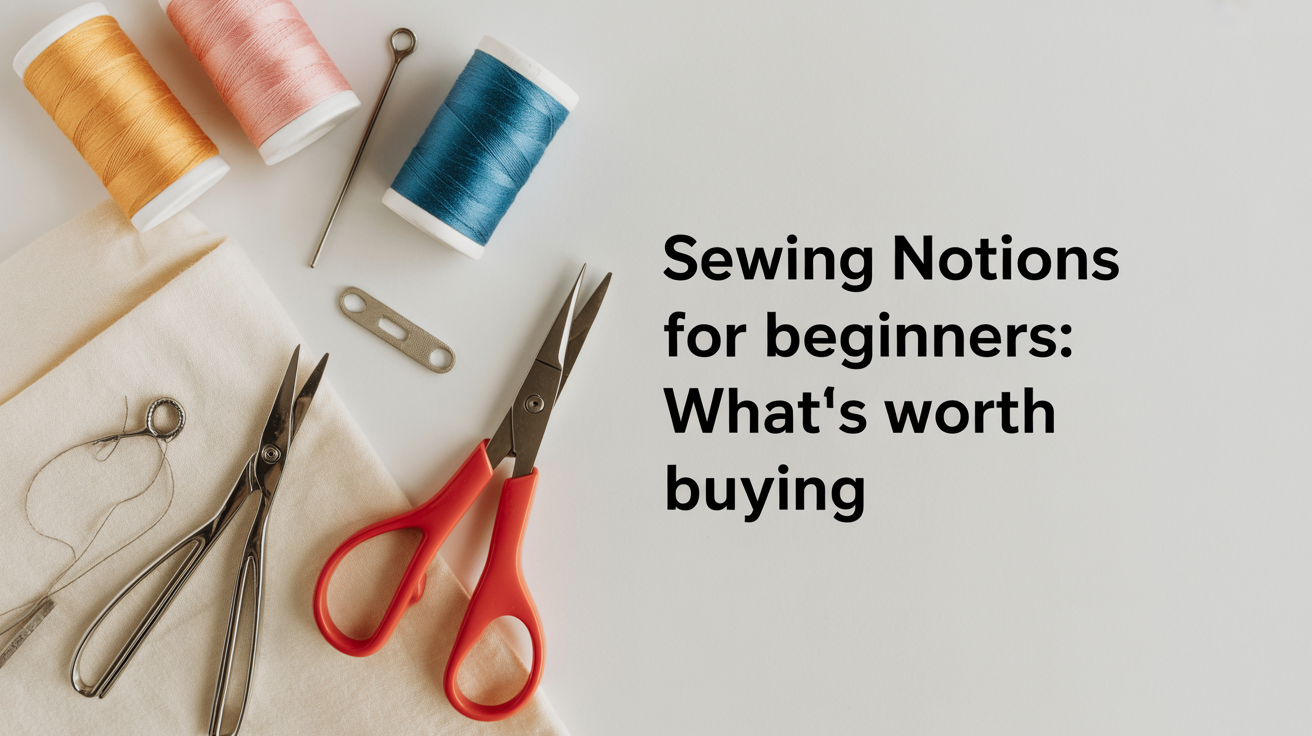
Sewing notions is the industry word for everything except the fabric and the machine: pins, scissors, thread, measuring tape, and a dozen other small items that end up scattered across every sewing room. When you're just starting out, the sheer variety on shop shelves is genuinely overwhelming. This guide cuts through it. You'll find out which items earn their place in a beginner's kit on day one, which ones you can hold off on, and a few that look useful but really aren't worth the drawer space.
The genuine must-haves
These are the notions you'll reach for on every single project. Buy them before you cut your first piece of fabric.
Pins and something to hold them
Flat-head glass pins (the kind with a round coloured bead on top) are the standard beginner pin. They're about 1 1/4 inches (3.2 cm) long, easy to pick up, and won't melt if you accidentally iron over one. A box of 100 costs next to nothing and lasts years. You'll also want a pin cushion or a magnetic dish. The magnetic dish is worth the few extra dollars because pins don't scatter when you knock it off the table.
Avoid the fine silk pins at this stage. They're beautiful but bend easily, and bent pins are a hassle when you're still learning to handle fabric.
Good scissors and a seam ripper
A pair of 8-inch (20 cm) dressmaking shears is the most important tool in your kit. Buy the best pair you can afford, keep them for fabric only, and tell every person in your household that rule once, clearly. Paper dulls blades fast. If your budget is tight, one good pair of fabric scissors beats three mediocre ones.
You also need a seam ripper. It's a small hooked blade for unpicking stitches when something goes wrong, and something always goes wrong at first. Buy a medium-weight one with a comfortable handle. The very cheap seam rippers drag instead of cutting cleanly and will make you frustrated before the fabric does.
Thread
Start with a small collection of all-purpose polyester thread in white, black, grey, and a neutral beige. Those four colours cover most beginner projects. Match thread to fabric colour when you can, and always test the tension on a scrap of your actual fabric before you sew a real seam. Thread weight and fibre content affect how it runs through the machine, and every machine is slightly different.
A measuring tape and a ruler
A 60-inch (150 cm) flexible measuring tape is essential for taking body measurements and measuring fabric on the bolt. You'll also want a short rigid ruler, 12 to 18 inches (30 to 45 cm), for marking seam allowances and drawing straight lines. A clear quilting ruler with grid markings is helpful because you can see through it to line up on a fold or a seam line.
Fabric marking tools
You need a way to transfer pattern markings onto fabric without leaving a permanent mark. A tailor's chalk in white or light blue brushes off cleanly. A chalk pencil is neater for fine lines. Air-erasable fabric marker pens are popular too; the marks disappear on their own within 24 to 48 hours, which is handy if you forget to erase them. Keep the water-erasable kind in reserve for when you need marks to last a few days.
Always test your marking tool on a small hidden corner of the actual fabric first. Some fabrics watermark easily, and some weave textures don't hold chalk well.
Hand-sewing needles
Even if you're machine sewing, you'll need hand needles for finishing and for the occasional repair. A mixed pack of sharps in sizes 5 to 10 covers most tasks. Needle packs are cheap, so don't scrimp here.
An iron and ironing board
This often gets overlooked in beginner supplies lists, but pressing seams as you go is what makes the difference between a homemade-looking garment and a finished one. You don't need a professional steam iron; a basic household model is fine. Set the heat for your fabric type, and always do a test press on a scrap. Delicate fabrics like chiffon scorch fast; sturdy quilting cotton handles high heat well.
Notions worth adding in your first few months
Once you've worked through a couple of projects, these items start to pull their weight.
Seam gauge
A seam gauge is a 6-inch (15 cm) metal or plastic ruler with a sliding marker. You set the slider to your seam allowance, 5/8 inch (1.6 cm) is standard in dressmaking, and use it to mark consistent distances as you go. It sounds minor, but it genuinely speeds up your marking once you stop measuring each pin placement individually.
Basting tape and wonder clips
Double-sided basting tape is water-soluble adhesive tape you peel and press to hold fabric layers together before sewing. It's particularly good for zippers and hemlines where pins create awkward lumps. Wonder clips, the large plastic clips designed for quilting, are useful when pins won't hold thick layers cleanly, like when you're sewing a folded hem on denim.
A thimble
Hand-sewing through multiple layers, particularly when you're stitching by hand on a hem, gets uncomfortable fast without a thimble. A metal thimble that fits snugly on your middle finger is the traditional choice. Some people prefer leather thimbles. Try both if you can, because the fit matters more than the material.
Rotary cutter and self-healing mat
If you take up quilting or want to cut multiple layers quickly, a 45 mm rotary cutter and a self-healing cutting mat (at least 18 x 24 inches / 45 x 60 cm) are real time-savers. The blade is very sharp; keep the safety guard on whenever it's not in active use, and replace the blade when it starts to snag rather than cut cleanly. These are not essential on day one, but once you try them you'll wonder how you managed without them.
What can wait (or what you probably don't need)
It's easy to spend money on specialist notions you'll never use. Here are a few common ones to skip until you have a specific reason to buy them.
| Notion | Why beginners often buy it | Why it can wait |
|---|---|---|
| Serger/overlocker thread cones | Looks professional, often sold near regular thread | You need a serger to use them; most beginners don't have one |
| Dressmaker's carbon paper and tracing wheel | Traditional pattern-transfer method | Chalk and air-erasable pens are easier and less messy |
| Point turner | For pushing out corners neatly | A chopstick or blunt pencil does the same job |
| Dress form | For fitting garments | Hard to size accurately, expensive; not useful until you're fitting your own patterns |
| Buttonhole foot | For making buttonholes | Most modern machines have this foot included; check before buying |
| Walking foot | Useful for quilting and slippery fabrics | A specialty tool for specific problems; not a day-one purchase |
Choosing the right needle for the job
Needles deserve a separate mention because beginners often ignore them until something goes wrong. The needle that came installed in your machine is a universal size 80/12, which works for most medium-weight fabrics. But the wrong needle causes skipped stitches, snagged fabric, and thread breakage, all things that feel like machine problems but are actually needle problems.
A general rule: the finer the fabric, the finer the needle. For lightweight cotton lawn or voile, try a 70/10. For heavy denim or canvas, move up to a 90/14 or 100/16. Change your needle regularly. A dull needle punches through fabric instead of piercing it cleanly, and a needle typically needs replacing after every 8 to 10 hours of sewing time or after any project that uses many metres of fabric.
For more detail on selecting the right needle for different fabrics, see our guide to choosing the right sewing machine needle.
Building your kit on a budget
You don't need to buy everything at once. A practical order for a first-time kit:
- Week one: dressmaking shears, seam ripper, glass-head pins, pin cushion, all-purpose thread in four colours, a measuring tape, tailor's chalk
- Week two or three: an iron if you don't already own one, a short rigid ruler, a pack of hand needles, a seam gauge
- Later, as needed: rotary cutter, self-healing mat, basting tape, wonder clips, specialist needles
Fabric and craft shops often sell beginner kits that bundle some of these items. Check what's actually included before you buy one; some are good value, and some are padded with duplicates of things you don't need.
One last note: buy notions that are well made but not precious. A mid-range pair of scissors you use confidently will serve you better than an expensive pair you're afraid to pick up. If you're shopping with specific fabrics in mind, the guide to the best fabrics for beginner sewing covers which materials are forgiving and which ones are better left until you have more experience.
Frequently asked questions
How much should I budget for a beginner sewing notions kit?
A functional starter kit covering pins, scissors, a seam ripper, measuring tape, thread, chalk, and hand needles typically runs between $30 and $60 (USD) depending on where you shop and whether you catch any sales. The scissors are where to invest most of that budget. Everything else is relatively inexpensive.
Can I use regular scissors instead of dressmaking shears?
You can, but household scissors are shorter, often duller, and not designed for the long cuts fabric requires. They'll tire your hand out and leave uneven edges. If budget is really tight, look for second-hand dressmaking shears at thrift stores or on resale sites rather than defaulting to kitchen scissors.
Do I need special thread for a sewing machine?
All-purpose polyester thread is fine for most beginner projects. What matters more is buying recognisable brands rather than the cheapest bargain-bin thread, which can be weak, uneven, or prone to tangling. Cheap thread is a very common cause of tension problems that beginners mistakenly blame on the machine.
What's the difference between woven and knit fabric notions?
When you sew knit fabrics, like jersey or ribbing, a few notions change. You'll want a ballpoint needle (also called a jersey needle) rather than a sharp needle, because it slides between fabric threads instead of piercing them. Some sewers also find that clips hold knits more smoothly than pins. For more on fabric types, see our beginner's guide to common fabric types.
How do I know if a notion is worth buying for my specific project?
Read the pattern instructions all the way through before buying anything. Most printed patterns list the notions you'll need (zippers, elastic, interfacing, buttons) right on the back of the envelope or in the introduction. Buy those specific items for the project you're about to start, and build your general kit gradually rather than all at once.