The Best Fabrics for Beginner Sewing (and What to Avoid)
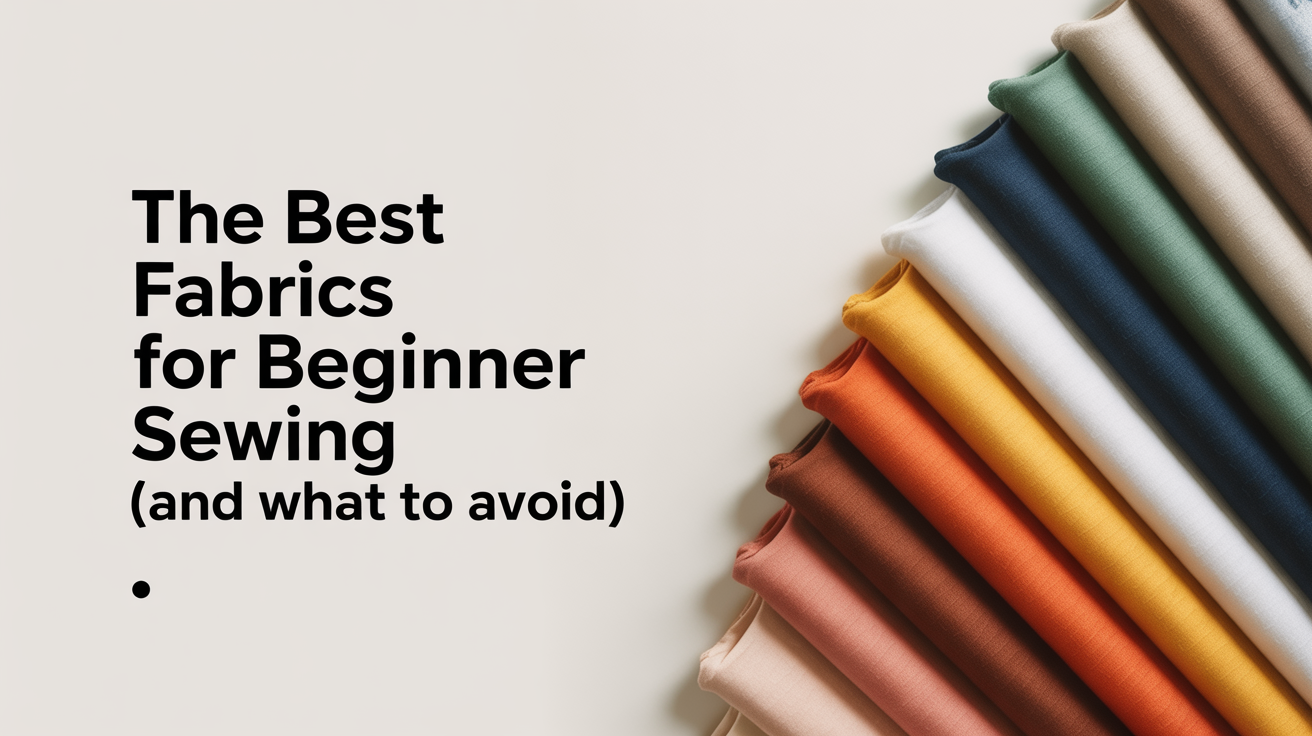
The most common reason beginner sewing projects go wrong has nothing to do with sewing machines or technique. It is the fabric. Picking a slippery chiffon or a loosely woven lace for your first project means you are fighting the material every step of the way. Pick the right beginner-friendly fabric and suddenly your stitches look even, your seams lie flat, and you actually enjoy the process.
This guide covers which fabrics are genuinely forgiving to work with, why they work well, which ones to save for later, and how to tell a good starter fabric from a frustrating one at the fabric store.
Why fabric choice matters so much at the start
When you are still learning to guide fabric through a machine, hold tension in your hands, and keep a consistent seam allowance, you need every advantage you can get. Easy-to-sew fabrics give you those advantages in a few ways:
- They grip each other slightly instead of sliding, so your pieces stay aligned as you sew.
- They hold a pressed crease, which makes folding hems and seam allowances much simpler.
- They do not fray excessively at the cut edge, giving you a few seconds to position things without the edge disintegrating.
- They feed evenly through the machine without bunching at the start or puckering along a long seam.
None of these qualities are glamorous, but every one of them translates directly to a project that looks finished rather than fought over.
The best fabrics for beginner sewing
Quilting cotton
Quilting cotton is the single best place to start. It is woven tightly enough that it barely frays, it presses beautifully with an iron, and it keeps its position while you sew. A yard of quilting cotton costs roughly $8 to $15 and comes in thousands of prints, so you are not stuck with boring solid colors. Look for 100% cotton on the bolt label, a weight around 4 oz per square yard, and a weave so tight you cannot easily push a pin through the threads without separating them.
One practical note: quilting cotton can shrink up to 5% in a hot wash. Pre-wash it before cutting your project, then tumble dry and press it flat. That one step prevents a finished tote bag from puckering the first time someone drops a water bottle in it.
Calico and muslin
Calico (called muslin in the US) is an unbleached, plain-woven cotton. It is inexpensive, widely available, and handles exactly like quilting cotton. Many experienced sewists use it exclusively for making test versions of garments, called muslins, before cutting into expensive fabric. As a beginner, it is excellent for practice seams and learning to press, and the plain surface shows you exactly where your stitch line wandered so you can correct it.
Cotton-linen blend
A fabric that is roughly 55% cotton and 45% linen is fractionally stiffer than pure quilting cotton, which actually makes it easier to handle for things like tote bags, cushion covers, and simple home decor. The linen content gives it structure so the pieces do not flop around on the cutting mat. It presses wonderfully. The only mild catch is that it frays a little more than quilting cotton, so trim your seam allowances with pinking shears or finish them quickly on the machine.
Felt
Felt is a non-woven fabric, meaning it has no grain and no fraying edges at all. Cut it with scissors or a rotary cutter and the edges stay clean indefinitely. It comes in small craft squares that cost very little, which means you can practice curves, corners, and applique shapes without worrying about wasting yardage. Felt is not appropriate for garments because it does not breathe or drape, but for small decorative projects, stuffed toys, and ornaments it is almost impossible to mess up.
Fleece (low-loft)
Fleece is stretchy but stable, it does not fray, and you can sew it with a regular stitch on most machines. For a beginner who wants to make a scarf, a simple blanket, or a pet toy, fleece is forgiving because small imperfections in the seam line disappear into the fluffy texture. Use a walking foot if your machine has one, or hold the layers firmly from behind the presser foot to stop the top layer from creeping forward. Keep scissors sharp, because fleece dulls blades faster than woven fabric.
A quick comparison of good starter fabrics
| Fabric | Fraying | Pressing | Grip when layered | Good for |
|---|---|---|---|---|
| Quilting cotton | Minimal | Excellent | Good | Bags, small garments, patchwork |
| Calico / muslin | Minimal | Excellent | Good | Practice pieces, toiles |
| Cotton-linen blend | Moderate | Excellent | Good | Home decor, bags |
| Felt | None | Not needed | Excellent | Toys, ornaments, applique |
| Low-loft fleece | None | Not needed | Moderate | Blankets, scarves |
What to avoid until you have more experience
These fabrics are not impossible to sew, but they introduce problems that make it very hard to tell whether a mistake came from your technique or from the material. Save them until you feel confident with a forgiving woven cotton.
Slippery and woven fabrics: Satin, silk, polyester lining fabric, and chiffon slide away from each other when stacked. You pin one edge and the other end shifts 2 cm (about 3/4 inch) by the time you reach the machine. They also show every needle hole, so ripping out a seam leaves a permanent dotted line.
Knits and jersey: Stretch fabrics need a different needle (a ballpoint or stretch needle), a different stitch (a narrow zigzag or a stretch stitch), and a machine that feeds them evenly from both top and bottom. None of that is complicated once you know what you are doing, but layering new material behavior on top of new machine skills makes troubleshooting very difficult.
Sheer fabrics: Organza and chiffon fray badly and shift under the presser foot. They also show the thread on the wrong side, so tension settings need to be precise.
Velvet and pile fabrics: The pile shifts in one direction, so two layers stacked face-to-face will creep past each other as you sew. The result is mismatched seams that are nearly impossible to unpick and re-sew cleanly.
Loosely woven fabrics: A very open weave, like some burlap or gauze, distorts when you pull it through the machine and frays so aggressively that the seam allowance can dissolve before you finish the seam.
How to pick fabric at the store
If you are standing at a cutting table and not sure whether a fabric is beginner-friendly, try a few things.
Fold a corner of the bolt back on itself and press it with your thumb. If the fold holds for a few seconds, the fabric will behave under a warm iron. If it springs back immediately, it is likely synthetic and may be harder to press flat.
Tug gently on the cut edge and watch whether threads pull loose easily. More than three or four threads coming away means moderate-to-high fraying, which is manageable but adds a step.
Lay two pieces of cut edge together and see whether they grip or slide. Fabrics that grab each other slightly are far easier to align and sew.
Finally, check the fiber content label. For your first few projects, stay with fabrics that are at least 70% natural fiber: cotton, linen, or a blend of the two. They behave predictably under a medium heat iron and respond well to gentle starching if you want a crisper hand.
If you want to read more about specific fabric categories and how they behave differently, the guide on common fabric types for beginners goes deeper into weaves, weights, and finishes. And when you are ready to think about what else you need before you cut into your first project, sewing notions for beginners walks through the short list of tools that are genuinely useful versus the ones that just fill a drawer.
A note on pre-washing and testing
Whatever fabric you choose, pre-wash it the way you plan to wash the finished project. Cotton shrinks. Linen shrinks more. Washing before cutting means your project stays the size you intended after the first laundry cycle.
Before sewing your actual pieces, run a short test seam on a scrap of the same fabric. Check that the stitch length looks right (2.0 to 2.5 mm for most wovens), the tension is balanced, and the presser foot pressure is not crushing the fabric flat. Adjusting on a scrap costs nothing. Unpicking three seams on a nearly finished bag costs half an hour and frayed nerves. Choosing the right needle for your fabric weight also plays into this: the guide on choosing the right sewing machine needle explains exactly which needle to reach for.
Frequently asked questions
Can I learn to sew on a polyester fabric?
You can, but woven polyester is more slippery than quilting cotton and harder to press flat because the fibers melt rather than crease under high heat. If you want to use polyester, choose a medium-weight woven rather than anything shiny or satin-finish, lower your iron temperature to a synthetic setting, and always use a pressing cloth between the iron and the fabric. Quilting cotton is still easier, but polyester is not a complete dead end.
What weight of fabric is easiest for a beginner?
Medium-weight fabrics in the 3 to 5 oz per square yard range are the most manageable. Very lightweight fabric (under 2 oz) shifts and puckers easily. Very heavy fabric, like denim or canvas over 10 oz, can be hard to sew through multiple layers and may stall a lower-powered machine. The fabrics listed above all fall comfortably in the middle range.
Does fabric width matter when I am buying?
Width affects how much yardage you need for a project, not how easy the fabric is to sew. Most quilting cotton comes 44 inches (112 cm) wide. Home dec fabrics and some linens come 54 to 60 inches (137 to 152 cm) wide, which means you sometimes need less yardage to cut a given piece. Always check the pattern or project instructions for the required width before buying.
Is it worth buying cheap fabric to practice on?
Yes and no. Very cheap fabric from discount bins is sometimes loosely woven or heavily starched, which means it does not behave like the fabric you will eventually use for a real project. Calico and plain quilting cotton from a proper fabric shop cost only a little more and give you honest feedback on your technique. A half yard (about 45 cm) is plenty for a practice session and costs less than a cup of coffee.
How much fabric do I need for a first project?
A simple tote bag uses about half a yard (45 cm) of a 44-inch-wide fabric for the body, plus a strip for handles. A zippered pouch uses a fat quarter, which is roughly 18 by 22 inches (46 by 56 cm). Both are excellent first projects on quilting cotton. Buy a little extra rather than a little short; remnants are useful for practicing seams and testing iron settings later.