How to Choose Thread for Your Project
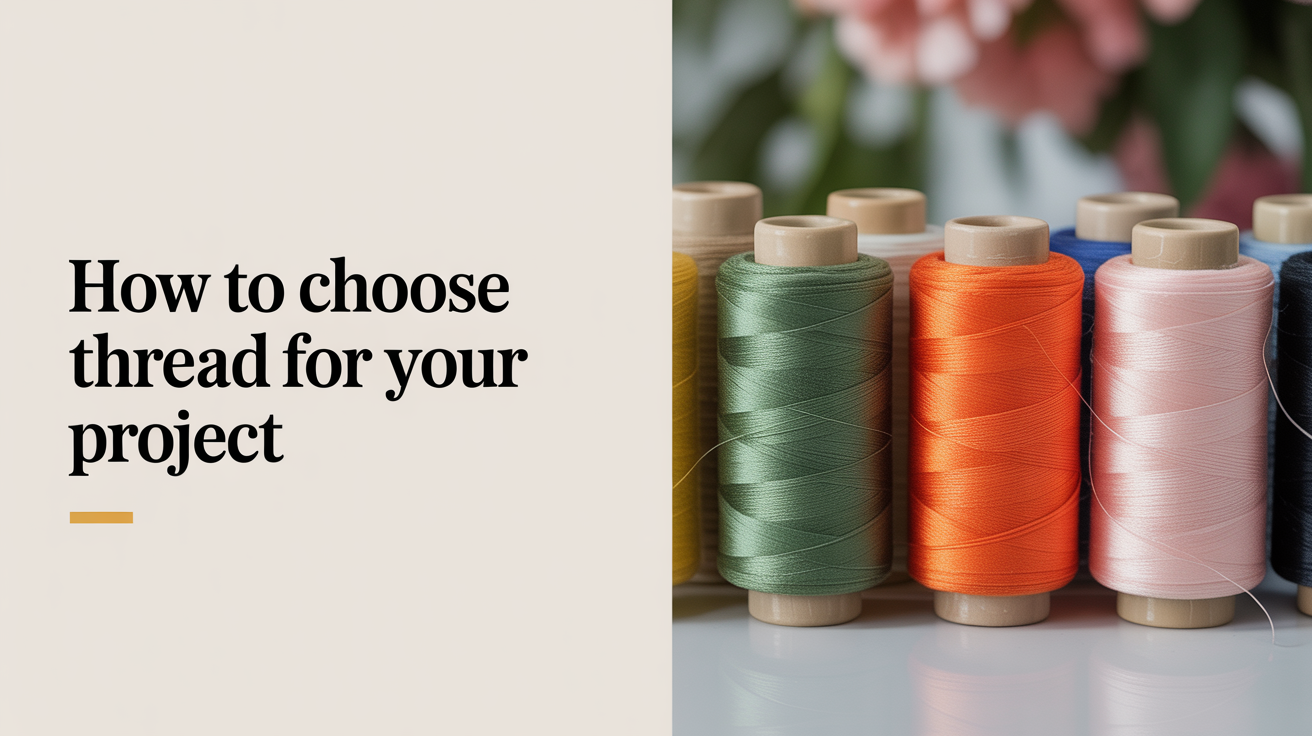
Picking thread feels simple until you're standing in front of a wall of spools with no idea which one to grab. The short answer: match the fiber content to your fabric, choose a weight that suits the seam, and go one shade darker than the fabric when you can't find an exact match. Everything below unpacks why those rules work and when to bend them.
Thread Fiber Types and When to Use Them
The material a thread is made from affects how it behaves in the needle, how it handles heat, and how well it moves with the fabric over time.
All-Purpose Polyester
Polyester thread is the most practical starting point for most beginners. It stretches slightly, so it works with both woven and knit fabrics. It resists shrinkage, tolerates a wide range of iron temperatures, and costs less than specialty threads. Look for labels like "all-purpose" or "general-use" on the spool.
Use it for: quilting cotton, denim, linen, canvas, knit tops, home dec projects.
Cotton Thread
Cotton thread has almost no stretch, which makes it well suited to woven fabrics that don't stretch either. It also takes heat well and produces very little lint. Quilters often prefer it because it presses flat neatly and blends into the fabric surface rather than sitting on top.
Use it for: quilting, cotton lawn, shirting fabric, heirloom hand sewing.
Avoid it for: knits or anything that needs seam elasticity. A cotton seam in a stretchy fabric will pop under tension.
Nylon and Silk Thread
Nylon thread is strong and nearly invisible in a bobbin when you want a buried hem. Silk thread is smooth and fine, often used for basting (temporary stitching) because it pulls out cleanly and leaves no residue.
Both are specialty threads. You probably won't need them for your first several projects, but it's good to know they exist.
Thread Weight: What Those Numbers Mean
Thread weight is labeled differently by brand, which creates a lot of confusion. The two most common systems are:
| Label | What it means | Best for |
|---|---|---|
| 50 wt (or 50/2) | Fine, standard weight | General garment sewing, quilting |
| 40 wt | Slightly heavier | Topstitching, decorative seams |
| 30 wt | Heavy, visible | Bold topstitching, denim |
| 12 wt | Very thick | Decorative hand stitching, couching |
For most projects, a 50-weight all-purpose thread is what you want. The higher the number, the finer the thread. A 12-weight is much thicker than a 50-weight.
Topstitching thread (often labeled that way on the spool) is heavier and designed to show. Use a topstitch needle with it, which has a longer eye to accommodate the extra bulk.
Matching Thread Color to Fabric
Getting the color right matters more than beginners expect. A mismatched thread catches light and draws the eye to every stitch line.
Solid fabrics: Hold the spool against the fabric in natural light. Go one shade darker rather than lighter. Thread appears lighter once it's stitched into fabric, so a slightly darker spool usually reads as a match.
Prints and patterns: Match the background color, or pick the most dominant color in the print. You can also use a neutral grey or taupe, which tends to disappear in busy prints.
Dark fabrics: Deep navy, black, and charcoal can be tricky because thread dye lots vary. Buy thread and fabric at the same time when possible, or keep a few spools of true black, navy, and charcoal on hand as reliable standbys.
Test your color match on a scrap of the actual fabric before you start your project. Stitch a few inches and press the seam. Lighting in a shop can fool you.
Needle and Thread Pairing
Thread and needle work together, and a mismatch causes skipped stitches, fraying, or thread breakage.
The eye of the needle should be big enough for the thread to pass through without friction, but not so big that the thread flops around. A good rule: thread the needle by hand. If you have to force the thread through the eye, size up your needle. If the thread slides through with room to spare, try a smaller needle.
| Thread weight | Needle size (universal) |
|---|---|
| 50 wt (fine) | 70/10 or 80/12 |
| 40 wt (standard) | 80/12 or 90/14 |
| Topstitching (30 wt) | 90/14 or 100/16 |
For knit fabrics, swap to a ballpoint or stretch needle regardless of thread weight. The rounded tip slides between fibers rather than piercing them, which prevents the tiny runs that can happen when you sew stretch fabric with a sharp needle.
A Few Practical Rules Before You Buy
Start with one or two high-quality spools rather than a bulk pack of unknown thread. Cheap thread frays, breaks at the needle, and leaves excessive lint in the machine. Brands like Coats & Clark, Gutermann, and Mettler are widely available and consistently reliable.
Check the sewing notions guide for beginners for a broader look at which supplies are genuinely worth buying early on and which can wait.
Buy thread after you have your fabric in hand. Color-matching from memory almost never works. Bring the fabric to the shop, or order a larger swatch first if you're shopping online.
Store thread away from direct sunlight. UV exposure weakens thread fiber over time, especially cotton. A closed drawer or box works fine.
Frequently Asked Questions
Can I use the same thread in the needle and the bobbin?
Yes, and for most home sewing that's exactly what you should do. Matching thread weight and fiber top and bottom gives you balanced tension, which produces even stitches. Some specialty techniques use a heavier decorative thread in the bobbin to add texture to the underside of a piece, but start with identical thread in both until you're comfortable with your machine's tension settings.
Does thread expire?
Thread doesn't have a strict expiration date, but it does degrade. Cotton thread becomes brittle with age and may snap more easily. If a spool has been sitting in a sunny window for years, test it on scrap fabric before using it on a project you care about. New thread from a reliable brand is always the safer choice.
What thread should I use for hand sewing?
For most hand sewing, a standard 50-weight cotton or polyester thread works well. Wax it by running the thread across beeswax or a candle stub to reduce tangling and help it glide through fabric more smoothly. You can find hand-sewing specific thread (often labeled "hand quilting thread") which is slightly thicker and pre-waxed. See the beginner fabric guide for more on pairing materials with the right technique.
Why does my thread keep breaking?
Thread breakage usually points to one of four things: the needle is too small for the thread, the thread is old or low quality, the tension is set too tight, or the machine isn't threaded correctly. Start by rethreading the machine carefully with the presser foot raised (which releases the tension discs), then check needle size and try a fresh needle if needed.
Do I need a special thread for stretchy fabric?
Stretchy fabrics need a thread that can move without snapping. Standard polyester all-purpose thread has just enough give for light knits. For athletic fabric or anything with significant stretch, look for thread labeled "stretch" or "woolly nylon," and pair it with a stretch or ballpoint needle. Explore the common fabric types guide to see how different fabrics behave before you start cutting.