How to Make a Fabric Scrunchie in 15 Minutes
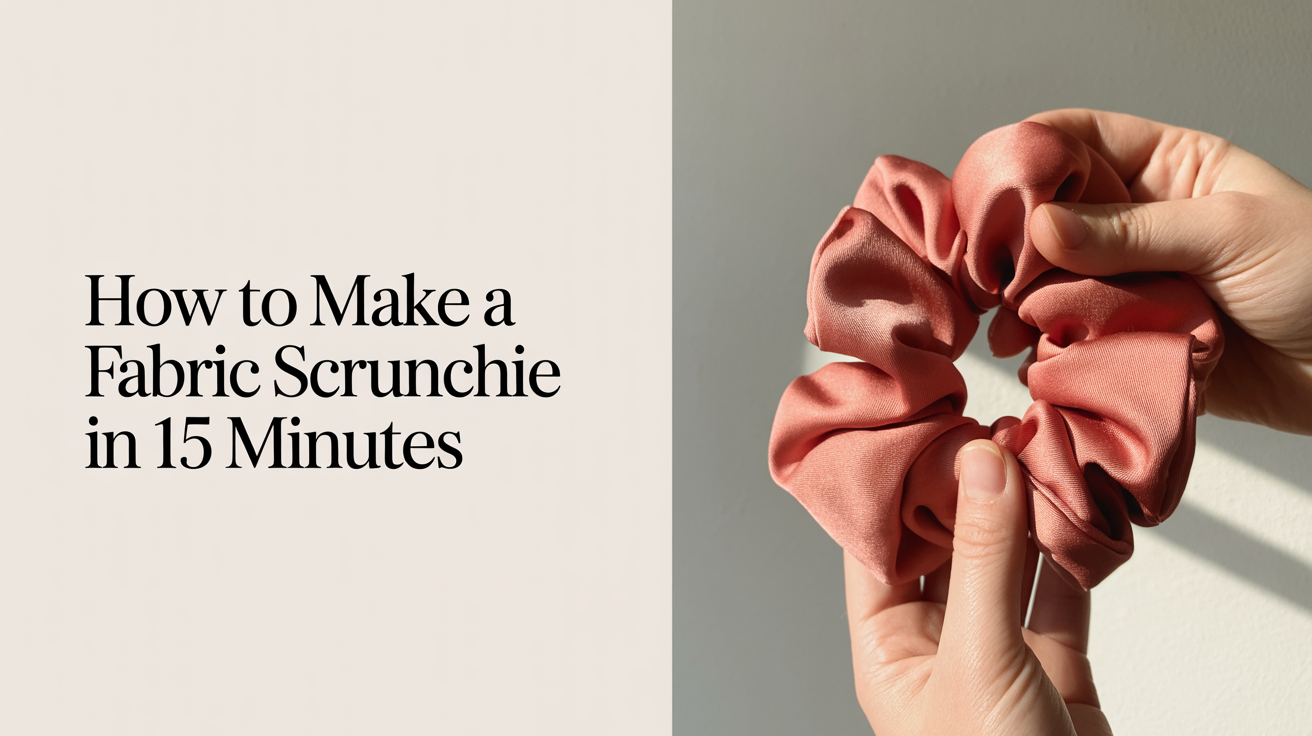
A scrunchie is one of the best first sewing projects you can pick. It uses a single rectangle of fabric, one short seam, and a piece of elastic. You'll practice stitching a straight seam, turning a tube right-side out, and closing an opening by hand or machine. The whole thing comes together in roughly 15 minutes once you've cut your fabric.
If you're just getting started and looking for a range of beginner-friendly makes, see the roundup of 10 easy sewing projects for absolute beginners.
What You Need
Keep this list short. A scrunchie doesn't require much.
Fabric: A strip roughly 4 inches wide by 22 inches long. Quilting cotton, jersey knit, velvet, or any light-to-medium weight fabric works. Avoid very thick or stiff materials for your first try.
Elastic: About 9 to 10 inches of 3/8-inch or 1/2-inch wide elastic. Hair-tie elastic or standard sewing elastic both work.
Tools:
- Sewing machine (or needle and thread for hand sewing)
- Scissors or rotary cutter
- Pins or clips
- Safety pin
- Iron
Test everything on a fabric scrap first, especially your stitch length and iron temperature. Settings that look right on a chart may need adjusting depending on your specific fabric.
Cut and Prep Your Fabric
Cut your rectangle to 4 inches by 22 inches. These measurements give you a finished scrunchie with a good amount of gather. If you want a fuller, more ruffled look, cut the fabric up to 45 inches long instead. For a slimmer style, cut it closer to 16 inches.
Fold the rectangle in half lengthwise with right sides together (the pretty side of the fabric facing in). Press the fold lightly with a warm iron. This crease helps keep the edges aligned when you stitch.
Pin or clip along the long raw edge. Leave a 1/4-inch seam allowance.
Sew the Long Seam and Turn the Tube
Stitch along the long pinned edge with a straight stitch, backstitching at both ends to secure the seam. Leave both short ends open for now.
Once you've stitched the long seam, trim any fraying threads and press the seam open if you can reach it. Then comes the satisfying part: turning the tube right-side out.
Attach a safety pin to one end of the tube. Push the safety pin through the inside of the tube, bunching the fabric up as you go, until the pin pops out the other end and the whole tube is right-side out. Work slowly so the safety pin doesn't catch the fabric.
Give the tube a press with your iron so it lies flat with the seam centered along one edge (or slightly to the back, which is what most people prefer).
Thread the Elastic
Cut your elastic to about 9 inches. Attach the safety pin to one end of the elastic and thread it through the fabric tube, just as you turned it. Keep a firm grip on the other end of the elastic so it doesn't disappear inside.
When both ends of the elastic are sticking out of the same opening, overlap them by about half an inch. Stitch across the overlap a few times to join the ends securely. A box stitch (a rectangle with an X inside) is the most reliable, but a few straight passes back and forth will hold on a lighter-weight scrunchie.
After joining the elastic, the fabric tube will naturally bunch and gather around it. Pull the elastic into the tube and distribute the gathers evenly.
Close the Opening and Finish
You now have an almost-finished scrunchie with one small gap where you threaded the elastic through. Tuck the raw edges of both short ends inside the tube about 1/4 inch, then bring the two ends together so the folded edges meet neatly.
You can close this gap by hand using a slip stitch (a nearly invisible stitch that catches just the folded edges), or on the machine using an edge stitch very close to the fold. Hand sewing gives a cleaner result here if you have a few extra minutes. Work with a thread color that matches your fabric so any visible stitches blend in.
Once the gap is closed, spread the gathers out one more time, and you're done.
Variations Worth Trying
Once you've made one scrunchie, small changes let you explore different techniques.
Contrasting lining: Cut a second strip in a coordinating fabric and sew them together before turning. The inside of the scrunchie becomes a surprise color.
Bias-cut fabric: Cutting the strip at a 45-degree angle to the grain gives a softer drape and a slightly stretchy feel without using knit fabric.
Wider elastic: Switching to 3/4-inch or 1-inch elastic makes a chunkier, more structured scrunchie. You may want to cut your fabric a bit wider (5 to 6 inches) to keep the gathers balanced.
Jersey or velvet: Knit fabrics like jersey sew up easily and don't fray, though they need a stretch stitch or a narrow zigzag instead of a straight stitch. Velvet is beautiful but likes to slide, so use plenty of pins and sew slowly.
When you're ready to move on from small accessories, the beginner tote bag tutorial uses the same basic skills and produces something you'll carry daily. For another quick home project, a pillow cover with an envelope back introduces working with larger pieces of fabric.
Frequently Asked Questions
What fabric works best for a beginner scrunchie? Quilting cotton is the easiest starting point. It holds its shape, presses well, and doesn't stretch or slide while you sew. Once you're comfortable with the steps, try velvet or jersey for a different look and feel.
How much elastic do I need? For a standard adult scrunchie, 9 to 10 inches of 3/8-inch or 1/2-inch elastic is a reliable starting length. If the finished scrunchie feels too tight or too loose, adjust the elastic length on your next one. The fabric dimensions stay the same either way.
Can I make a scrunchie without a sewing machine? Yes. Hand sewing the long seam with a running stitch or backstitch works fine, though it takes longer. A backstitch gives a stronger seam, which matters if the fabric is prone to fraying or if the scrunchie will get heavy daily use.
My tube won't turn right-side out. What am I doing wrong? The tube is usually too narrow or the safety pin is catching inside. Make sure your seam allowance isn't wider than 1/4 inch (which would narrow the tube), and try pushing the fabric in smaller bunches at a time. A blunt-tipped chopstick or pencil can help coax stubborn corners through.
How do I keep the elastic from twisting inside the tube? The elastic almost always twists a little, but it doesn't matter much in practice since the fabric covers it. If twisting bothers you, hold both ends of the elastic flat as you overlap and stitch them, and it will sit flatter once it's inside the tube.