How to Measure and Cut Fabric Accurately
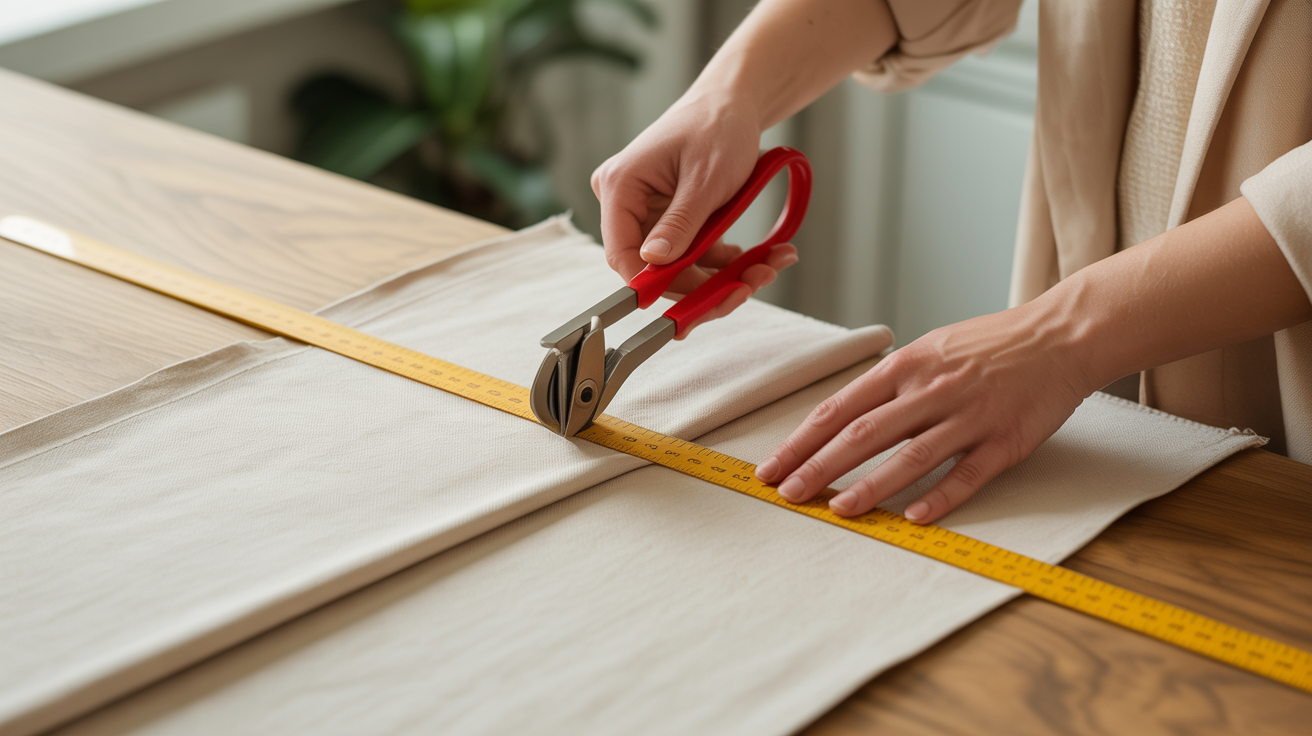
Accurate cutting is where a project starts to succeed or fail. If your pieces are slightly off, seams won't line up, hems will wave, and you'll spend time correcting problems that were created before a single stitch was sewn. The good news is that measuring and cutting fabric accurately is a learnable skill, and a few tools plus a consistent process will get you there quickly.
Tools You Need Before You Start
You don't need a full workroom setup, but a few specific items make a real difference.
Measuring tools:
- A rigid ruler or quilting ruler (at least 6 x 24 inches) for long straight lines
- A flexible tape measure for curved body measurements or fabric that isn't flat yet
- A seam gauge (a small 6-inch ruler with a sliding marker) for checking seam allowances
Cutting tools:
- Sharp fabric scissors used only for fabric (using them on paper dulls the blades fast)
- A rotary cutter, self-healing cutting mat, and acrylic ruler if you plan to cut many straight pieces
Marking tools:
- Tailor's chalk, a chalk wheel, or washable fabric markers for tracing lines
- Pins or pattern weights to hold pieces in place while you mark
All measurements and tool settings in this guide are starting points. Always test cuts on scrap fabric first, especially when working with a new material.
How to Prepare Fabric Before Cutting
Cutting on fabric that hasn't been prepared leads to pieces that shrink or distort after washing. Most woven fabrics should be pre-washed, dried, and pressed before you cut them. Pressing removes wrinkles that can throw off your measurements by several millimeters across a larger piece.
Grain line matters. Woven fabric has a lengthwise grain (parallel to the selvage, which is the finished edge), a crosswise grain (perpendicular to the selvage), and a bias (diagonal, at roughly 45 degrees). Most pattern pieces specify which direction the grain runs on the cut piece. Cutting off-grain causes finished garments to twist or hang unevenly.
To find straight grain on a woven fabric, you can pull a single thread along the crosswise grain and cut along the gap it leaves. This gives you a perfectly straight edge to work from. On knit fabrics, look for a column of stitches and use that as your guide instead.
Learn more about fabric construction in our guide to common fabric types.
How to Measure Fabric for Sewing
Measuring fabric for sewing is about two things: getting the total yardage right and placing each pattern piece so it uses the fabric efficiently.
For yardage: Read your pattern envelope carefully. It lists yardage by fabric width (usually 44/45 inches or 58/60 inches) and by garment size. If you're between sizes or adjusting the pattern, add a little extra. Running out mid-project is frustrating.
For laying out pattern pieces:
- Fold the fabric in half lengthwise with selvages together, unless the pattern specifies otherwise.
- Position pattern pieces according to the layout diagram. Pieces marked "cut on fold" go directly on the folded edge.
- Align the grain line arrow on each pattern piece parallel to the selvage. Measure from the selvage to both ends of the grain line arrow and adjust until both measurements match.
- Pin or weight each piece once it's positioned correctly.
Using a ruler to mark cutting lines: If you're not using a printed pattern, measure and mark directly on the fabric with chalk or a washable marker. Use your quilting ruler to draw straight lines. For right angles, confirm your corner with a quilting square or the corner of your cutting mat grid.
For fabric choices that work well at this stage, see our overview of the best fabrics for beginner sewing.
How to Cut Fabric Straight
Cutting fabric straight takes a steady hand and the right setup. The table or cutting surface matters: a large, flat, stable surface lets you see the whole piece and keeps fabric from shifting.
With scissors:
- Keep the fabric flat on the table rather than lifting it as you cut.
- Hold the scissors so the lower blade stays on the table surface and slides forward with each cut.
- Use long, smooth cuts for straight lines rather than short snips.
- Keep your free hand flat on the pattern piece near (not ahead of) the scissors.
With a rotary cutter:
- Place your acrylic ruler along the cutting line and hold it firmly.
- Start the cutter at the far end of the ruler and pull it toward you in one smooth stroke, applying steady downward pressure.
- Keep fingers curled behind the ruler edge, not over it.
- Always engage the blade guard when setting the cutter down.
Sharp tools are the single biggest factor in straight cuts. A dull blade drags the fabric and causes jagged edges. Replace rotary cutter blades as soon as you notice resistance, and have fabric scissors sharpened once a year if you sew regularly.
Common Cutting Mistakes and How to Avoid Them
| Mistake | What Goes Wrong | Fix |
|---|---|---|
| Fabric slips while cutting | Pieces come out the wrong size or shape | Use more pins or pattern weights; cut on a non-slip mat |
| Cutting off-grain | Finished piece twists or doesn't hang right | Realign grain line before cutting; measure from selvage to both ends of the arrow |
| Seam allowance not included | Pieces are smaller than expected | Check whether the pattern includes seam allowance or you need to add it |
| Skipping pre-washing | Fabric shrinks after the first wash | Pre-wash and dry before cutting, especially natural fibers |
| Scissors lifted off table | Cuts angle through layers | Keep lower blade on the surface; let the fabric rest flat |
Cutting Multiple Layers at Once
Once you're comfortable with single-layer cutting, cutting two layers at once saves time. The key is making sure both layers are aligned before you cut. Smooth out any wrinkles between the layers and pin generously, especially on slippery fabrics.
For slippery materials like satin or charmeuse, some sewers prefer to cut single layers or add tissue paper between layers to prevent shifting. Knit fabrics benefit from being spread flat and allowed to relax before cutting, since stretching while cutting builds tension that distorts the pieces.
For a broader overview of what notions help at this stage, see our guide to sewing notions for beginners.
Frequently Asked Questions
Do I need a rotary cutter, or can I use scissors? Scissors work well for most cutting tasks, especially curved lines and single pieces. Rotary cutters are faster for long straight cuts and quilting, but they're not required to start. Get comfortable with scissors first, then add a rotary cutter if you find yourself cutting a lot of rectangular pieces.
How much extra fabric should I buy to allow for mistakes? A quarter to half a yard extra is a reasonable buffer for a first-time project. This gives you room for miscuts, grain alignment issues, or pattern adjustments without running short.
What does "cut on the fold" mean? It means you place that pattern piece directly against the folded edge of the fabric, not the selvage. When you cut and unfold the fabric, you'll have one symmetrical piece instead of two separate halves. Do not cut along the fold itself.
How do I keep fabric from moving when I cut? Pins placed every few inches within the seam allowance (so pin holes don't show on the finished piece) hold most fabrics well. Pattern weights are faster for large pieces. For really slippery fabrics, try cutting on a textured surface like a flannel board or a self-healing mat.
My cut edges are always slightly jagged. What am I doing wrong? Jagged edges usually come from dull scissors or picking up the fabric while cutting. Check that your scissors are sharp (they should glide without pulling), keep the lower blade on the table, and use longer, continuous cuts rather than short snips.