How to Sew a Simple Elastic-Waist Skirt
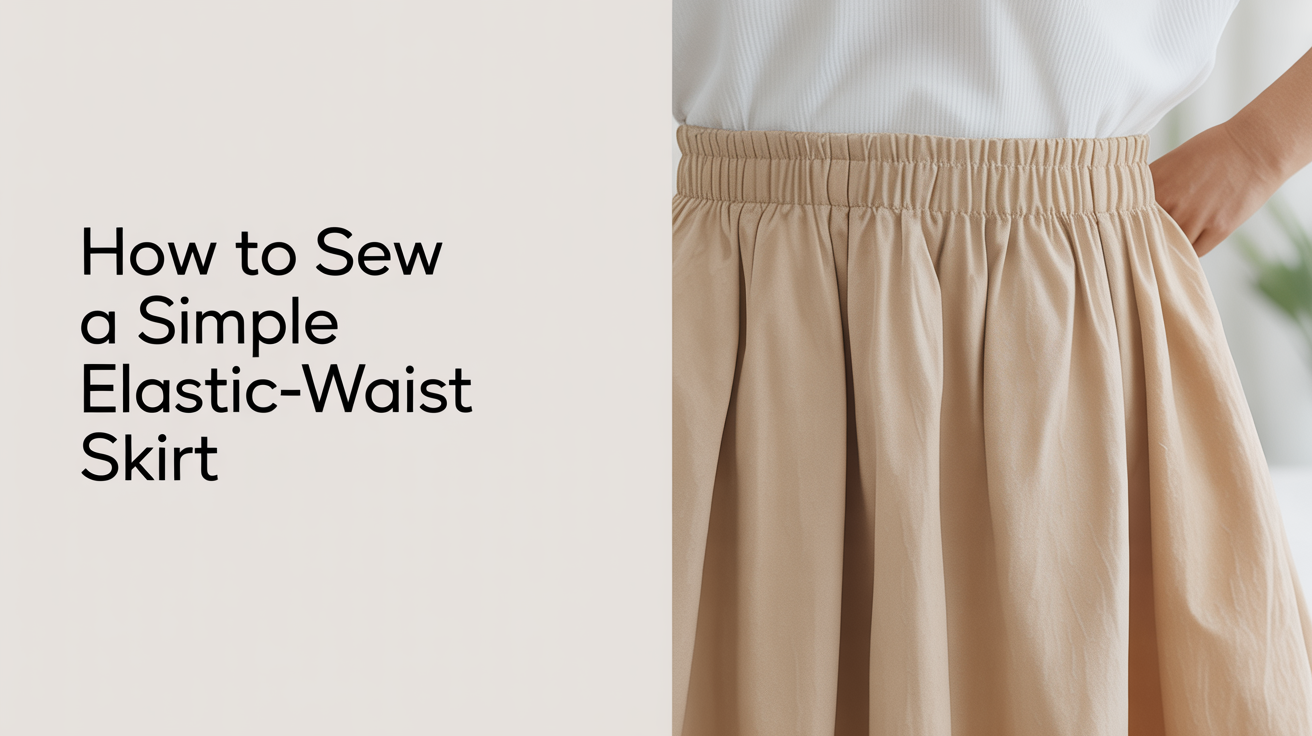
An elastic-waist skirt is one of the most rewarding first garments you can make. There is no zipper, no button, and no tricky fitting involved. You measure, cut, sew two seams, add a casing, thread elastic through, and wear it. Most beginners finish one in two to three hours.
This guide walks through each step in plain language so you can follow along even if this is your first time sewing a garment. If you want to warm up with something flat before cutting fabric, start with 10 Easy Sewing Projects for Absolute Beginners.
What You Need
Gather your materials before you sit down at the machine. Having everything on the table saves a lot of stopping and starting.
Fabric: 1.5 to 2 yards of a woven cotton, linen blend, or lightweight denim. Avoid knits for this version because the construction assumes the fabric does not stretch. Wash and dry the fabric before cutting so any shrinkage happens now rather than after you sew.
Elastic: 1-inch-wide non-roll elastic, cut to your comfortable waist or hip measurement minus about one inch. Test the fit by wrapping it snugly around the spot where you want the skirt to sit, then cutting where it feels comfortable but secure.
Other supplies:
- Matching thread
- Scissors or a rotary cutter and cutting mat
- Ruler or measuring tape
- Pins or clips
- An iron and pressing surface
- A large safety pin (for threading elastic)
- Chalk or a fabric marker
A note on safety: pins, needles, and scissors are sharp. Work slowly when handling them, keep your fingers clear of the needle while the machine runs, and use caution with a hot iron. Test any machine settings on a scrap of your actual fabric first.
How to Cut Your Fabric
The basic shape is a rectangle. The width and length will depend on your measurements.
Step 1: Find your measurements. Measure around the fullest part of your hips (not your waist, because the elastic needs to stretch over your hips to go on). Add 2 inches for ease. This is your panel width.
Decide how long you want the skirt to hang. Add 4 inches to that number: 1.5 inches for the waistband casing at the top and 2.5 inches for a folded hem at the bottom.
Step 2: Cut two panels. Cut two rectangles of fabric at the width and length from Step 1. Cutting two panels and sewing them together gives you two side seams, which hang more evenly than a single tube of fabric.
Label the right side of the fabric lightly with chalk so you don't lose track of which side faces out.
Sewing the Side Seams
Place the two panels together with right sides facing each other. Pin or clip along both long edges. These will become your side seams.
Sew each side seam with a straight stitch, 5/8 inch from the edge. That 5/8 inch is called the seam allowance, and staying consistent with it keeps the skirt the right size.
After sewing, finish the raw edges to prevent fraying. A zigzag stitch run along each raw edge works well for most cottons. If your machine has an overlock stitch, use that instead.
Press the seams open with your iron. This small step makes the finished skirt lie flat and look noticeably cleaner.
You now have a fabric tube. Turn it right side out and check that both seams are straight and the panels are the same length. Fix anything obvious now before you move to the waistband.
Making the Elastic Waistband Casing
The casing is a folded channel at the top of the skirt that holds the elastic in place.
Step 1: Fold and press. Fold the top raw edge down by half an inch toward the wrong side of the fabric, and press it flat with your iron. This tucks the raw edge in so it won't fray inside the casing.
Step 2: Fold again. Fold the top down again by 1.25 inches and press. Pin this fold in place all the way around.
Step 3: Stitch the casing. Sew around the casing close to the bottom folded edge, leaving a gap of about 2 inches in the stitching. This gap is where you will thread the elastic through. Backstitch at both ends of the gap to secure the stitching.
Threading and Finishing the Elastic
Attach a large safety pin to one end of your elastic. Feed the safety pin into the gap in the casing and work it all the way around the tube until it comes back out the same opening. Hold on to the trailing end of the elastic the whole time so it doesn't disappear inside.
Overlap the two ends of elastic by about an inch and sew across the overlap several times to secure it firmly. Zigzag back and forth a few times, then check that the join holds before letting go.
Distribute the fabric gathers evenly around the elastic. Pin the gap in the casing closed and sew it shut, matching the original casing stitching line.
Give the waistband a press from the outside with a slightly damp cloth to smooth the gathers.
Finishing the Hem
Fold the bottom raw edge up half an inch toward the wrong side and press. Fold up again by 2 inches and press. Pin in place.
Sew the hem close to the upper folded edge with a straight stitch. Take your time on curves or when navigating pins. Press the hem flat when you're done.
Try the skirt on. Check the length and adjust if needed before calling it finished. If you want to keep the project momentum going, how to sew a simple tote bag uses the same straight-seam skills on a flat project.
Quick Reference: Measurements at a Glance
| Measurement | How to find it |
|---|---|
| Panel width | Hip circumference + 2 inches ease, divided by 2 (you cut 2 panels) |
| Panel length | Desired skirt length + 4 inches (casing + hem) |
| Elastic length | Comfortable waist or hip measurement minus 1 inch |
| Casing fold | 0.5 inch first fold, then 1.25 inch second fold |
| Hem fold | 0.5 inch first fold, then 2 inch second fold |
Frequently Asked Questions
What fabric works best for a beginner skirt pattern? A medium-weight woven cotton is the most forgiving option. It presses crisply, frays predictably, and feeds through the machine without slipping. Linen blends work well too. Stay away from slippery fabrics like charmeuse or very stretchy knits until you have a few projects behind you.
How do I know what size elastic to cut? Wrap the elastic around the part of your body the skirt will slide over (usually the hips). Pull it snug but not tight, mark where it overlaps, and cut there. You will overlap the ends by about an inch when joining them, so the finished loop will be roughly one inch smaller than your measurement.
My gathers look bunched up on one side. What went wrong? The elastic has probably twisted inside the casing. Before sewing the elastic ends together, lay the skirt flat and confirm the elastic lies flat without any twists. If it has twisted, work it back around until the twist comes out through the gap before joining the ends.
Can I sew this entirely by hand? The straight seams and casing can be sewn by hand using a backstitch, though it will take considerably longer. The hem works well with a slip stitch or hemming stitch. The main challenge is keeping even tension over a long seam. If you want to practice hand sewing before trying this, take a look at how to sew a pillow cover with an envelope back for a shorter hand-sewn project.
How do I add a lining? Cut a second set of panels in lining fabric at the same dimensions. Sew the lining panels into a tube the same way you sewed the outer skirt. Place the lining inside the outer skirt with wrong sides together and treat the two layers as one piece when sewing the casing and hem. A lining helps the skirt drape more smoothly and prevents the outer fabric from clinging.