Can You Teach Yourself to Sew? Self-Teaching vs Classes
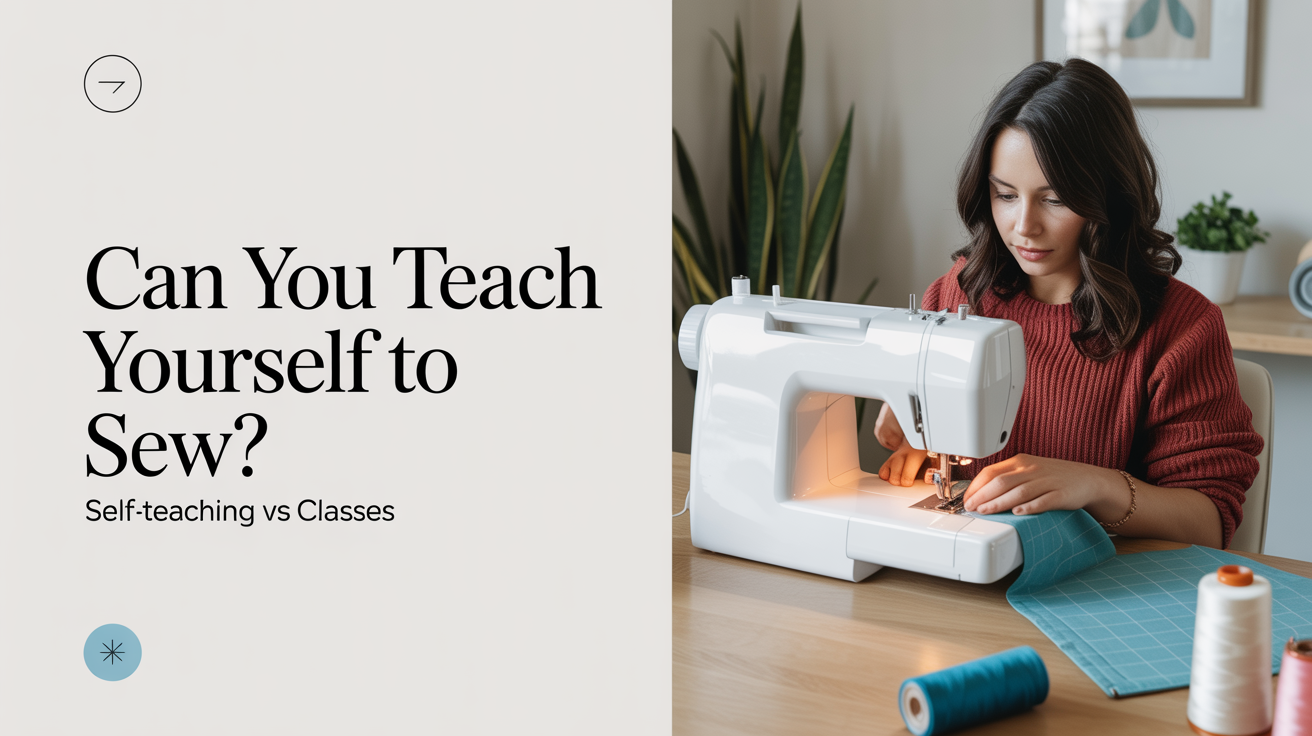
Yes, you absolutely can teach yourself to sew. Plenty of confident, capable home sewists never sat through a single formal lesson. That said, classes aren't a waste of time either. The best approach depends on how you learn, what you want to make, and how much friction you're willing to tolerate at the start.
This guide breaks down what self-teaching actually looks like, where classes add real value, and how to pick the path that will keep you at the machine long-term.
What Self-Teaching Sewing Actually Involves
Teaching yourself to sew means building skills through a combination of online tutorials, books, and trial and error on real projects. It works, but it's worth knowing upfront what you're signing up for.
What you'll be doing
Most self-taught beginners follow a pattern like this: pick a small project, watch or read about the technique it requires, try it, fix what went wrong, and move on. Progress comes from finishing things rather than drilling isolated skills.
The sticking points tend to be the same for everyone:
- Threading a machine and getting the tension right
- Understanding seam allowances and why ignoring them causes problems
- Reading a pattern without someone to ask questions
None of these are insurmountable. A good beginner's roadmap can walk you through the first few hurdles in a logical order, which helps a lot when you're working alone.
The tools you need to start
You don't need much. A sewing machine in working order, a handful of basic supplies, and a project you care about finishing. A beginner sewing kit covers the essentials without the clutter. Resist buying specialty tools until a specific project asks for them.
The honest downsides
Self-teaching can be slow. You'll run into problems and spend time diagnosing them rather than sewing. Sometimes you'll reinforce a bad habit before you realize it's a habit at all, like holding fabric while it feeds through the machine or skipping pins. These aren't permanent, but they take more effort to unlearn than to avoid.
What Classes Actually Teach You
A structured class, in-person or live online, isn't just a faster way to learn the same things. It offers a few specific things that are genuinely hard to get on your own.
Immediate correction
An instructor can watch your hands and tell you, in real time, that you're guiding fabric too tightly or sitting at an angle that strains your neck. Video tutorials can't do that. Books can't do that. For learners who get frustrated by mystery problems, having someone in the room is worth a lot.
A set timeline
Classes create accountability. You show up, you work on the project, you finish it by a certain date. For people who struggle with self-directed learning, a class structure removes the friction of deciding what to do next.
Social context
Sewing alongside other beginners is genuinely motivating. You see that other people's seams are also crooked at first. You share tips. You borrow confidence from watching someone else figure something out.
Comparing the Two Approaches Side by Side
| Factor | Self-Teaching | Classes |
|---|---|---|
| Cost | Low (books, free videos) | Higher (tuition, materials) |
| Flexibility | Learn on your own schedule | Fixed class times |
| Feedback | Delayed (troubleshoot yourself) | Immediate from instructor |
| Pace | Set by you | Set by curriculum |
| Social support | None built in | Built in |
| Best for | Patient, self-directed learners | Learners who want structure |
Neither row is a knock against the other option. A self-taught sewist and a class-trained sewist can end up with the same skills. The difference is mostly in the experience of getting there.
Should You Start with Hand Sewing or Jump Straight to a Machine?
This question comes up a lot for beginners figuring out where to start, and it's worth addressing before you invest time in either path.
Hand sewing builds a feel for how thread, fabric, and tension interact. It's also forgiving: if something goes wrong, you can pull the thread and start over without resetting a machine. Some teachers recommend starting there for exactly this reason.
Machine sewing is where most people eventually want to be, and there's a case for going directly to it so you're building machine-specific habits from the beginning. The answer really depends on what you want to make.
A deeper comparison of hand sewing vs. machine sewing lays out the trade-offs in more detail.
A Hybrid Approach Worth Considering
Many sewists, self-taught and otherwise, land in the middle: they learn independently most of the time and take a targeted class when they hit a wall.
This works well in practice. You might teach yourself the basics through a few small projects, then take a one-day zipper workshop when you're ready to add that skill. Or you take an intro class to get comfortable with your machine, then continue on your own from there.
The hybrid approach lets you keep costs reasonable while still getting professional input on the techniques that genuinely benefit from hands-on instruction, things like adjusting fit on a garment or getting a clean buttonhole.
If you go this route, sewing stores often offer single-session workshops on specific skills. These tend to be cheaper than multi-week courses and are easy to slot in without committing to a full curriculum.
Frequently Asked Questions
Can a complete beginner really learn to sew from YouTube?
Yes. Thousands of people have. The key is choosing a channel or tutorial series that's actually aimed at beginners rather than jumping between unrelated videos. Look for content that explains why you're doing each step, not just what to do. Consistent instruction from one source beats a patchwork of clips from twenty different teachers.
Do I need sewing lessons to make my own clothes?
Not necessarily. Many self-taught sewists make garments successfully. Fitting a garment to your own body is one area where an instructor's eye can save you significant frustration, since pattern adjustments for fit involve a lot of trial and error. If garment sewing is your goal, a fitting class at some point tends to pay off.
How long does it take to learn basic sewing on your own?
Most beginners can complete a simple project, like a tote bag or a zippered pouch, within a few sessions. Getting comfortable enough to tackle garments or home dec projects with some confidence usually takes a few months of regular practice. "Regular" matters more than hours per session.
What's the biggest mistake self-taught sewists make?
Skipping the basics to get to a project faster. Threading the machine properly, pressing seams as you go, and cutting fabric on the grain all seem like housekeeping steps until you notice how much they affect the finished result. Spending an hour on those fundamentals at the start saves you hours of head-scratching later.
Are online sewing classes worth it compared to in-person?
It depends on what you're learning. Technique demonstrations translate well to video. Getting hands-on correction does not. Online classes are a reasonable option if no local classes exist or if the schedule works better for you. For machine-specific troubleshooting or fitting, in-person is still the more useful format when you can access it.