The Beginner Sewing Kit: What You Actually Need to Start
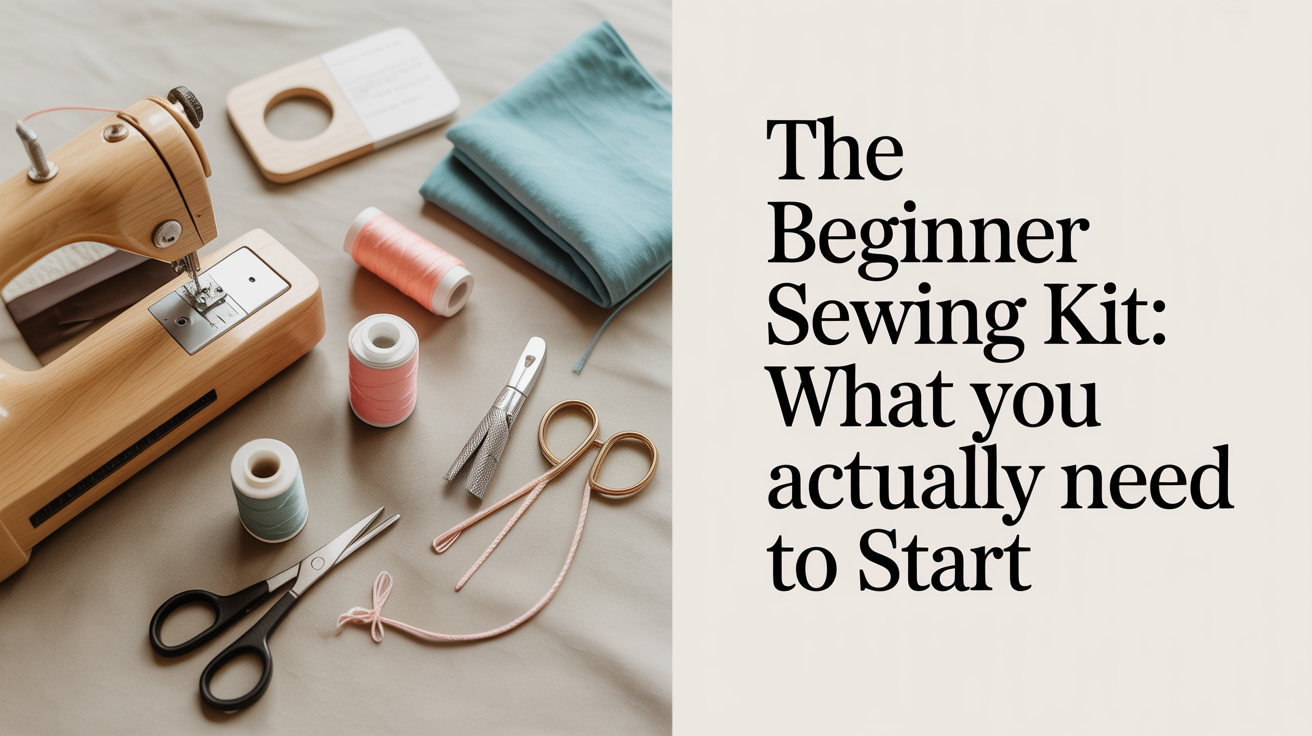
Starting to sew is exciting, and it is also easy to lose an afternoon in a craft store buying things you will not touch for two years. This guide cuts through that. Below is a plain list of what a new sewer actually needs on day one, what to add after a few projects, and what is firmly in the "later, maybe" pile. Every item here does a real job.
Before you buy anything, it helps to know where sewing fits into your life. If you want to do everything by hand, your kit looks different from someone who has a machine. Hand sewing vs machine sewing: where should a beginner start walks through both routes so you can decide before you spend money.
The core hand-sewing kit
You can start sewing today with fewer than ten items. This set covers hand stitching, basic repairs, and small projects like hemming or making a simple pouch.
Needles
Buy a pack of assorted sharps, size 5 to 10. Sharps are the straight, general-purpose needles used for most hand sewing. Smaller numbers mean bigger needles, which sounds backwards but quickly becomes second nature. A pack of 50 mixed needles costs almost nothing and means you will always have a fresh one when you bend or lose one (and you will).
Avoid embroidery needles and tapestry needles for now. They are designed for specific tasks and will frustrate you on ordinary fabric.
Thread
Start with 100% polyester all-purpose thread in black, white, and a mid-grey. Those three colors cover most repairs and beginner projects. Later you can match thread to fabric, but for learning, neutral colors mean you can always see your stitches clearly.
Buy good thread. Cheap thread snaps constantly and shreds inside a machine. Gutermann and Coats & Clark are widely available and reliable. A small spool (about 100 m / 110 yards) is enough for several projects.
Scissors
You need two pairs, and this is worth spending a little money on.
- Fabric scissors: A 8-inch (20 cm) dressmaker's shear with a bent handle. The bent handle lets the blade lie flat on the fabric while you cut, which gives a cleaner line. Buy decent ones and never, ever use them on paper. Cutting paper dulls the blade faster than anything. Write "FABRIC ONLY" on the handle with a marker if you share a household with people who might grab them.
- Small thread scissors or snips: A pair of 4-inch (10 cm) scissors or embroidery snips for clipping thread ends and trimming close. These live near your hand while you sew.
Pins and a pincushion
Steel dressmaker's pins, 1-3/8 inch (3.5 cm), are the standard. Buy 100 and use a pincushion or a small magnetic dish to hold them. Pins on a flat surface get knocked to the floor and then found by bare feet, so keep them contained.
Glass-head pins are easier to spot in fabric. Plastic-head pins work fine but melt under a hot iron, which is an unpleasant discovery. If you plan to iron over your pinned fabric, go glass-head.
A seam ripper
Every sewing teacher will tell you this is your most-used tool, and they are right. A seam ripper has a small hooked blade that slides under a stitch and pops it open. You will use it often, not because you are bad at sewing, but because everyone adjusts seams. Get one with a red ball at the tip (the ball protects fabric when you push it along a seam) and replace it when it stops cutting cleanly, which costs about a dollar.
A tape measure
A flexible dressmaker's tape measure, 60 inches (150 cm) long. Cloth tape, not the rigid metal kind from the toolbox. You will wrap it around your wrist, around a sleeve, around a cushion form, and a rigid tape cannot do that.
A fabric marker or tailor's chalk
You need to mark cutting lines and stitch guides on fabric before you cut or sew. Options:
- Tailor's chalk: A flat wedge of chalk that brushes off when you are done. Works well on most fabrics and costs almost nothing.
- Water-erasable fabric marker (blue): Marks wash out with a damp cloth or in the laundry. Precise and easy to see.
- Heat-erasable fabric pen (purple): Marks disappear with a warm iron. Convenient but not suitable for fabrics that cannot be ironed, and marks can reappear in the cold.
Any one of these works. Chalk is the cheapest starting point.
What you need if you are using a sewing machine
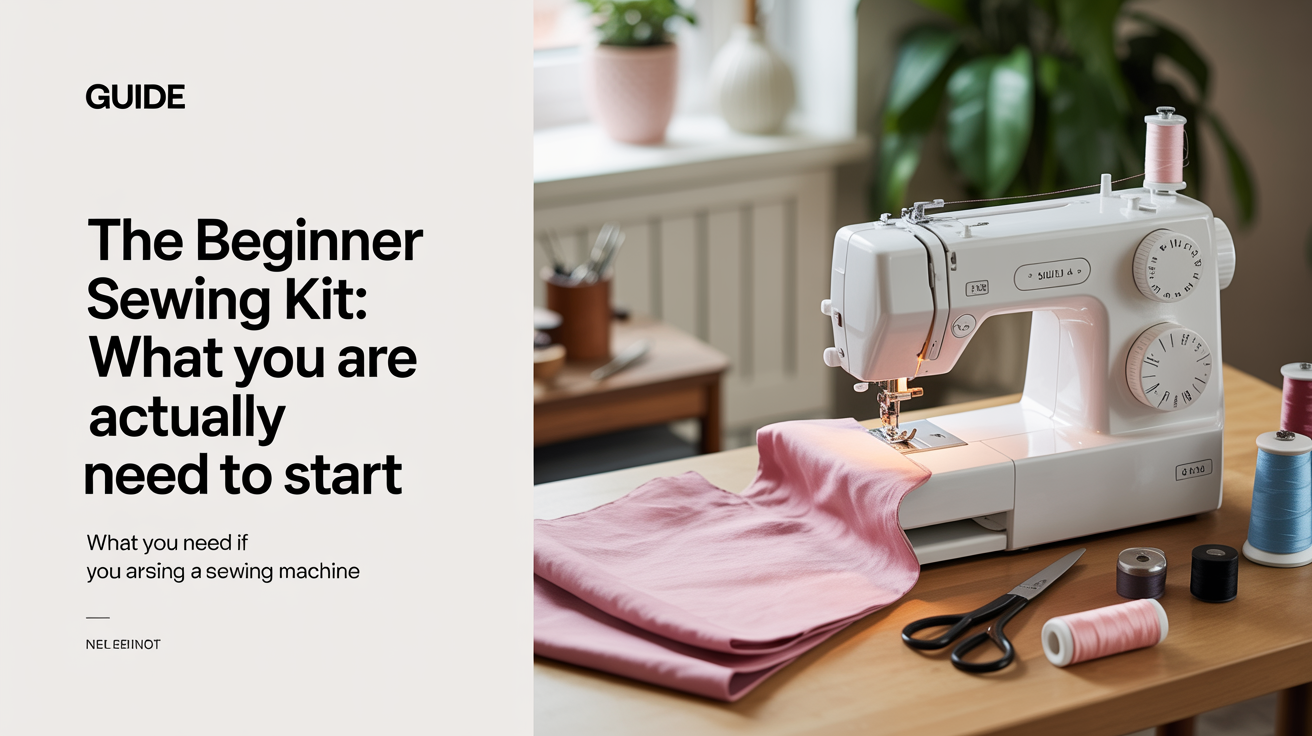
A machine opens up much faster construction and more durable seams. Your basic sewing kit stays the same, but a few extra items matter.
Extra bobbins and a spare needle
Wind two or three extra bobbins with your common thread colors so you are not stopping mid-project to wind more. Bobbin sizes vary by machine model, so check your manual or the machine's case.
Your machine comes with a needle in it, but needles are consumables. A bent or dull needle skips stitches, pulls fabric, or snaps, often at an inconvenient moment. Buy a pack of universal needles (size 80/12 or 90/14 for most beginner fabrics) and swap in a fresh one every few projects or whenever you hear that distinctive "thunk" sound on each stitch.
Sewing machine needles are different from hand-sewing needles. The eye is at the pointed end, and they fit into the machine's needle clamp. Always turn the machine off before changing a needle.
A small iron and pressing surface
A lot of new sewers underestimate pressing, but ironing seams as you go is what separates a finished-looking project from a lumpy one. You do not need a full-size ironing board. A small sleeve board (about 50 x 15 cm / 20 x 6 inches) or even a firm rolled towel on a table works for most beginner projects.
Your home iron works fine. Set it to the temperature the fabric requires and test it on a scrap piece first, because a too-hot iron melts synthetic fabric and leaves a permanent shiny mark. Steam helps seams lie flat, but check whether your fabric can handle moisture before you press.
Seam gauge
A seam gauge is a 6-inch (15 cm) metal ruler with a sliding red marker. You set the marker to your seam allowance (commonly 5/8 inch or 1.5 cm for most patterns) and use it to measure consistently from the fabric edge. It sounds like a minor tool but it makes seams accurate without measuring each time. A basic one costs about two dollars and fits in a pocket.
A practical kit list at a glance
| Item | Why you need it | Approximate cost |
|---|---|---|
| Assorted sharps (needles) | All hand sewing | $2-4 for 50 |
| All-purpose thread (3 colors) | Every project | $3-5 per spool |
| 8-inch fabric scissors | Cutting fabric | $15-30 |
| Small thread snips | Clipping ends | $5-10 |
| Dressmaker's pins (100) | Holding pieces together | $3-6 |
| Pincushion or magnetic dish | Keeping pins safe | $3-8 |
| Seam ripper | Fixing mistakes | $2-5 |
| Tape measure | Measuring | $2-4 |
| Tailor's chalk or fabric marker | Marking | $2-6 |
| Extra bobbins (3-4) | Machine sewing | $4-8 |
| Universal machine needles | Machine sewing | $3-6 |
| Small iron and pressing pad | Pressing seams | Varies |
| Seam gauge | Consistent seam allowances | $2-4 |
A hand-sewing starter kit runs roughly $30-50 if you buy the basics above. A machine-ready kit adds another $15-20 in consumables (needles, bobbins, seam gauge).
What to skip for now
Some tools appear on "beginner kit" lists but genuinely wait until you have a few projects behind you.
Rotary cutters and cutting mats are efficient for cutting multiple layers or quilting, but they require practice to use safely (the blade stays sharp and retracts only when you consciously engage the guard). Your fabric scissors will serve you well for the first dozen projects.
A dress form is useful for garment fitting but costs $80-300 and takes up real space. Wait until you are consistently making garments and finding the fitting process important.
Specialty presser feet for your machine, like a zipper foot, ruffler, or blind hem foot, each serve one job. Most machines come with a zipper foot, which is the first specialty foot worth knowing. The others wait until you need them.
An overlocker (serger) finishes raw edges beautifully and is very fast, but it is a second machine, runs $150-400+, needs its own thread setup (four spools at once), and is not a beginner priority. Pinking shears or a simple zigzag stitch on your sewing machine do the same job while you are learning.
Setting up a space and building from here
You do not need a dedicated sewing room. A kitchen table, good light, and a chair at a comfortable height are enough. How to set up a small sewing space at home has specific ideas for making a shared space work.
Once you have your tools sorted, the next step is understanding the path ahead. How to start sewing: a complete beginner's roadmap outlines a sensible order for learning skills so early projects build on each other rather than jumping ahead too fast.
Sharp tools, a hot iron, and pins all deserve attention. Keep them away from children, cap needles and pins when not in use, and treat the seam ripper with the same respect as any other small blade. Good habits in the first week stick for years.
Frequently asked questions
Do I need a sewing machine to start sewing?
No. Many beginners start with hand sewing and pick up a machine later once they know they enjoy the craft. A machine is faster for straight seams and construction, but for small repairs, hemming, or simple crafts, your hands and a needle are enough.
What fabric should I practice on first?
Quilting cotton or calico (unbleached cotton muslin) is the standard recommendation. Both are inexpensive, easy to cut cleanly, press well, and feed through a sewing machine without stretching or slipping. Avoid stretchy knits, slippery satin, or sheer fabrics until you have the basics down.
How do I know if my scissors are good enough?
Test them by cutting a single layer of cotton fabric in one smooth stroke. Good scissors cut cleanly without dragging or chewing the edge. If the fabric folds into the blades or you hear tearing, the scissors are either dull or too cheap. Sharpening fabric scissors is possible and worth doing once they start to dull.
Can I use regular household scissors for fabric?
You can, but the results will show it. Household scissors are rarely sharp enough for clean cuts, and the shape makes it harder to cut flat. Ragged cut edges lead to fraying and uneven seams. A decent pair of fabric scissors is one of the few places in a beginner kit where the investment pays off immediately.
How often should I replace sewing machine needles?
As a starting point, change the needle every 8-10 hours of sewing time, or sooner if you hear a thumping sound with each stitch, notice skipped stitches, or the needle has hit a pin. Needles are inexpensive enough that replacing them early costs much less than unpicking a ruined seam.