How to Set Up a Small Sewing Space at Home
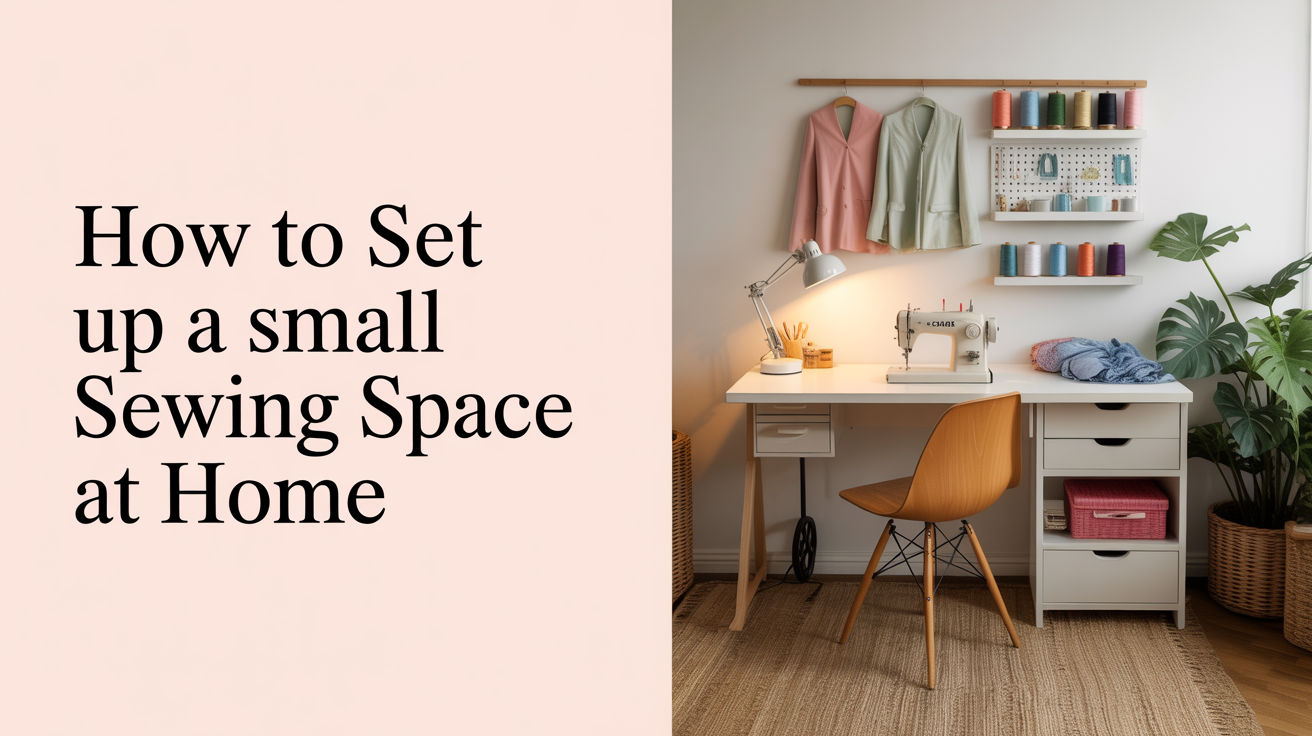
You don't need a dedicated room or a Pinterest-perfect studio to start sewing. A corner of a bedroom, one end of a dining table, or a section of a spare room all work fine. What matters is that your space is consistent, organized, and safe to use. This guide walks you through setting one up from scratch, even if you're working with very little room.
Choosing the right spot in your home
The single most important thing is good light. Natural light from a window is ideal, but a bright overhead light or a dedicated desk lamp placed slightly to the left of your machine (or the right, if you're left-handed) makes a real difference. Threading a needle in poor light is genuinely frustrating, and it's easy to sew crooked when you can't see where your needle meets the fabric.
After light, think about these things:
- Surface height. A table that sits at roughly your elbow height when you're seated lets your arms rest naturally. Standard dining tables (about 30 inches or 76 cm) are usually fine.
- Proximity to an outlet. Your sewing machine and iron both need power. Extension cords trailing across the floor are a trip hazard. Position your space near a wall socket if you can.
- A firm, flat floor. Thick carpet can make a sewing chair feel unstable. A hard floor or a low-pile rug is safer and easier to clean when you drop pins.
- Distance from curious pets and children. Needles, pins, scissors, and a hot iron are all genuine hazards. A closed door or a high surface helps.
If you're working in a shared space like a dining room, a folding table you can put away after each session works well. The key is that you can return to the same setup each time rather than unpacking everything from scratch.
What furniture you actually need
You need far less than most sewing room mood boards suggest. Here's a realistic starter list:
| Item | What to look for |
|---|---|
| Sewing table or desk | Sturdy, flat, at least 24 x 36 inches (60 x 90 cm); leave room to the right of your machine for fabric to feed through |
| Chair | Adjustable height, supportive back; avoid very soft chairs that let you slump |
| Ironing board or pressing mat | A full-size ironing board takes up room; a tabletop pressing mat works for small pieces |
| Storage for notions | A small rolling cart, a drawer unit, or even a handled box that you can bring to your table |
| Good lamp | Daylight-spectrum bulbs (around 5000K) reduce eye strain compared to warm-toned bulbs |
If you're just starting out, don't buy everything at once. Begin with a solid table and a decent chair, and add storage as you figure out what you actually need. Plenty of beginners work for months from a kitchen table with their supplies in a single bag.
Organizing your tools and notions
The goal is to always know where things are so you don't waste time hunting. A few basic habits make this much easier.
Keep your frequently used tools within arm's reach of your machine. A small pot or cup for scissors and seam rippers, a pincushion right on the table surface, and your current thread and bobbins in a shallow dish or tray is enough for a simple sewing session.
For everything else, group by category:
- Thread: Spools stored upright on a rack or in a box together; keep colors loosely sorted so you can find a match quickly.
- Fabric: Folded neatly on a shelf or in a basket. Even a small collection gets tangled fast if you just pile it.
- Patterns: Flat or rolled in a tube, not crumpled. Paper patterns tear easily. If you're using printed PDF patterns, keep them in labeled folders.
- Hand-sewing supplies: Needles in their original packets (loose needles are genuinely dangerous), thimble, hand-sewing thread.
A dropped pin on a hard floor is easy to miss, and bare feet are not your friend around a sewing space. Keep a small magnet or a magnetic pin dish on your table and sweep the floor around your workspace at the end of every session.
Setting up your sewing machine safely
Before your first session in a new space, give yourself time to position the machine properly rather than just plonking it wherever fits. The feed dogs (the little metal teeth that move your fabric forward) sit in the center of your needle plate. You want enough table space to the left of the machine for fabric to lay flat as you guide it, and enough to the right for the fabric to come out the other side without bunching up or pulling. For most home projects this means at least 12 inches (30 cm) of clear space on each side.
Check your machine is on a stable surface. A wobbling machine is harder to control and can cause uneven stitches. If your table surface is slippery, a non-slip mat under the machine helps considerably.
Thread your machine in good light before you start sewing and test your stitch settings on a scrap of the fabric you plan to use. Stitch length and tension that work on quilting cotton may need adjusting for linen or a stretch fabric, so always test first rather than starting on your actual project. This is a habit that will save you a lot of unpicking later.
If you're still figuring out your machine setup, the guide on hand sewing vs machine sewing is worth reading before you commit to a machine-heavy workspace.
Making a small space work efficiently
Tight spaces reward a clean-as-you-go approach more than large studios do. A few strategies that help:
Cut at a different time than you sew. Cutting fabric spreads mess across a large area and produces small clippings everywhere. If your cutting table is also your sewing table, clear and wipe down between the two tasks.
Press as you go. Keep your iron or pressing mat within easy reach so you can press seams as you finish them. Cold-pressed seams are harder to work with and show more on finished pieces. Just be careful with a hot iron near loose fabric and thread ends, and always place it flat on its rest between uses rather than on the fabric.
Use a small project box or tray. Keep everything for your current project in one container, separate from your general notions storage. This makes it easy to put everything away mid-project and come back to it without losing your place.
For more on which tools you actually need to buy before you start, see the beginner sewing kit for a practical, no-fluff list.
Frequently asked questions
Do I need a dedicated room to sew at home?
No. Many experienced sewers work from a corner of a bedroom, a kitchen table, or a folding table they set up and put away. What helps most is consistency, good light, and having your tools organized so you can get started quickly each time.
What size table is good for a sewing machine?
A table at least 24 inches (60 cm) deep and 36 inches (90 cm) wide gives you enough room for the machine and some working space on either side. Bigger is better if you have it, since larger pieces of fabric need somewhere to go as they feed through.
How do I keep my sewing space safe?
Store needles and pins in a pincushion or case rather than loose on the table. Keep scissors in a pouch or on a holder rather than buried under fabric. Let your iron cool before storing it, and never leave it face-down on fabric. If you have children or pets, store sharp tools in a closed drawer or cabinet when not in use.
What's the best lighting for sewing?
Daylight or a daylight-spectrum bulb (around 5000K) is easiest on your eyes, especially for detailed work like threading needles or matching patterns. A lamp positioned slightly to the side of your work rather than directly above cuts glare on the fabric surface.
Can I sew in a bedroom?
Yes. A bedroom corner is one of the most common beginner sewing setups. The main things to watch are ventilation if you iron a lot, a firm floor surface if possible, and keeping sharp tools away from any children who share the space. A rolling cart you can tuck into a closet between sessions is a useful solution for keeping the room tidy.
If you're ready to take the next step, the complete beginner's roadmap to starting sewing covers what to learn first, in what order, so you're not guessing where to begin.