Hand Sewing vs Machine Sewing: Where Should a Beginner Start?
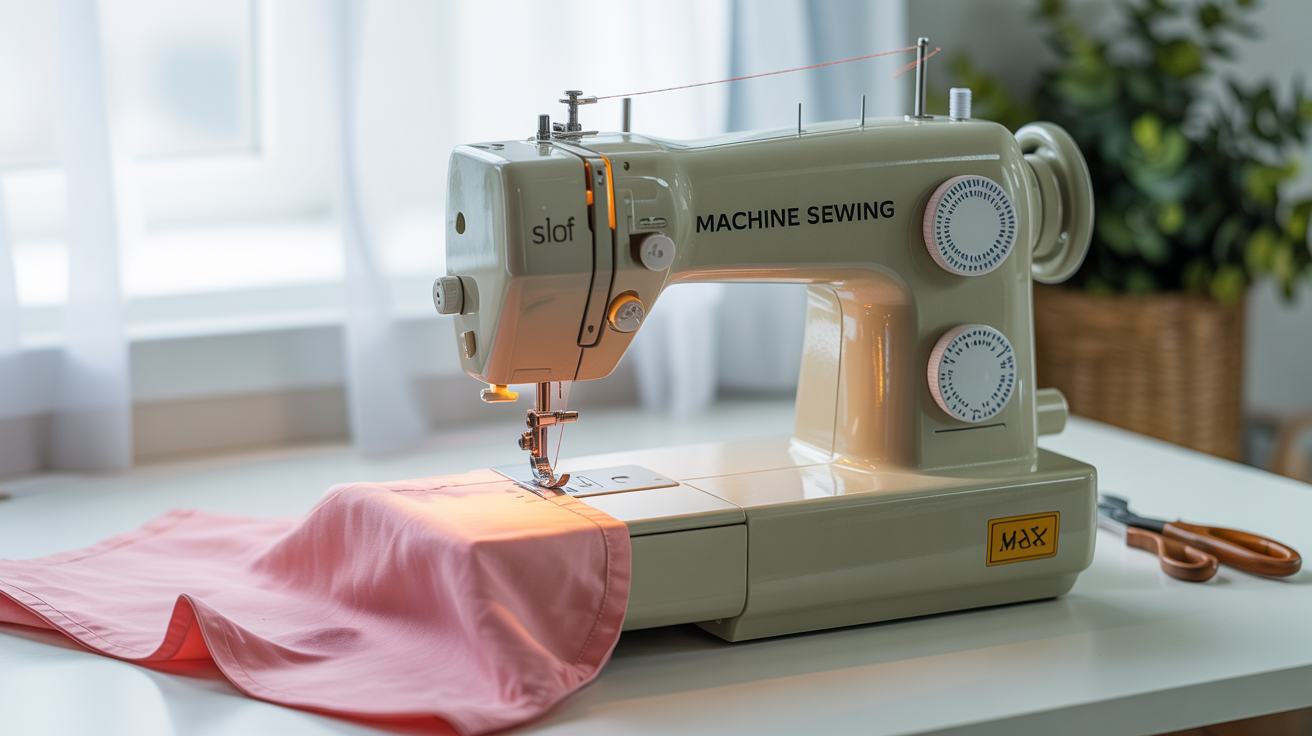
If you've decided to learn to sew but aren't sure whether to pick up a needle and thread or sit down at a machine, you're not alone. It's one of the first questions new sewists ask, and the honest answer is: both methods are worth knowing, but they're suited to different tasks. Where you start depends on what you want to make, how much space and money you have, and how you prefer to learn.
This guide walks you through what each method actually involves, where each one shines, and how to decide what makes sense for you right now.
What hand sewing and machine sewing actually involve
Hand sewing means guiding a needle threaded with a single length of thread through fabric, stitch by stitch. You control everything: the tension, the spacing, the direction. It's quiet, portable, and needs almost nothing in the way of equipment. A few needles, a spool of thread, a pair of scissors, and a thimble if you find your fingertip gets sore.
Machine sewing uses two threads (one on the top, one wound onto a small bobbin underneath) that interlock inside the fabric to create a lockstitch. A domestic sewing machine lets you sew straight lines quickly and consistently, and most machines can also do zigzag and a few other utility stitches. There's a learning curve in setting up the machine, threading it correctly, and keeping your lines straight, but once those skills click, you can sew things far faster than you ever could by hand.
Neither method replaces the other. Most experienced sewists use both.
Where hand sewing does the job better
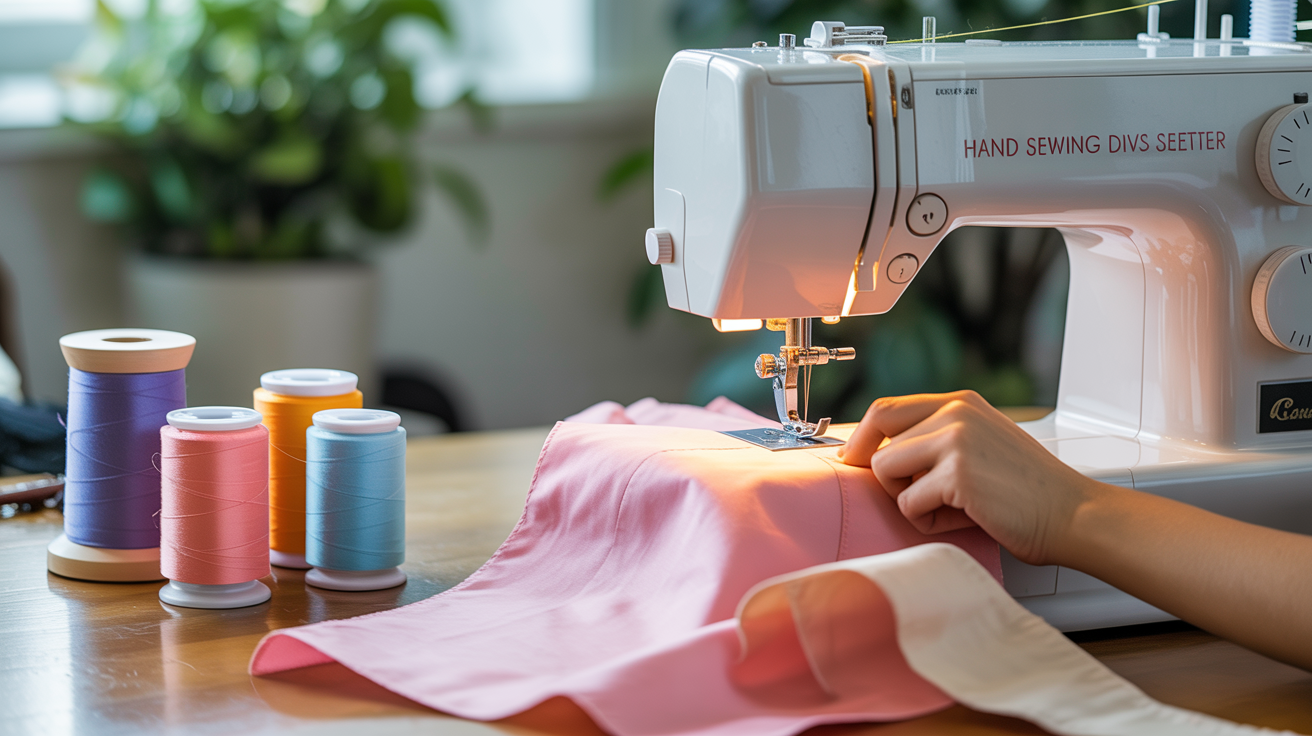
Hand sewing is not just a fallback for when you don't have a machine. There are things it genuinely does better.
- Repairs and alterations. Replacing a button, catching a fallen hem, or closing a small seam that has split open is faster to do by hand than to drag out a machine and thread it up. Invisible stitches like the slip stitch and the ladder stitch are also impossible to replicate by machine.
- Delicate or fiddly fabric. Very fine silk, organza, or fabric with beading often fares better with the gentle control of a hand needle rather than being fed under a presser foot.
- Attaching findings. Hooks and bars, snap fasteners, and bar tacks all typically get sewn on by hand.
- Embroidery and decorative stitching. If you want to add a simple running-stitch border or some basic embroidery to a project, that's hand-work territory.
- Sewing on the go. You can hand sew on a train, at the kitchen table, or in a small flat with no dedicated space. The only tool that needs storage is a small kit.
If you want to start with the very basics before investing in any equipment, hand sewing is genuinely a good first port of call. It teaches you how thread behaves, how to control tension, and how fabric responds to a needle, all of which make you a better machine sewist later.
Where machine sewing is worth the setup
A sewing machine earns its place the moment you want to sew anything with long straight seams: a tote bag, a pillowcase, a simple skirt, curtains. Hand-sewing a 60 cm (about 24 inch) side seam in a pair of trousers would take a very long time and would almost certainly produce an inconsistent stitch that wouldn't hold well under daily wear.
Here's where a machine pulls ahead:
- Speed. A basic domestic machine running at a moderate pace sews roughly 400 to 800 stitches per minute. A patient hand sewist manages around 20 to 30 stitches per minute, which gives you some idea of the difference.
- Seam strength and consistency. A machine lockstitch, with balanced tension, is very hard to pull apart. It's consistent in length across the whole seam, which matters for durability.
- Topstitching. That visible line of stitching along the edge of a collar or a pocket is done by machine and gives finished garments their crisp, professional look.
- Most garment construction. Shirts, dresses, trousers, jackets and the vast majority of home furnishing projects are sewn primarily by machine.
Is hand sewing as strong as machine sewing?
This comes up often, and the short answer is: not for long structural seams. A machine lockstitch is stronger than most hand stitches for seams that will be washed repeatedly or take stress, because the two-thread interlock is more secure than a single thread passing through the fabric.
The exception is certain hand stitches used for specific jobs. A well-executed backstitch, for instance, is the strongest hand stitch and can hold a seam reasonably well. But for a centre back seam on a pair of jeans or a shoulder seam on a coat, you really want a machine.
Where hand sewing holds its own is in applications where the stitch isn't taking stress in the same way. A slip stitch closing the turning gap in a cushion cover or a fell stitch attaching a lining is perfectly strong for its purpose, even though you couldn't take a structural seam that far.
| Stitch type | Method | Best use | Relative strength |
|---|---|---|---|
| Lockstitch | Machine | Long seams, garment construction | Very high |
| Backstitch | Hand | Repairs, short seams, sewing by feel | Good |
| Running stitch | Hand | Gathering, basting, embroidery | Low for stress seams |
| Slip stitch | Hand | Invisible hems, closing openings | Good for its purpose |
| Zigzag | Machine | Finishing raw edges, stretch fabric | High |
Should you learn hand sewing before using a machine?
There's no single right answer, but some of the most competent sewists suggest that spending even a week or two on hand sewing first isn't wasted time. Here's why.
When you sew by hand, you watch each stitch form. You feel when tension is too tight (the fabric puckers) or too loose (the thread lies limp on the surface). You notice when your needle goes in at an angle rather than straight through. This awareness doesn't disappear when you switch to a machine.
That said, if your goal is to make clothes and you're practical about wanting results quickly, there's nothing wrong with starting on a machine. Thread up with a forgiving fabric like quilting cotton or calico (avoid stretchy jersey or slippery satin until you're comfortable), sew some straight lines, then practice curves. If you need to hand-sew something later, such as buttons or a hem, those are simple enough to pick up as you go.
What you do want before touching a machine is some basic understanding of your equipment. Knowing what you need to get started, and what you can skip for now, saves money and frustration. Our beginner sewing kit guide covers exactly that.
Getting set up for either method
Whether you start by hand or by machine, a few practical points apply to both.
- Work in good light. Threading a needle or seeing your stitch line on dark fabric in a dim corner is harder than it sounds, and eye strain sets in faster than you'd expect.
- Keep sharp tools separate from dull ones. A blunt hand needle drags through fabric instead of piercing cleanly. A dull pair of scissors crushes the thread at the cut point rather than slicing it. Both are more likely to lead to poked fingers, so replace them when they stop performing well.
- Test your settings or technique on scrap fabric first. If you're adjusting a machine's stitch length or tension, sew a test seam on the same fabric you'll be using before touching your actual project. If you're trying a new hand stitch, try it on a leftover piece. Fabric is forgiving if you let yourself practice.
- Use the right thread for the job. A 100% polyester all-purpose thread works for most beginner projects on cotton or linen. Don't use the cheapest thread you can find; it breaks easily and leaves lint in the machine.
If you're working out where to keep your supplies and set up a comfortable space, take a look at how to set up a small sewing space at home for some practical ideas that don't require a dedicated room.
Frequently asked questions
Can I learn to sew without a machine?
Yes, completely. Many traditional techniques, including garment making in parts of the world where hand stitching is standard, involve no machine at all. For most modern sewists in the UK or US, a machine becomes useful once you want to sew larger projects efficiently, but there's nothing you absolutely must have a machine for at the start. Buttons, hems, small repairs, embroidery, and even simple pouches or pincushions can all be sewn by hand.
How long does it take to learn hand sewing?
Basic stitches like the running stitch and backstitch can be picked up in an afternoon. Getting tidy, even stitches with consistent spacing takes a bit more practice, but most people feel comfortable after a few hours of deliberate practice over a week or so. The harder skills, like an invisible slip stitch or a neat blanket stitch, take longer but aren't necessary at the beginning.
What's the best first project for a beginner?
For hand sewing: a fabric bookmark, a simple pouch, or replacing a button. For machine sewing: a pillowcase (one of the most satisfying quick wins) or a tote bag. Both give you straight lines, manageable amounts of fabric, and something genuinely useful at the end.
Do I need to learn hand sewing if I have a machine?
Not in depth, but a handful of hand stitches will come in handy regardless of how much you machine-sew. Knowing how to sew on a button, do a slip stitch, and put in a basic hem stitch by hand means you can handle repairs and finishing tasks that a machine can't easily reach. It also means you're not stopped when your machine needs a service.
Is machine sewing hard to learn?
The very first time you sit down to thread a machine and load a bobbin, it can feel overwhelming. After a few sessions, the process becomes routine. Most beginners find that the hardest part is not the machine itself but keeping a consistent seam allowance (the distance from the edge of the fabric to the stitch line, usually 1.5 cm or 5/8 inch for garment sewing) while moving the fabric at a steady pace. Using the seam guide markings on your machine's needle plate helps with this immediately.