How to Start Sewing: A Complete Beginner's Roadmap
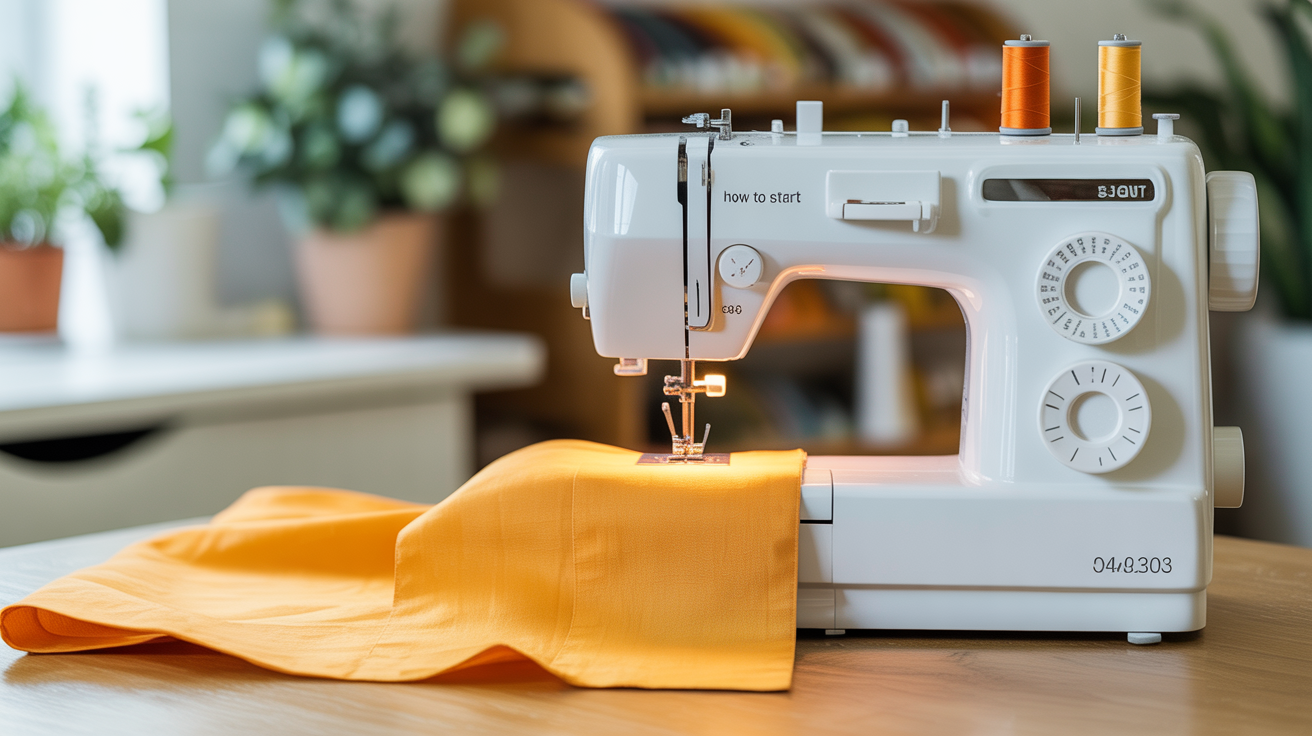
Sewing is one of those skills that looks complicated until the moment it suddenly isn't. You sit down at a machine, thread the needle, press the foot pedal, and watch two pieces of fabric join into something real. That first seam, even if it wobbles, is genuinely exciting. This roadmap will take you from "no idea where to begin" to finishing your first project, with honest advice about what actually matters for a beginner.
What you need to get started
Before touching a machine, it helps to understand the short list of things you actually need versus the long list of things that look appealing in a shop.
The non-negotiables for a first project are a machine in working order, good scissors (not kitchen scissors), pins, a seam ripper, and thread in a neutral color like cream, grey, or navy. A tape measure and fabric marker round out the basics. If you want more detail on building out your kit, the guide on the beginner sewing kit walks through each item and what to look for.
Choosing your first machine
You do not need an expensive machine. A basic mechanical machine, the kind with a dial for stitch selection and a simple tension adjustment, is ideal for learning because every setting is visible and tangible. Electronic machines with touchscreens are convenient later, but when you're still figuring out why your thread is bunching underneath the fabric, fewer menus is better.
Look for a machine that:
- Has a free arm (a removable section that exposes a narrow cylinder, useful for sleeves and cuffs)
- Comes with at least a basic zigzag stitch in addition to straight stitch
- Has an automatic needle threader or at least a threader tool in the box
- Has reviews that mention good customer service, because beginners will have questions
If you're borrowing a machine from a family member, check that it runs smoothly and that you can get the manual online. An older machine in good condition beats a cheap new one with poor tension.
Fabric choices for your first project
Quilting cotton is the best fabric to learn on. It's woven tightly, so it doesn't stretch out of shape while you're handling it, it presses flat beautifully with an iron, it comes in hundreds of prints and solid colors, and it's inexpensive enough that you won't feel nervous cutting into it. Calico, the plain undyed version, is even cheaper and perfect for practice runs.
Avoid knit fabrics (jersey, ribbing, stretch cotton) until you're comfortable with a straight seam. Knits move under the presser foot, require a stretch stitch or a walking foot, and will frustrate a beginner quickly. Silk, velvet, and loosely woven linen are also better saved for later.
Understanding the machine before you sew
Sitting down at a machine without reading anything first is a reliable way to end up with a bird's nest of thread underneath your fabric and no idea what went wrong. Spend twenty minutes with the manual before you make a single stitch.
The three things to understand before your first seam:
Threading the machine correctly. Most thread tension problems come from a threading error, not from the tension dial. Follow the numbered thread path in your manual exactly, including the take-up lever, which is the moving hook near the top that goes up and down with the needle.
Winding and inserting the bobbin. The bobbin supplies thread from below, and the way it sits in its case affects how stitches form. Wind it evenly, insert it in the correct orientation (your manual will show which way the thread pulls off), and draw the bobbin thread up through the needle plate before you start.
Testing on scrap first. Before you cut into any fabric you care about, stitch a 15 cm (6 in) test seam on a folded piece of the same fabric. Check that the stitch looks even on both sides. If the top thread is pulling loops to the back, try re-threading. If the bobbin thread is pulling up, adjust the upper tension slightly. Always test on scrap.
Basic skills to practice before your first project
A project goes much better when you've practiced the component skills in isolation. These are worth spending a session on before you commit to sewing anything finished.
| Skill | What to practice on | Signs you've got it |
|---|---|---|
| Straight seam | Two 25 cm (10 in) strips of quilting cotton | Even stitch length, consistent 1.5 cm (5/8 in) margin |
| Pivoting at corners | A simple fabric square, sewing around all four corners | Corners meet neatly when turned right side out |
| Backstitching | Any seam | 3-4 stitches back at start and end, thread doesn't pull out |
| Pressing seams | Any sewn piece | Seam lays flat, no puckers, no scorching |
| Ripping a seam | Any seam you've sewn | Stitches removed cleanly without tearing fabric |
The seam ripper is not a sign of failure. Every experienced sewer uses one constantly. Getting fast with a seam ripper is a genuine skill.
On pressing: the iron is what makes home sewing look professional. Press every seam open or to one side before you join it to another piece. A 20-second press takes a seam from lumpy to flat, and that difference shows in every finished project. The iron will be hot, so set your project down on a stable ironing board or pad, keep the cord out of your way, and don't leave a steam iron face-down on fabric.
Deciding between hand sewing and machine sewing
Some beginners start with hand sewing, either because they don't have a machine yet or because they want to understand stitches before mechanizing them. Both paths work. If you're weighing the options, the article on hand sewing vs machine sewing covers the tradeoffs honestly, including what hand sewing teaches you that machine work doesn't.
The short version: hand sewing is slower and harder to make even, but it gives you total control and requires no setup. A machine produces strong, consistent seams much faster, which matters when you want to finish something. Most sewers use both, depending on the task.
Your first project: a simple tote bag or pillowcase
The best first project is one that uses straight seams, doesn't require fitting to a body, and produces something useful. A flat tote bag or a simple pillowcase meets all three criteria.
A basic tote bag requires:
- Two rectangles of quilting cotton, roughly 38 x 42 cm (15 x 16.5 in)
- Two strips for handles, roughly 10 x 60 cm (4 x 24 in) each
- Matching thread
- About two hours the first time
You sew the two main pieces right sides together along three edges, clip the corners (cut a small triangle off each bottom corner without cutting the seam, so the corners turn out flat), turn it right side out, and attach the handles. No zippers, no curves, no buttonholes. The entire project uses straight seams and one pivot at each corner. When you're done, you have something you can actually use, which matters more than it sounds.
A pillowcase is equally good and has the advantage of a single long rectangle, so there are fewer pieces to keep track of.
Avoid pattern pieces that require cutting on the bias, gathering, setting in sleeves, or using elastic in a casing until you've made at least two or three straight-seam projects. Those skills are all learnable, but they each introduce a new variable, and it's easier to learn one thing at a time.
Setting up a space that makes sewing easier
Sewing works best when your machine is at a comfortable height, your light is good enough that you can see the needle clearly, and your tools are within reach without having to get up between steps. A proper sewing table is ideal but not essential. A sturdy dining table works, as long as the machine doesn't vibrate off it.
The bigger issue for most beginners is fabric control. When you're sewing a long seam, the fabric behind the machine needs somewhere to go. If it's hanging off the edge of the table, its weight will drag the seam sideways. Set up so the fabric behind the needle is supported, whether by a wider table or by a folding table placed behind your main surface.
Pins go in a pincushion or a magnetic dish, not loose on the table where they slide onto the floor and become a hazard. Scissors live in one place and don't get used for paper, which dulls the blades quickly. If there are children in the house, needles and pins need to go back into a closed container when you step away. These aren't dramatic safety rules; they're just practical habits that become automatic after a few sessions.
For more ideas on arranging a workable space in a small home, the post on how to set up a small sewing space at home has specific suggestions for limited square footage.
Frequently asked questions
How long does it take to learn to sew?
Most beginners can finish a simple project like a tote bag or pillowcase in their first or second session. Feeling comfortable with the machine and understanding what causes common problems takes about five to ten hours of practice spread across a few weeks. Advanced skills like fitting garments or working with slippery fabrics take months of regular practice, but you don't need to wait for those to start making useful things.
Do I need to learn to read a pattern?
Not right away. Many excellent beginner projects use simple measurements rather than pattern pieces. Rectangles and squares are cut with a ruler and marker, which is often faster and less intimidating than tracing and cutting pattern tissue. When you're ready to move into garment sewing, printed or digital patterns become more important, and they're worth learning then.
Why does my thread keep breaking or bunching?
The two most common causes are incorrect threading and the wrong needle. Re-thread the machine completely, including the bobbin, following your manual exactly. Then check that you're using a needle sized for your fabric. A standard 80/12 needle works well for quilting cotton. If the needle is bent or has been in the machine for more than a few projects, replace it. A new needle costs almost nothing and fixes more problems than most beginners expect.
Can I learn to sew without taking a class?
Yes. Plenty of people learn entirely from online videos, books, and practice. The main thing a class adds is immediate feedback when something goes wrong, which speeds up the troubleshooting part. If you're self-teaching, find a reliable source for answers to your questions, whether that's a sewing forum, a YouTube channel you trust, or a local fabric shop with staff who don't mind questions.
What fabric should I absolutely avoid as a beginner?
Stretch knits, sheer fabrics like chiffon or organza, and loosely woven tweeds are genuinely difficult for beginners. They each require specific techniques or presser feet to manage well. Stick with woven fabrics, particularly quilting cotton or cotton-linen blends, until straight seams feel automatic. Once they do, you'll have the foundation to take on more demanding materials without the frustration of fighting the fabric while you're still learning the machine.