How to Hem Pants by Machine (Step by Step)
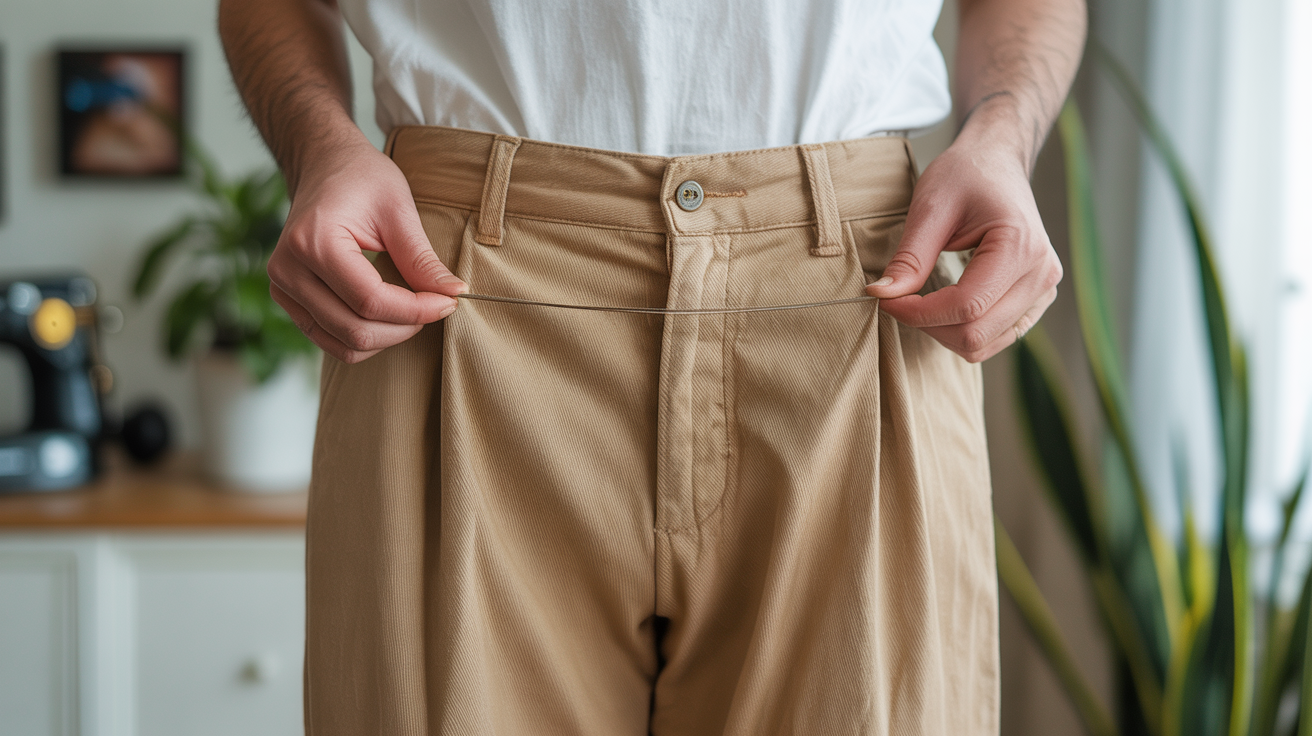
You can hem a pair of pants on a regular sewing machine in about 30 minutes, and the result looks just as clean as anything from a tailor. The process is the same whether you are shortening dress trousers or a pair of jeans: measure the new length, cut away the extra fabric, fold and press, then sew. The only real difference is the fabric weight and whether you want to preserve the original hem.
This guide walks you through both approaches. Work at whatever pace suits you, and test your machine settings on a scrap of the same fabric before touching the actual garment.
What you need before you start
Gathering everything in advance stops you having to hunt around with pins in your fingers halfway through.
- Sewing machine with a straight-stitch setting
- Thread that matches the pants (hold the spool against the fabric in daylight to check)
- Sharp fabric scissors or a rotary cutter and cutting mat
- Seam ripper (for jeans with an original hem you want to keep)
- Measuring tape and a fabric marker or tailor's chalk
- Iron and ironing board
- Pins or wonder clips
- A hem gauge or ruler (a 6 in / 15 cm one works perfectly)
If the pants have thick side seams or are made of denim, a denim needle (size 90/14 or 100/16) will stop your machine skipping stitches through the bulk.
How to measure the correct hem length
Measuring while you are wearing the pants is the only reliable way to get the length right. Skipping this step is the most common beginner mistake, and it is easy to avoid.
Step 1: put on the shoes you will wear with these pants
Hem length changes by half an inch or more depending on shoe heel height. If you plan to wear the pants with trainers, measure in trainers. Dress trousers for heeled shoes need to be measured in those heels.
Step 2: mark the new hemline
Stand naturally. Have someone place a pin horizontally across the front leg at the point where you want the finished hem to fall. A simple rule: for trousers, the front hem sits just above the top of the shoe with a slight break (about 0.5 in / 1.3 cm of fabric resting on the shoe). For casual pants or jeans, ankle-length looks clean and works for most people.
Mark the same height all the way around the leg using your chalk or marker. A hem gauge held against the leg makes this faster.
Step 3: calculate your cutting line
Most machine hems need a seam allowance of 1.5 in (3.8 cm) below the finished hemline. Write down:
- Finished hemline (your chalk mark): X
- Cutting line: X + 1.5 in (3.8 cm) below that mark
So if your pants are currently 34 in (86 cm) long and you want them at 30 in (76 cm), your cutting line is at 31.5 in (80 cm).
How to cut and prepare the fabric
Turn the pants inside out. Lay one leg flat on your cutting surface, smoothing out any wrinkles.
Mark the cutting line all the way around the leg at the measurement you calculated. Cut along this line with sharp scissors. Blunt scissors drag and distort the fabric edge, so if yours have been sitting in a drawer for two years, now is a good time to sharpen or replace them.
Finish the raw edge before you fold anything. An unfinished edge will fray inside the hem and eventually work its way loose. A zigzag stitch along the raw edge works well on most woven fabrics, and an overlocked edge is even neater. For more detail on keeping fabric edges from unraveling, see our guide on how to finish raw edges so fabric doesn't fray.
Repeat on the other leg. Always do both legs from the same chalk marks rather than using the first finished leg as a measuring template. Copying from the finished hem risks compounding small errors.
How to press and pin the hem
Pressing is not optional. A hem stitched without pressing first looks wobbly and homemade in the wrong way. The iron is what makes a hem look professional.
Fold and press the hem allowance
Turn the pants inside out if they are not already. Fold the raw edge up by 1.5 in (3.8 cm) so the wrong sides of the fabric face each other and the fold sits exactly on your chalk hemline. Press firmly along the folded edge with a hot iron set for the fabric type (check the garment care label). Hold the iron still for a few seconds rather than dragging it back and forth, which can stretch the fabric.
For a comprehensive look at how heat and technique affect fabric, the guide on how to press seams the right way and why it matters has a lot of useful detail.
Pin the fold in place
Place pins perpendicular to the fold every 2 to 3 in (5 to 8 cm), with the pin heads pointing outward so you can pull them out easily as you sew. On curved hems or tapered legs, you may need to ease the fabric slightly. Small notches cut into the seam allowance (not into the hem itself) help the fabric lie flat on tighter curves.
How to sew the hem on your machine
Set your machine to a straight stitch, length 2.5 to 3 mm. Longer stitches look nicer on heavier fabric; shorter stitches suit lightweight wovens like quilting cotton or linen.
Sew from the inside of the garment so you can see the folded edge you are following. Start about 0.25 in (6 mm) from the top of the hem fold and sew all the way around, keeping parallel to the folded edge. Backstitch at the start and end to lock the thread.
A few things that trip people up:
- Thick seam intersections on jeans can jam the machine. Sew slowly through them, turning the handwheel by hand if needed, and use a thicker denim needle.
- Uneven stitch distance from the edge usually means you are rushing. Slow down and keep your eyes on the fabric edge rather than the needle.
- Puckering often means the stitch length is too short or the thread tension is too tight. Do a quick test on a scrap of the same fabric before you commit.
Press the finished hem from the outside, using a pressing cloth if the fabric is delicate or prone to shine.
How to hem jeans without losing the original hem
Factory jeans have a slightly heavier topstitch in a gold or tan thread that is hard to replicate exactly. The "original hem" technique preserves that stitching, and while it takes a little more setup, it is not complicated.
Measure the amount to shorten
Put on the jeans with your shoes. Mark the point where you want the hem to fall. Measure the distance from the mark to the bottom of the existing hem. This is the amount to remove.
Fold and sew
Fold the leg upward from the outside (so the original hem is on top) by the amount you measured. You are folding the leg inside itself. Press this fold with your iron. Sew a straight stitch around the leg as close to the existing hem stitching as you can. The original topstitch is now your guide.
| Shortening amount | How to proceed |
|---|---|
| Less than 1 in (2.5 cm) | Original-hem method works well; small fold stays neat |
| 1 to 2 in (2.5 to 5 cm) | Original-hem method still good; press thoroughly so the fold does not bulk out |
| More than 2 in (5 cm) | Cut to a normal hem allowance instead; the fold becomes too thick and the hem will look lumpy |
Trim the excess fabric from inside the fold, leaving about 0.75 in (2 cm) inside the new seam. Press from the outside. The original hem sits right at the ankle just as it did from the factory, with no sign that anything has been altered.
Frequently asked questions
What stitch length should I use to hem pants?
A stitch length of 2.5 to 3 mm works for most fabrics. For lightweight fabrics like a thin wool blend or cotton poplin, stay closer to 2.5 mm. For denim or heavy canvas, 3 mm or even 3.5 mm gives a stronger, neater result. Always test on a scrap first because every machine and fabric combination behaves a little differently.
Can I hem pants by hand if I don't have a machine?
Yes. A slip stitch or catch stitch is nearly invisible from the outside and is the traditional method for dress trousers. It takes longer than a machine hem but is worth learning for garments where you do not want any visible stitching on the front of the leg. That said, a machine hem is faster and plenty strong for everyday wear.
My hem is uneven on one side. What went wrong?
The most common cause is that the original chalk mark was not level all the way around the leg. Measuring from the floor up (rather than down from the waistband) gives a more reliable result. If the pants have already been cut, try easing the longer side down slightly before re-pinning and pressing. A well-pressed fold hides a lot of small inconsistencies.
How do I keep the hem from coming undone in the wash?
Backstitching at the start and end of the seam is the main fix, and it only takes a second. Finishing the raw edge before folding also helps. If you already have a hem that is unraveling, the seam ripper is your friend: unpick it, re-finish the raw edge, and resew. It is much easier to do this before a small loose section becomes a big one.
How much seam allowance do I need for a machine hem?
A standard 1.5 in (3.8 cm) seam allowance gives you enough fabric to fold once and sew a straight line. Some people prefer a double-fold hem, where you fold 0.75 in (2 cm) twice, which encloses the raw edge without needing a separate finishing step. Double-fold hems work well on lighter fabrics like quilting cotton. On heavier trousers or jeans, a single fold with a finished edge is easier to manage and less bulky. For an overview of seam allowance basics, take a look at how to sew a straight seam with the right seam allowance.