How to Mend a Tear and Fix a Hole by Hand
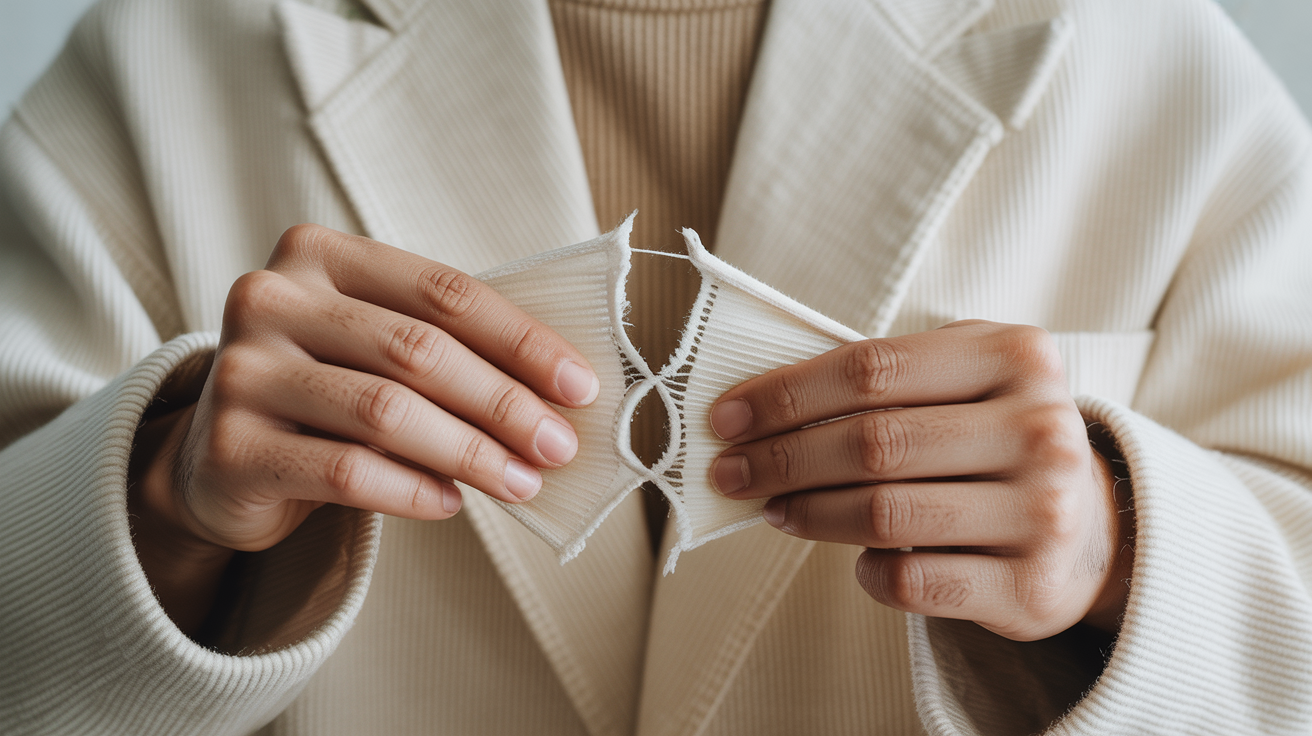
A torn seam or small hole does not mean a garment is finished. With a needle, thread, and about fifteen minutes, you can close most damage so it holds through regular wear. This guide walks through the tools you need, which stitch to use for which repair, and how to finish off so the thread stays put.
Before you start, test your thread color on a scrap of the fabric or inside a hidden seam. A close match disappears; a poor match draws the eye straight to the repair.
At a Glance
- A ripped seam gets a backstitch, overlapping the intact stitching by about 1 cm on each side.
- A small hole under 5 mm in woven fabric gets darned: a woven grid of running stitches that fills the gap.
- A larger hole or worn patch needs a fabric patch behind the garment, anchored with running stitch through both layers.
- Knit fabrics need a ballpoint needle and a looser stitch so the repair can still stretch with the fabric.
- Open a torn seam another half centimeter on each side with a seam ripper before you start, so you are sewing through solid fabric, not frayed threads.
- If the surrounding fabric has weakened significantly, back it with fusible interfacing before stitching, or switch to machine reinforcement.
What You Need Before You Start
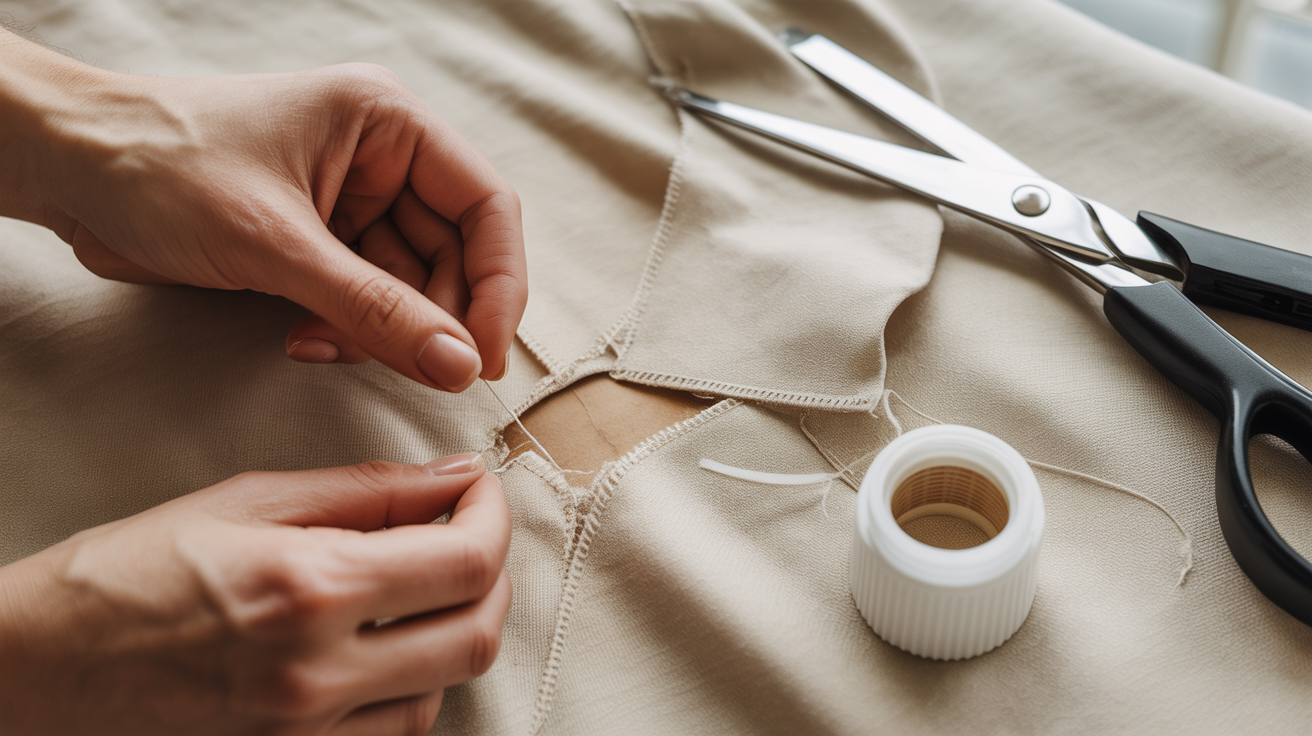
You do not need a kit full of notions. For basic mending, gather:
- Needle suitable for the fabric weight (a sharps needle works for most wovens; a ballpoint for knits)
- Thread that matches the fabric color as closely as possible
- Small scissors or a seam ripper
- Pins to hold the fabric in place while you work
- Iron for pressing seams flat before and after (use a press cloth on delicate fabrics)
If the tear is along a seam, you may also want a seam ripper to open a few extra stitches on either side so you can re-sew on stable fabric rather than frayed edges.
Learning to thread a needle and tie a knot that holds is the first skill to have in place before any mending job. A knot that slips undoes all your work.
How to Repair a Ripped Seam by Hand
A seam that has pulled open at a stress point is one of the most common repairs. The original fabric is intact; only the stitching has failed.
Prepare the Area
Open the damaged section another half centimeter on each side with a seam ripper. This exposes fresh, unfrayed thread holes to sew through. Press the seam allowances flat with an iron so the edges lie in position while you work.
Choose Your Stitch
A backstitch is the right choice for seam repairs. It produces a continuous line of thread that interlocks with itself, so if one loop breaks, the rest holds. To backstitch:
- Knot your thread and bring the needle up through both layers of fabric, one stitch length ahead of where the seam broke.
- Insert the needle back into the fabric at the start of the gap, going backward one stitch length.
- Bring the needle up one stitch length ahead of where it went in.
- Repeat, always sending the needle backward to the end of the previous stitch.
Keep stitches even: roughly 3 to 4 mm works well for most fabrics. Overlap the existing machine stitching by about 1 cm on each side to anchor the repair into solid thread.
Finish Off
After overlapping the existing stitching, take two or three small stitches on top of each other in the seam allowance, then pass the needle under the last loop before pulling tight. Trim the thread close. Press the seam flat from the right side.
If you want a more thorough overview of which stitches suit which jobs, the guide to basic hand sewing stitches every beginner should learn covers the full range, including whip stitch and slip stitch for different repair situations.
How to Fix a Hole in Woven Fabric
A hole with no seam nearby needs a different approach because there is nothing to close against itself. The goal is to fill the gap with new thread, supported by the fabric around it.
Small Holes (Under 5 mm)
A simple darning technique works well. This is the traditional repair for holes or worn areas in fabric or knitting using needle and thread alone: you anchor the thread at the edge of the hole and carry it across the gap in a running stitch, working back and forth in parallel rows until the space is bridged, then turn ninety degrees and weave a second layer of thread over and under the first. The interlocked threads support each other the way a woven fabric does, which is why the technique holds up under normal wear even though it is built from loose thread rather than the original cloth.
Thread your needle with matching thread and bring it up just outside the hole. Work parallel lines of running stitch back and forth across the gap, catching a few threads of fabric on each side. Once you have covered the hole in one direction, rotate ninety degrees and weave the needle over and under those first threads to create a woven patch.
Larger Holes or Worn Thin Areas
For a hole bigger than about 1 cm, or a spot that has worn completely through, a fabric patch gives more strength. Cut a piece of matching or complementary fabric slightly larger than the hole, position it behind the garment on the inside, and pin it flat. From the right side, use small running stitches around the perimeter of the hole, catching both layers. Then work rows of parallel stitching across the hole to anchor the patch through to the face fabric.
A running stitch is the foundation of this technique. The guide on how to sew a running stitch and when to use it explains length, tension, and common starting mistakes.
If you would rather the repair show than hide it, that is a legitimate choice rather than a fallback. Contrast-thread darning and patch work sewn to be seen, sometimes called visible mending, is a long-standing tradition (Japanese sashiko stitching is the best-known example) built specifically around making a repair look intentional rather than concealed.
Mending Knit Fabrics
Knit fabrics present a separate challenge: they stretch, and a rigid stitch will pop on the first wear. A few adjustments help.
Use a ballpoint or jersey needle, which slides between knit loops rather than piercing them. Thread choice matters too: a thread with some give, or a strand of woolly nylon, handles stretch better than standard polyester on a very stretchy knit.
For small holes in a T-shirt or similar, a tiny whip stitch around the perimeter of the hole draws it closed without bunching. Work loosely. Pull the thread just enough to bring the edges together, not so tight that the fabric puckers. Test the area gently before wearing to confirm the stitch has room to flex.
For ladder runs in knitwear, the repair is more like a crochet hook rescue than a standard mend: a yarn needle and matching yarn can ladder stitches back up the column if you work slowly from the bottom of the run upward.
Quick Reference: Which Stitch for Which Repair
| Repair type | Best stitch | Notes |
|---|---|---|
| Ripped seam | Backstitch | Overlap existing stitching by 1 cm on each side |
| Small hole in woven | Darning (running stitch grid) | Keep tension loose; fabric should lie flat |
| Large hole or worn area | Running stitch over a patch | Patch goes on inside; stitch catches both layers |
| Hole in knit | Whip stitch | Work loosely to allow stretch |
| Fraying edge with no seam | Whip stitch or blanket stitch | Encases the raw edge |
| Decorative or visible mend | Running stitch in contrast thread | Visible mending intentionally shows the repair |
How Long Common Repairs Actually Take
Time estimates help you decide whether a repair is worth doing by hand before you sit down. These are for someone comfortable with basic stitches, working carefully rather than rushing.
| Repair | Typical time | Skill needed |
|---|---|---|
| Ripped side seam, 2 to 3 inches | 5 to 10 minutes | Backstitch |
| Small woven hole, dime-sized | 10 to 15 minutes | Darning grid |
| Patched hole, quarter-sized or larger | 20 to 30 minutes | Patching plus running stitch |
| T-shirt hole, small | 10 to 15 minutes | Loose whip stitch |
| Herringbone repair on a mid-fabric tear | 15 to 25 minutes | Herringbone or catch stitch |
Frequently Asked Questions
What thread should I use for mending? Match the fiber content if you can: cotton thread for cotton fabric, polyester for synthetics. Color match matters more than fiber match for most repairs, but polyester thread on a natural fiber garment can create a stiffer feel over time. A standard all-purpose polyester thread handles most repairs adequately.
How do I keep the repair from showing on the outside? Work with small, even stitches and thread that closely matches in color and weight. On the right side of the fabric, use a slip stitch or ladder stitch for seam repairs along hems or side seams because only tiny thread dots show. Backstitch is stronger but more visible, so reserve it for seam allowances where the stitching is hidden inside.
My thread keeps knotting as I sew. What is wrong? Thread length is often the culprit. Cut your thread no longer than about 45 cm (roughly from your fingertip to your elbow). Longer thread has more time to twist and tangle as you pull it through. Waxing the thread by running it over a beeswax block also reduces friction and tangling.
How do I repair a tear that is not along a seam? A mid-fabric tear with two raw edges needs to be brought together before stitching. Pin the edges so they just meet without overlapping, then use a herringbone stitch or a catch stitch worked across the gap from the inside of the garment. This distributes the strain across a wider area than a single line of stitching.
When is hand mending not enough? If the fabric around the tear has weakened significantly, hand stitching through fragile material will tear out again quickly. In that case, a fusible interfacing patch ironed to the back of the fabric first gives the needle something solid to pass through. For structural stress points like crotch seams or underarm seams on frequently worn garments, machine stitching with a reinforcing zigzag is a more durable long-term fix.
Is it worth mending cheap or fast-fashion clothing? Often yes, at least for a five-minute seam repair. A ripped seam is usually a stitching failure, not a fabric failure, so a quick backstitch can add months of wear for almost no cost. Worn-through knees or elbows on thin fabric are a different case: if the fabric itself has thinned to the point of tearing again nearby, a patch buys some time, but repeated failures in the same spot are a sign the garment is near the end of its useful life.