How to Sew a Curtain Hem and Simple Panels
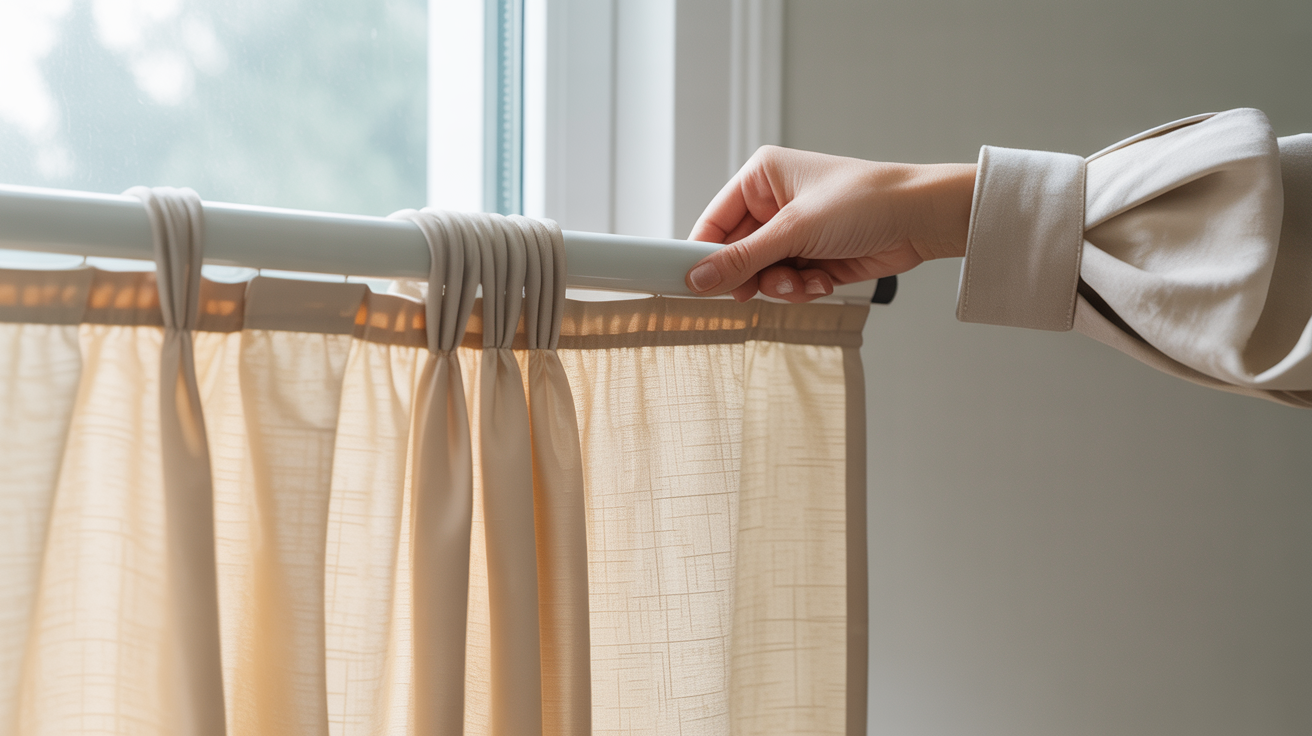
Hemming curtains is one of the most practical skills you can pick up early on. You can make panels that fit your exact windows, salvage store-bought curtains that are too long, or just practice turning a raw edge into something finished and tidy. The techniques here are the same ones used on any hem, so the time you spend on a curtain teaches you something that carries over to every other project.
What You Need Before You Start
You do not need specialty tools. A basic setup covers almost everything:
- Fabric (bottomweight cottons, cotton-linen blends, and light canvas all work well for beginners)
- Matching thread
- Sewing machine with a standard presser foot
- Iron and ironing board
- Measuring tape and fabric marker or chalk
- Pins or binding clips
- Scissors or a rotary cutter and mat
For a lined panel you will also want lining fabric. For a simple unlined panel, a double-fold hem takes care of the raw edges on its own.
Test your machine's stitch length on a scrap of your actual fabric before cutting anything. A length of 2.5 to 3 mm works for most medium-weight curtain fabrics. Adjust tension if the thread pulls to one side.
How to Measure and Cut Your Fabric
Accurate cutting saves a lot of frustration later. Measure your window and decide on:
- Finished length -- from where the rod pocket or header will sit down to where you want the curtain to end
- Width -- most panels look better with fabric that is 1.5 to 2 times the width of the window for a soft gather
Add seam allowances to each measurement before cutting:
- For the bottom hem: add 4 inches for a double 2-inch hem (this folds under twice, giving you a neat 2-inch finished hem with no raw edge showing)
- For the sides: add 2 inches per side for a double 1-inch hem
- For the top: add enough for your chosen heading style, typically 3 to 4 inches for a basic rod pocket
Cut along the grain of the fabric. If your fabric has a pattern or weave direction, align it consistently across panels so they match when hung side by side.
How to Sew a Curtain Hem by Machine
The bottom hem is usually sewn first, before the sides, so the side hems can overlap and enclose the corners cleanly.
Press Before You Sew
Pressing is not optional. A hem that has been pressed holds its fold accurately and feeds through the machine without shifting. Press the fold, then press it again after pinning.
Learn more about why this step matters and how to do it well: how to press seams the right way and why it matters.
Fold and Pin the Double-Fold Hem
- Fold the bottom edge up by 2 inches and press.
- Fold up again by another 2 inches and press. This encloses the raw edge inside the fold.
- Pin across the fold every 4 to 6 inches, with pin heads pointing toward you so they are easy to remove as you sew.
If the hem does not lie flat, your fabric may be slightly off-grain. You can ease small amounts with steam while pressing.
Stitch the Hem
Sew close to the top folded edge, about 1/8 inch in. Keep your speed steady and remove pins just before the needle reaches them. Do not sew over pins -- this can bend or break the needle.
Backstitch at both ends to secure the stitching. If you want the stitching line to be invisible from the front, a blind hem stitch (available on most machines as a specialty stitch) catches only a thread or two of the face fabric. A straight stitch along the inner fold is simpler and perfectly acceptable for casual or everyday curtains.
Sewing the Side Hems
Side hems follow the same double-fold method:
- Fold each long edge in by 1 inch and press.
- Fold in again by 1 inch and press.
- Pin and stitch along the inner fold.
At the bottom corners, you will have a small overlap of fabric from the bottom hem and the side hem. Fold it flat and stitch through the layers. A few hand stitches at the corner can keep the overlap tidy if the machine has trouble with the bulk.
For the cleanest finish, finishing raw edges on any exposed seams before you begin hemming prevents fraying during the life of the curtain.
Making a Simple Rod Pocket
A rod pocket is just a tube of fabric at the top of the panel that the curtain rod slides through.
- Decide on your pocket depth. For a standard 1-inch rod, a 1.5-inch finished pocket gives a little ease. Add 0.5 inches for a seam allowance and fold. Total fabric: 2 inches from the top raw edge.
- Fold the top edge down by 0.5 inches and press. This is your seam allowance.
- Fold down again by 1.5 inches and press.
- Stitch close to the bottom fold of the pocket. This is the channel the rod goes through.
- For a header (a ruffle above the rod), stitch a second line 1 to 1.5 inches above the bottom stitching line.
Slide the rod in before hanging to check the fit. The fabric should gather evenly without being too tight to push the rod through.
Tips for Straight, Even Results
Keeping a curtain hem straight over a long length is mostly a question of consistency at the pressing stage.
- Use a hem gauge or ruler every time you fold. Do not rely on eyeballing. A hem gauge is a small metal ruler with a sliding guide that costs very little and removes guesswork.
- Mark before you press. Use chalk or a disappearing fabric marker to mark your fold line every 6 to 8 inches before pressing. The marks iron away.
- Check for squareness before you cut. Pulling the fabric along the grain and making sure your cut edge is truly at 90 degrees to the selvage prevents a hem that dips or rises across the width.
If this is your first time sewing a straight line over a long distance, practice on a strip of scrap fabric first. See the approach in how to sew a straight seam with the right seam allowance.
Frequently Asked Questions
What is the easiest hem for curtains? A double-fold hem sewn by machine is the most straightforward. It requires no special notions, finishes the raw edge inside the fold, and works on almost any fabric weight appropriate for curtains.
How much fabric do I add for a curtain hem? For a standard double 2-inch hem at the bottom, add 4 inches to your finished length. For side hems using a double 1-inch fold, add 2 inches per side.
Can I hem curtains without a sewing machine? Yes. A slip stitch worked by hand is traditional for hemming curtains because the stitches are invisible from the front. It takes longer, but the result is clean and the technique is the same double-fold approach.
My hem waves instead of lying flat. What went wrong? The most common causes are cutting off-grain or insufficient pressing. Re-press with steam and ease any fullness while the fabric is warm. If the problem persists, the fabric may have been stretched on the bolt and needs to be washed and dried before cutting.
Do I need to finish the raw edges on a double-fold hem? No. The double fold encloses the raw edge inside the hem so it does not show or fray. If you are making an unlined single-fold hem, finishing the raw edge with a serger, zigzag stitch, or Hong Kong finish is worthwhile.