How to Sew a French Seam for a Clean Finish
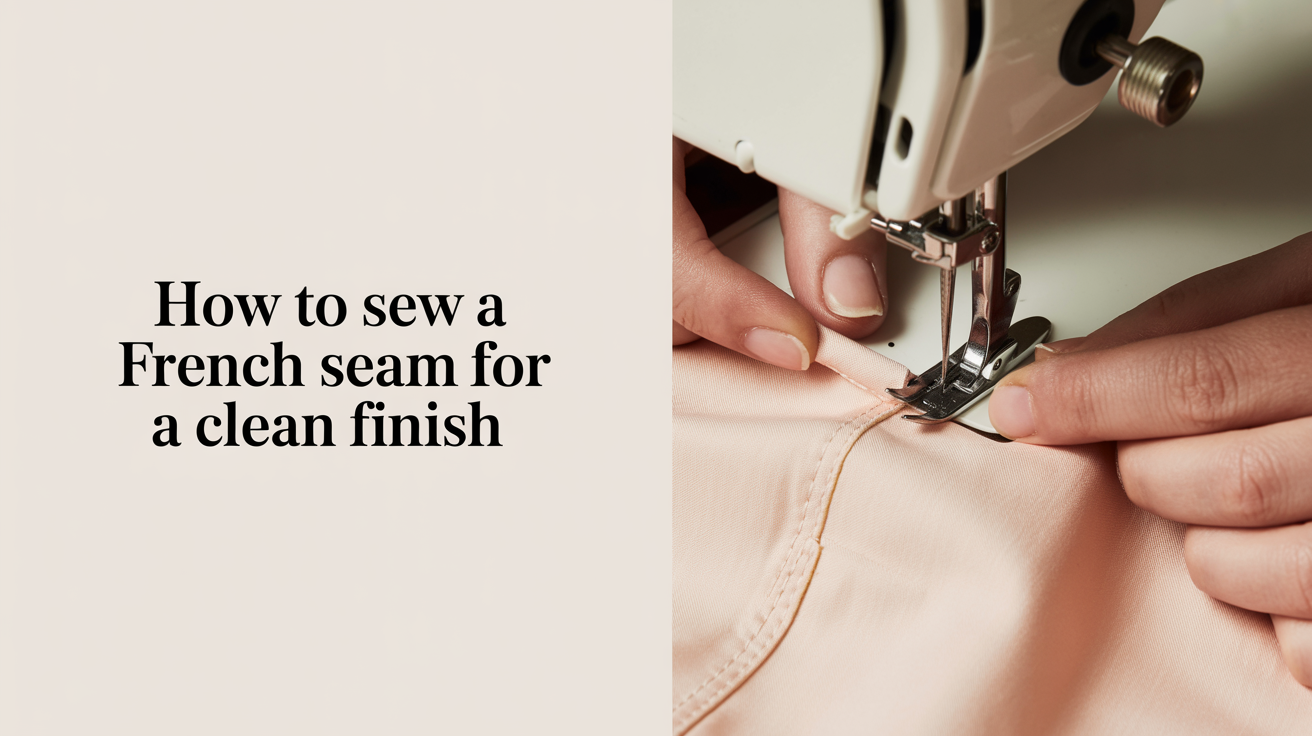
A French seam encloses the raw fabric edges inside a tidy folded tunnel. The result is a seam with no fraying visible on either side, which makes it a go-to finish for lightweight fabrics, sheer curtains, and any project where the inside will be seen. As Wikipedia's overview of seam types describes it, a French seam is one of a handful of standard seam constructions used in garment sewing, distinguished from a plain seam specifically because it fully encloses the raw edges rather than leaving them exposed. The technique takes a little more time than a basic seam, but the steps themselves are straightforward once you understand the logic: sew wrong sides together first, trim, fold, then sew again.
Before you start, test your stitch length and presser-foot pressure on a scrap piece of the same fabric. Seam allowances and iron temperatures are starting points, not fixed rules.
At a Glance
- Sew wrong sides together first, at roughly half your final seam allowance; this is the opposite of a normal seam.
- Trim the first seam allowance down to about 1/8 inch (3 mm) before folding.
- Fold right sides together, enclosing the trimmed edge, and press the fold crisp before sewing the second pass.
- Sew the second seam far enough in to fully catch the trimmed edges inside, usually 1/4 inch (6 mm) from the fold.
- Works best on lightweight to medium wovens; skip it on thick fabric (too bulky) and knits (use a serger or zigzag instead).
- Start with a minimum 5/8 inch (1.5 cm) seam allowance so you have enough fabric for both passes.
What You Need
- Fabric (French seams work best on lightweight or medium-weight wovens; avoid thick or stretchy fabric for your first attempt)
- Sewing machine threaded and ready
- Sharp scissors or rotary cutter
- Iron and ironing board
- Pins or fabric clips
- A ruler or seam guide
The seam requires a minimum of 5/8 inch (1.5 cm) seam allowance to work comfortably. If your pattern calls for a narrower allowance, add extra when cutting. According to Wikipedia's entry on seam allowance, home sewing patterns typically use 1/4 to 5/8 inch of allowance beyond the cutting line, and a 5/8 inch allowance is specifically chosen on many patterns because it leaves enough fabric to be "safely caught" when two pieces are joined. For a French seam, that same 5/8 inch has to stretch across two separate stitching passes instead of one, which is exactly why the technique needs more allowance than a plain seam does.
Step 1: Sew Wrong Sides Together
This is the part that trips up most beginners, because it is the opposite of what you normally do.
Place your two fabric pieces with the wrong sides facing each other. Pin along the edge you want to seam. Stitch at 3/8 inch (1 cm) from the raw edge, or roughly half your total seam allowance.
Press the seam open to set the stitches, then press it to one side. A well-pressed seam at this stage makes the next step much cleaner. For guidance on pressing technique, see how to press seams the right way and why it matters.
Step 2: Trim the Seam Allowance
Trim the seam allowance down to about 1/8 inch (3 mm). Cut close to the stitching line but not so close that you clip the stitches.
This is where sharp scissors matter. Dull blades drag the fabric and leave ragged edges that are hard to fold under cleanly. Take your time and cut in smooth, steady strokes along the full length of the seam. On a seam longer than about 12 inches (30 cm), trim in short sections rather than one continuous pass; it is easier to keep the width consistent, and you are less likely to veer into the stitching line partway through.
Step 3: Fold and Press
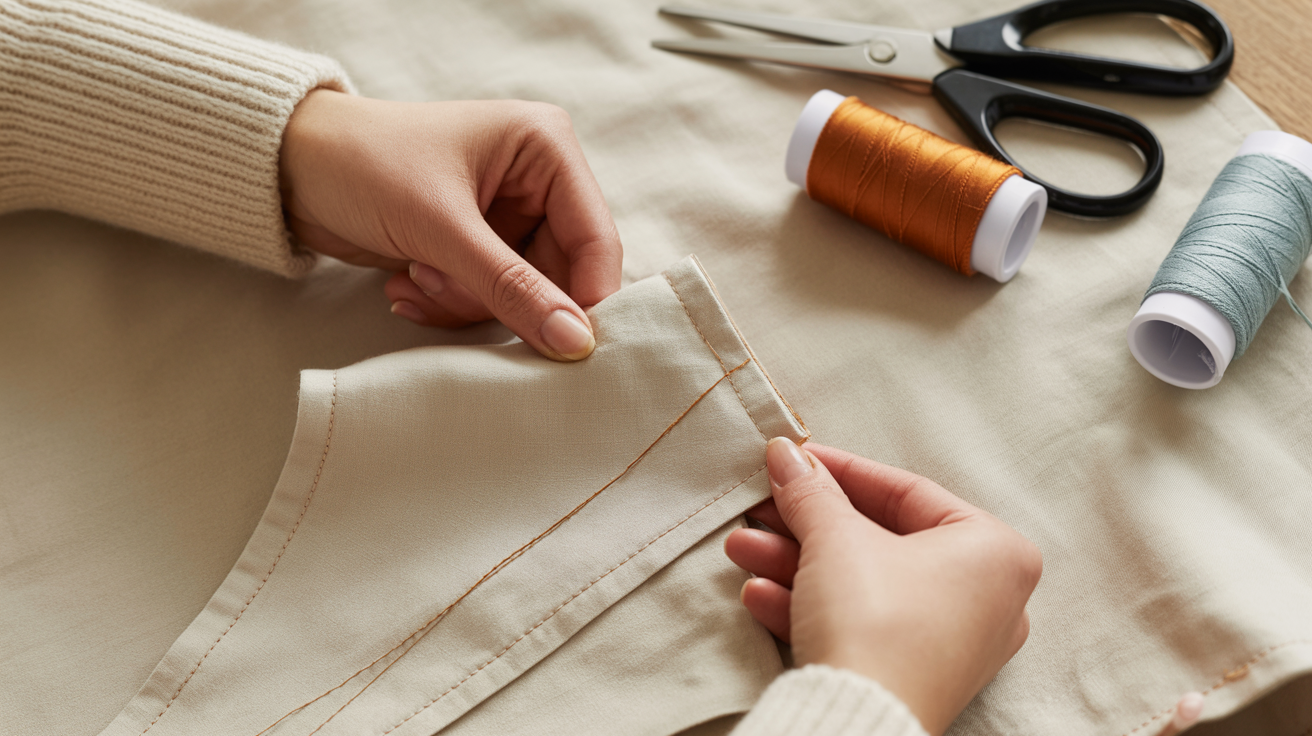
Fold the fabric so the right sides now face each other, rolling the stitched seam line right to the fold edge. The trimmed raw edges should be tucked inside the fold.
Press firmly with a hot iron appropriate for your fabric. This fold is the core of the French seam: you are creating a fabric tube that will enclose everything. If the fold is not crisp and even, the finished seam will look uneven from the outside.
Pin or clip along the fold to hold it in place.
Step 4: Sew the Second Seam
Stitch along the folded edge at 1/4 inch (6 mm) from the fold, or just enough to clear the trimmed edges inside. As you sew, run your finger along the fold ahead of the presser foot to make sure the inner edges are staying flat and not bunching.
If you are new to keeping a consistent seam allowance, a straight seam with the right seam allowance technique will help you stay on track here.
Press the finished seam to one side from the right side of the fabric. Once the two passes are done, the finished seam typically measures 1/4 to 3/8 inch (6 to 10 mm) wide from fold to stitching line, narrow enough to lie flat under most garments without adding noticeable bulk.
When to Use a French Seam
| Situation | Good fit? |
|---|---|
| Sheer or lightweight fabric (voile, lawn, organza) | Yes |
| Unlined garments where seams will show | Yes |
| Pillowcase or bag lining | Yes |
| Curved seams (side seams, princess seams) | With care; clip the seam frequently |
| Thick denim or canvas | No; too much bulk |
| Knit or stretch fabric | No; use a serger or zigzag instead |
Curved seams are possible but require extra clipping after the first stitching so the allowance can ease around the curve before you fold. Trim gradually and check the fold before pressing.
How a French Seam Compares to Other Finishes
Choosing between seam finishes usually comes down to fabric weight, sewing time, and whether the inside of the garment will be visible.
| Finish | Time to sew | Bulk | Best for |
|---|---|---|---|
| French seam | Slowest (two full passes) | Very low | Sheers, unlined garments, linings |
| Plain seam + zigzag edge | Fast | Low to medium | General garment sewing, most fabrics |
| Plain seam + serged edge | Fast (with a serger) | Low | Knits, wovens, production-style finishing |
| Flat-felled seam | Slow (folding + topstitching) | Low, very durable | Jeans, workwear, seams under stress |
A French seam is the slowest of these options but gives the cleanest interior of any of them, which is the trade you are making: extra time now for a seam that never needs a separate raw-edge finish later.
Common Problems and Fixes
Raw edge shows at the fold line. The trimmed allowance was not clipped short enough, or the fold was not pressed all the way to the stitching line. Unpick the second seam, re-press the fold more firmly, and re-stitch.
Second seam catches the raw edge unevenly. The fabric shifted when you pinned. Clip more frequently and press harder before stitching.
Seam puckers from the right side. Stitch length may be too short for the fabric weight. Try a slightly longer stitch on a scrap and re-test.
Seam is too narrow to turn. The first stitching line was placed too close to the raw edge, leaving no room to fold. Aim for 3/8 inch on the first pass so you have enough seam allowance to work with.
Trimmed edge frays before you can fold it. This happens most on loosely woven fabric like linen or voile. Work in shorter sections: trim a few inches, fold and press that section immediately, then move on, rather than trimming the whole seam and letting the cut edge sit exposed while you work your way along it.
Once you are comfortable with straight French seams, the technique also applies to the side seams of a lightweight blouse or the body of a pillowcase. The goal is a finished interior that looks as considered as the outside.
After sewing your seam, check the raw edges along any other part of your project. If they need attention, how to finish raw edges so fabric doesn't fray covers the most practical options for beginners.
Frequently Asked Questions
Can I sew a French seam by hand? Technically yes, but it takes a long time and the results are harder to keep even. The technique relies on two rows of straight stitching, which a machine produces far more consistently. Hand-sewing a French seam is worth practicing on a short sample if you are curious, but for an actual project a machine is the better tool.
What seam allowance do I need to start with? A minimum of 5/8 inch (1.5 cm) gives you room to sew the first pass at 3/8 inch and still have 1/4 inch left for the second seam after trimming. Some sewists prefer 3/4 inch (2 cm) when starting out, which gives a little extra margin if the first trim is not perfectly even.
Does a French seam work on curves? Yes, but curved seams need extra clipping after the first stitching so the allowance can ease around the bend. Clip every half inch or so on tight curves, and press very carefully before sewing the second seam. A gentle curve is manageable; a sharp curve is tricky and better handled with a serged or zigzagged finish until you have more experience.
My seam allowance shows through sheer fabric. What went wrong? On truly sheer fabric, even 1/8 inch of trimmed allowance can cast a shadow. Trim as close to 1/16 inch (about 2 mm) as you can manage safely after the first stitching, and use a narrow 1/4 inch finished seam. Some sewists trim with embroidery scissors for more control on fine fabrics.
Do I need a special presser foot? No special foot is required. A standard presser foot works for both passes. Some sewists use a 1/4 inch foot to keep the second seam consistent, but a seam guide or a strip of masking tape on the machine throat plate works just as well.
How much extra fabric does a French seam use compared to a plain seam? Very little in the final garment, since the finished width lands around 1/4 to 3/8 inch either way. What it costs you is cutting allowance: you need the full 5/8 inch seam allowance rather than the 1/4 to 3/8 inch a plain seam with a serged edge might use, so factor that into your fabric estimate and pattern layout before cutting.
Can I use a French seam on a garment I'll need to let out later? Not comfortably. Because the first seam is trimmed down to 1/8 inch, there is very little extra fabric hidden inside the seam to release if you need more room. If you expect to need alterations later, a flat-felled seam or a plain seam with a generous allowance gives you more to work with.