How to Sew a Pincushion: The Perfect First Hand-Sewing Project
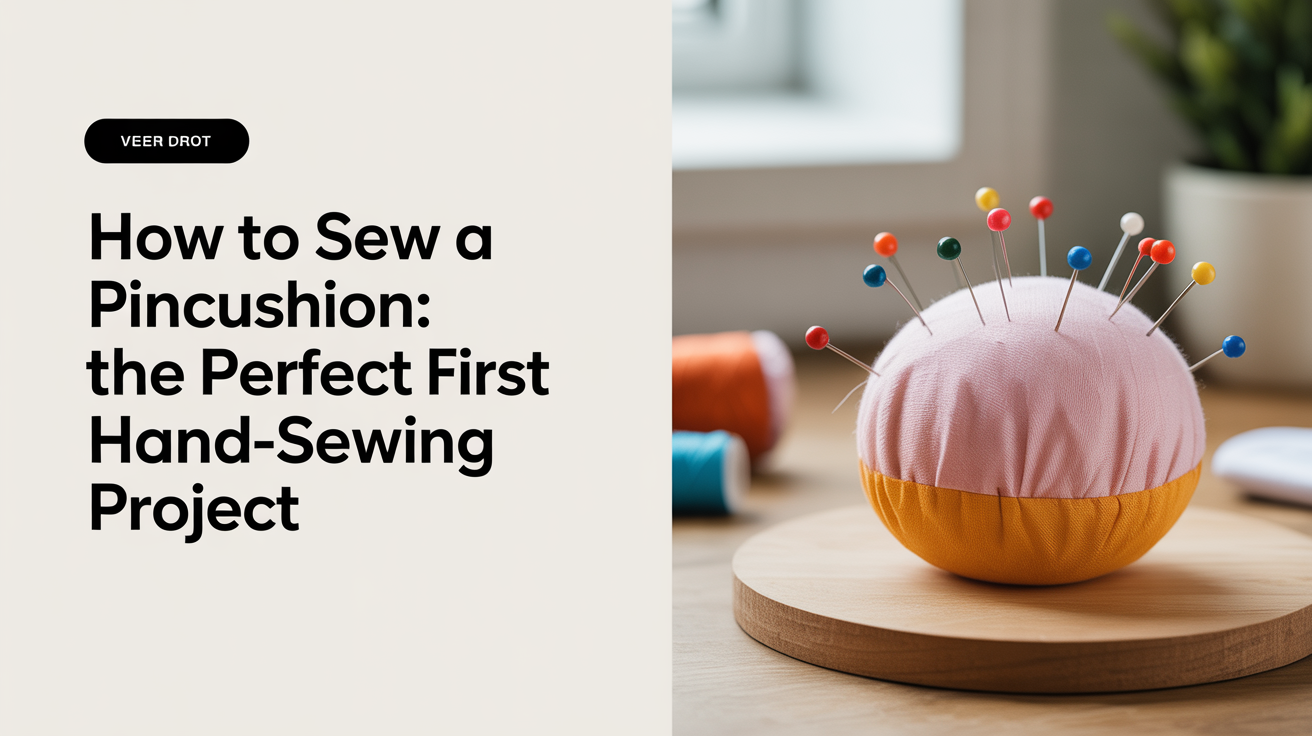
A pincushion sits on every seasoned sewer's table, but it also happens to be one of the most useful things a beginner can make first. It is small, forgiving, and takes you through a complete hand-sewing cycle in under an hour: cutting fabric, pinning pieces together, stitching a seam, stuffing, and closing the gap. When you finish, you have a tool you will actually use.
This tutorial walks you through a simple square pincushion made entirely by hand. No sewing machine needed.
First Stitch is an independent sewing-learning resource and is not affiliated with any maker or retailer mentioned. Sewing involves sharp needles, pins, and scissors; work carefully and treat all measurements as starting points to test on scrap fabric first.
What You Need
Fabric scraps work perfectly here. Aim for two squares of tightly woven cotton, each roughly 5 inches by 5 inches. Loosely woven fabric or stretchy knit will let stuffing poke through, so cotton quilting fabric, denim off-cuts, or canvas remnants are better choices.
Materials list:
- Two 5 x 5 inch fabric squares (cotton or similar)
- Hand-sewing needle (a sharp or crewel needle, size 7 or 8)
- Thread in a matching or contrasting color, about 24 inches
- Stuffing: polyester fiberfill is easiest, but dried walnut shells or ground walnut shells keep pins sharp over time
- Scissors
- Pins
- A fabric marker or chalk pencil (optional, for marking your seam line)
If you have not yet gathered your basic tools, the guide on the beginner sewing kit covers what to look for without overspending.
Cutting and Preparing Your Fabric
Place your two squares together with the printed or "right" sides facing each other. This means the outer surface of the finished pincushion will be on the inside right now. That is intentional: you sew the seam on the inside and then turn the whole thing out.
Mark a seam allowance of about half an inch around the perimeter. You will sew along this line and leave the fabric outside it as a seam allowance. On a 5-inch square, that gives you a finished cushion of roughly 4 inches across, which is a comfortable size to hold and to jab pins into.
Pin the two layers together at each corner and along the sides. The pins keep the fabric from shifting while you stitch.
Sewing the Seam with a Running Stitch
Thread your needle and tie a knot at the end of the thread. Start in one corner, poking your needle up through both layers close to your marked line. Work a running stitch along three sides and about two-thirds of the fourth side. The running stitch is simply in-and-out through the fabric in even steps, roughly 3 to 4 millimeters each.
Pull your stitches snug but not tight enough to pucker the fabric. At corners, take a small extra stitch right at the turn before continuing along the next side. This reinforces the corner where tension will be highest once the cushion is stuffed.
Stop when you have left a gap of about 1.5 to 2 inches on the final side. Tie off your thread with a small knot close to the fabric. This gap is your turning and stuffing opening.
Trim the corners diagonally, cutting close to your stitching but not through it. This reduces bulk so the corners turn out neatly rather than bunching up.
Turning, Stuffing, and Shaping
Reach into the gap and gently pull the fabric through so the right sides are now on the outside. Use a blunt object like a chopstick or the eraser end of a pencil to push the corners out from the inside. Work slowly; sharp objects can pierce the fabric.
Now stuff the cushion. Pull small tufts of fiberfill apart before inserting them rather than pushing in one large clump. Clumps create hollow pockets inside, and pins will shift around rather than staying put. Fill the cushion firmly. A dense pincushion holds pins upright; an underfilled one lets them flop sideways and can be frustrating to use.
Keep stuffing until the cushion feels solid and resists gentle squeezing. You will probably use more stuffing than you expect. Tuck the raw edges of the opening inside as you go, folding them in about half an inch to match the seam allowance on the rest of the piece.
Closing with a Slip Stitch
The slip stitch closes the opening with nearly invisible stitches. Thread a fresh length of thread and knot it. Bring the needle up through the folded edge of one side of the gap, pulling the knot inside so it is hidden.
Take a small horizontal stitch into the fold of the opposite side, then another stitch back into the first side, working along the opening in small steps. A slip stitch for invisible hand sewing catches only the folded fabric and does not show on the outside when pulled gently taut.
When you reach the end of the gap, pull the thread snug to bring the two edges together. Make two or three small backstitches in place to secure the thread, then pass the needle through the body of the pincushion and bring it out an inch away before trimming. The tail disappears inside.
Give the finished cushion a press with your fingers to even out the stuffing. That is your pincushion.
Frequently Asked Questions
What fabric works best for a pincushion? Tightly woven cotton is the most practical choice. It is easy to sew by hand, does not unravel quickly, and pins go in and come out without resistance. Avoid loosely woven fabric like burlap or any knit; stuffing works its way through both over time. Denim and canvas also work well and hold up to heavy use.
Can I use polyfill instead of walnut shells? Yes. Polyester fiberfill is the easiest stuffing to find and works well for most uses. Walnut shells and crushed walnut shell powder are sometimes recommended because they are slightly abrasive and help keep pin and needle tips sharp, but the difference is subtle. If you are just starting out, fiberfill is the sensible choice.
My corners came out bunchy. What went wrong? The usual cause is not trimming the corner seam allowance before turning. Clip the corner fabric diagonally, leaving about 2 to 3 millimeters from the stitching. That removes the extra bulk so the corner folds cleanly. Pressing the seam open with your fingernail before turning also helps.
How do I keep the stuffing from shifting inside? Fill more densely than you think you need to, working in small tufts rather than one large piece. The cushion should feel quite firm when pressed. If the stuffing settles after a week of use, open a small section of the slip-stitch seam, add more fiberfill, and close it again.
Do I need to wash the fabric before I start? For a pincushion, pre-washing is not strictly necessary since the finished piece will not go through the laundry. If you are using fabric from a larger project that you plan to wash later, pre-wash the scraps to match. Otherwise, skip it and get straight to the sewing.