How to Use a Slip Stitch for Invisible Hand Sewing
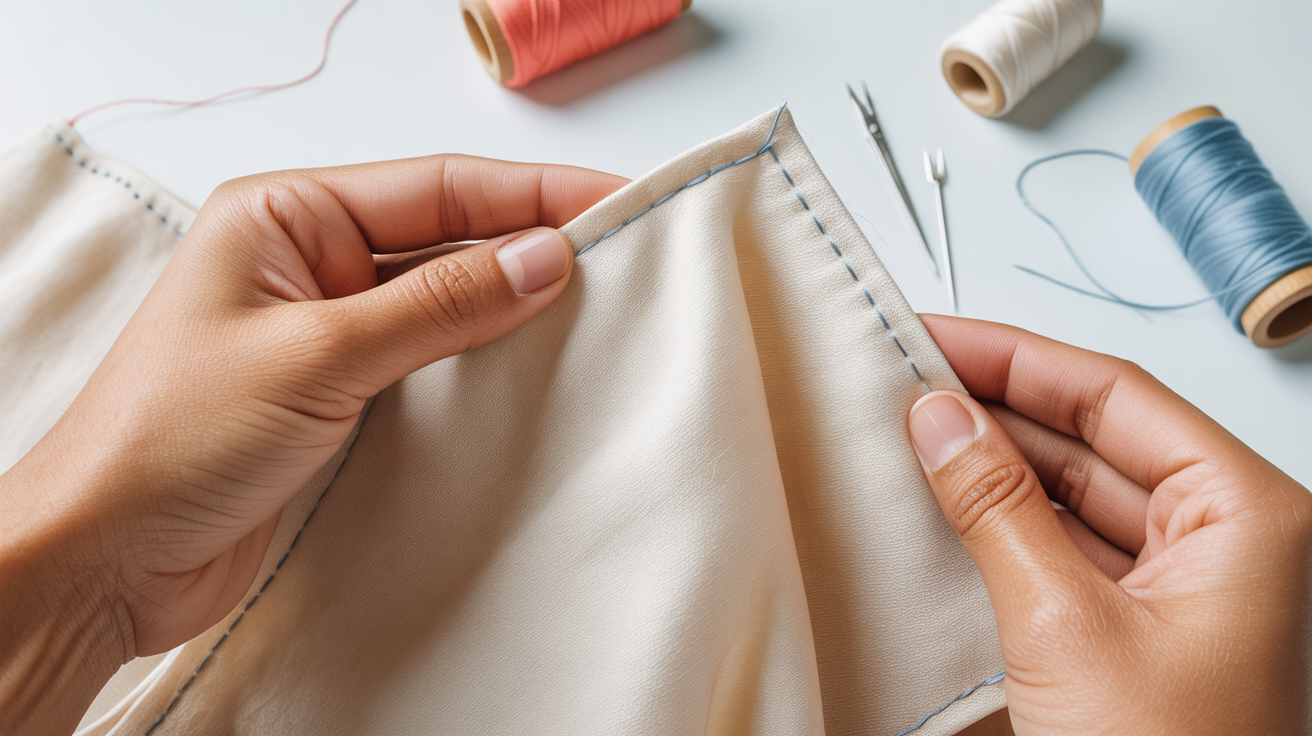
The slip stitch is the hand-sewing technique you reach for when you want the thread to disappear. It closes stuffed pillows, finishes lining edges, repairs side seams, and creates blind hems that look clean from the outside. Once you get a feel for the motion, it is one of the most useful stitches you will return to again and again.
At a Glance
- The slip stitch hides most of the thread inside a folded edge, leaving only tiny catches visible on the surface.
- Use it to close pillow and toy openings (as a ladder stitch), finish linings, and sew blind hems.
- Work stitches 3 to 5 mm long, alternating between the two folded edges in a small zigzag.
- Use a single strand of thread that closely matches the fabric color, not a doubled strand.
- Press both edges before you start and press the finished seam again after closing it.
- Anchor the end with two or three small backstitches inside the fold, never a knot left sitting on the surface.
What the Slip Stitch Actually Does
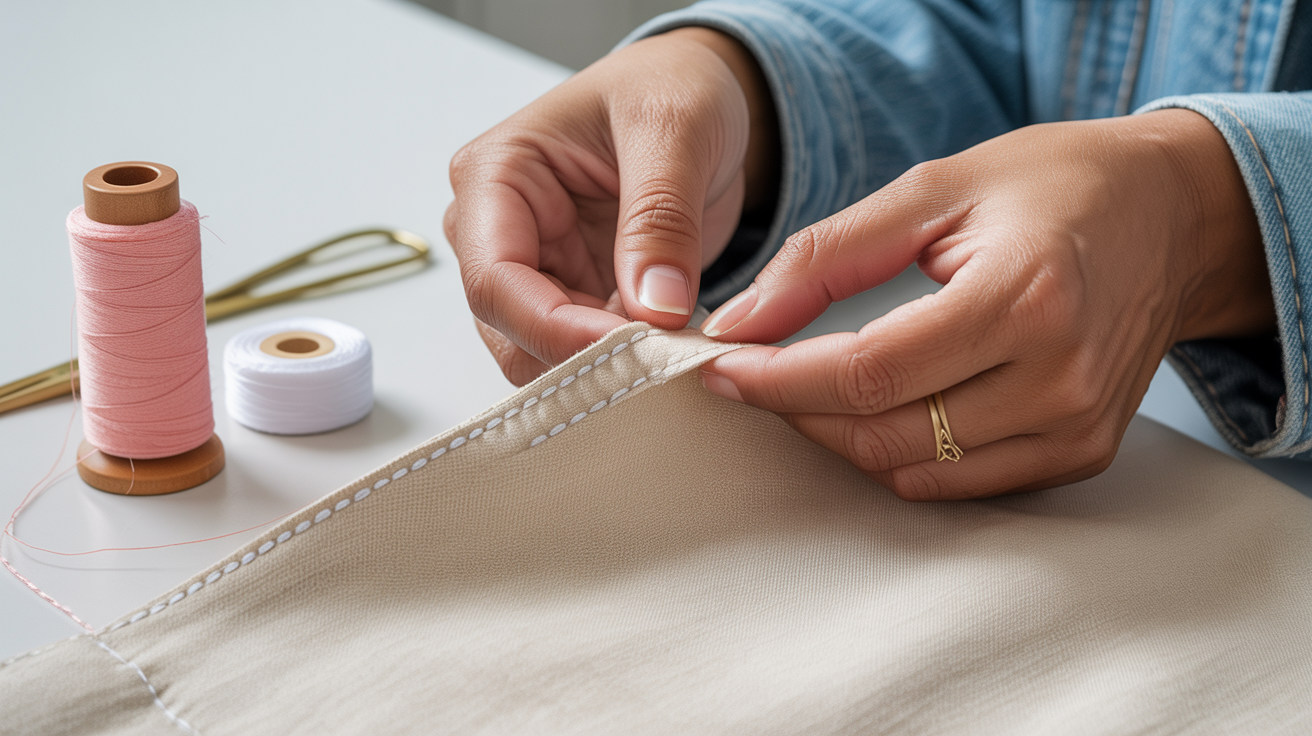
A slip stitch works by hiding most of the thread inside a fold of fabric. The needle travels through a folded edge, then picks up just a few threads from the fabric underneath, then returns into the fold. Because the thread runs inside the fold for most of each stitch, only tiny catches of thread show on the surface. This general family of technique, where the sewer deliberately catches only a few fibers of the outer fabric so the joining thread stays hidden, is what textile references classify as a blind stitch: a method of joining fabric so the stitching thread stays invisible, or nearly invisible, in normal use.
This makes it different from a simple running stitch, which passes through all layers and leaves visible thread on both sides. The slip stitch is designed to be one-sided: neat on the outside, with the thread tucked away in the fold.
You will hear a few names for related techniques. The term "slip stitch" most often describes closing an opening where two folded edges meet, such as the gap left in a pillow cover after turning. The "ladder stitch" is a close relative used specifically for that same join, where the stitches form a ladder pattern between two folded edges before you pull the thread to close them. A "blind hem" uses a similar motion to secure a folded hem from the inside without stitching showing on the front of the garment.
For this guide, we will focus on the classic slip stitch for closing seam openings and finishing folded edges, with a note on the ladder stitch variation at the end.
What You Need Before You Start
Gather these before you sit down to sew. Having everything at hand makes a real difference once you are working on a small, fiddly opening.
| Item | Notes |
|---|---|
| Hand-sewing needle | Sharps or milliners needle, size 9 or 10 for light fabric |
| Thread | Match the fabric color as closely as possible |
| Small scissors | For trimming thread ends |
| Pins or clips | To hold the folded edges together before stitching |
| Thimble | Optional but helpful if your fingertip gets sore pushing the needle |
Thread choice matters more for an invisible stitch than for most other hand sewing. Polyester all-purpose thread blends in well and is strong enough for seam closures. If you are hemming wool or a heavy fabric, use a thread made for that fiber type.
Good scissors matter here more than for general sewing too. A slip stitch involves a lot of close trimming right next to the fold, and dull scissors chew the thread end into a fuzzy stub that is hard to bury cleanly. Keep a small, sharp pair set aside just for thread work if you can, since cutting paper or heavier materials with the same blades dulls them faster.
If you are not yet confident threading a needle and tying a secure starting knot, the guide on how to thread a needle and tie a knot that holds covers both before you start.
How to Sew a Slip Stitch Step by Step
Prepare the Edges
Press both folded edges with an iron before you begin. A crisp, even fold makes it much easier to keep your stitches consistent. Pin or clip the opening closed, holding the two folded edges together at the same level.
Start by knotting your thread and pulling it up through the fold of one edge so the knot hides inside the fold and is not visible from the outside.
The Stitch Motion
- Bring the needle out through the fold of the top edge.
- Directly across from where the needle emerged, insert the needle into the fold of the opposite edge and travel along inside that fold for about 3 to 6 millimeters (roughly 1/8 to 1/4 inch).
- Bring the needle back out through the fold.
- Cross back to the first fold and repeat.
The stitches alternate from edge to edge in a small, even zigzag. Pull the thread gently after each stitch so the seam closes without puckering, but not so tight that the fabric bunches.
Stitch length is a matter of feel. Smaller stitches hold more securely but take longer. Longer stitches go faster but are more visible if the thread color is not a perfect match. Aim for something in the 3 to 5mm range as a starting point, then adjust on a scrap. A denser stitch (closer to 3 mm) makes sense on anything that will see stress or repeated handling, like a stuffed toy seam or a pillow that gets thrown around; a sparser stitch (closer to 5 mm) is fine on a lining seam that stays flat inside a garment.
Finishing Off
When you reach the end of the opening, take two or three small backstitches in place inside the fold to secure the thread. Then run the needle inside the fold for about a centimeter and pull it out, snip the thread close to the fabric, and let the tail disappear into the fold. No knot will show on either side.
The Ladder Stitch Variation
The ladder stitch is a slip stitch used for closing stuffed items, plush toys, and sewn bags where both edges are open folds facing each other. The technique is the same, but the visual while you work looks like rungs of a ladder: you take a stitch along one folded edge, then cross directly to the other folded edge and take a stitch, building parallel rungs.
Once you have sewn along the entire opening, you pull the thread and the ladder rungs pull the two folds together and close the opening cleanly. Pull steadily and evenly, not in one sharp tug.
For a stuffed toy or a pillow that will get handled roughly, it is worth breaking the single-strand rule from the tips below and using a doubled thread for the ladder stitch itself. The extra strength matters more than the slightly larger stitches, since a toy seam that fails means loose stuffing rather than a mildly visible thread.
You will see the term "ladder stitch" used interchangeably with "invisible stitch" and "slip stitch" across sewing patterns, especially in soft-toy and home-dec instructions. They all describe small variations on the same basic hidden-thread motion, and a running stitch, the simplest in-and-out hand stitch, is what most of these variations are built on before the fold-catching technique is added.
Blind Hem by Hand
A blind hem uses a similar approach but is worked from the inside of a garment. You fold the hem up, then fold the hem allowance back slightly to expose a small amount of the hem edge. The needle catches just one or two threads of the garment fabric, then travels through the folded hem allowance, alternating back and forth.
From the outside, you see only tiny pinprick dots of thread, often invisible once the garment is pressed flat. From the inside, you see a row of diagonal stitches across the hem fold. As a rule of thumb, the stitch works about 1/8 to 1/4 inch away from the fold edge, which is exactly the depth range covered in the step-by-step motion above.
The key for a blind hem is to catch as little of the outer fabric as possible. Pinching the fold firmly and using a fine needle makes this easier. Test on scrap fabric first, since fabric weave and thickness affect how visible the picks are from the right side. A tightly woven fabric like broadcloth hides catches more readily than a loose, open weave like linen, where even a single-thread pick can show as a small dimple.
Once you are comfortable with the basic slip stitch motion, the blind hem is a natural next step. Comparing it with other foundational techniques is easier once you have a solid handle on basic hand sewing stitches every beginner should learn.
Tips for Keeping Stitches Invisible
- Match thread color to the dominant fabric color. If the fabric has multiple colors, match the most visible one when the garment is worn.
- Use a single strand of thread. A double strand adds visible bulk in the fold.
- Keep stitches consistent in size. Irregular spacing draws the eye more than a slightly visible thread does.
- Press the seam after closing it. A gentle press settles the thread into the fabric and smooths any slight puckering.
- Pull thread at a low angle. Pulling upward instead of along the seam tends to make the stitch visible.
If you want to practice the motion before working on a real project, how to sew a running stitch and when to use it is a good starting point for building hand-sewing rhythm before moving to more technique-specific stitches.
Frequently Asked Questions
What is the difference between a slip stitch and a ladder stitch? They use the same fundamental motion. The ladder stitch specifically describes joining two open folded edges facing each other, where you sew along both edges before pulling the thread to close the gap. A slip stitch more broadly describes any technique where thread runs inside a fold to stay hidden. In practice, many patterns use both terms to describe the same thing.
Can I use a slip stitch on machine-sewn projects? Yes, and it is one of the most common uses. Any time you sew a project right sides together and leave a turning gap, you close that gap with a slip stitch once the item is turned right side out.
How do I stop the thread from showing on the right side? The two main factors are thread color and stitch depth. Match your thread closely, use a single strand, and catch only a few threads of the outer fabric when you cross over. A fine needle (size 9 or 10) makes small catches easier.
How long should each stitch be? For most fabrics, 3 to 5 millimeters is a workable starting length. Thicker fabrics or items that need extra durability benefit from shorter stitches. Delicate fabrics where any thread visibility matters call for the shortest stitches you can manage consistently.
My seam is puckering after I close it. What went wrong? Puckering usually means you pulled the thread too tight, or your stitches are not consistent in spacing. Unpick a few stitches and redo them, pulling just enough tension to close the gap without gathering the fabric. Pressing with an iron after closing often relaxes minor puckering.
How many stitches do I need for a typical pillow closure? For a 10 cm (4 inch) turning gap, plan on roughly 12 to 16 stitches at a 3 to 5 mm spacing. Overlap your last stitch with the first by a few millimeters and take an extra backstitch there, since the closure point on a stuffed item takes more pull than the rest of the seam.
Does the fabric type change how I should sew a slip stitch? Yes. Loosely woven or slippery fabrics like satin need smaller, more frequent stitches because the weave gives the thread less to grip. Knit fabrics need a slightly looser pull so the seam can still stretch; pulling a slip stitch too tight on a knit hem creates a visible pucker line that will not press out.