How to Sew Corners and Curves Neatly by Machine
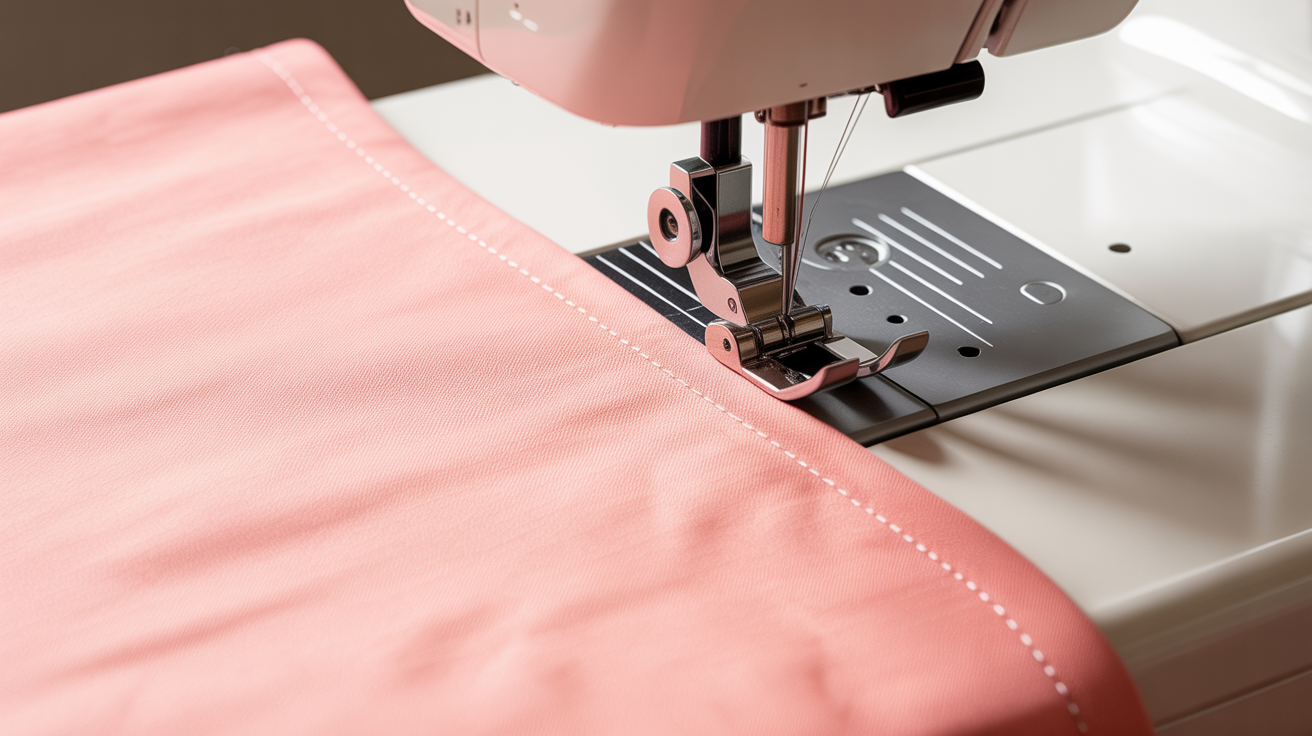
Sewing corners and curves cleanly is one of those skills that makes a real difference in how your finished projects look. Sharp collar points, smooth necklines, tidy bag corners: once you know the mechanics, all of these become much more manageable. The short answer is this: for corners, you stop with the needle down, lift the presser foot, and pivot. For curves, you steer slowly and clip or notch the seam allowance so the fabric lies flat. Everything else is detail.
Before you try any of this on real fabric, cut a few test pieces from scrap and practice. If you need a refresher on how to operate your machine generally, the complete beginner's guide to using a sewing machine covers the controls you will use here.
How to Sew Sharp Corners by Machine
The key move for corners is called pivoting: you stop the machine exactly at the corner point, leave the needle in the fabric, and rotate the fabric before continuing.
Step-by-step: the pivot
- Sew toward the corner at a steady pace, slowing down as you get within about an inch.
- Stop with the needle in the down position, exactly at the corner point. Your seam lines should meet at that spot.
- Lift the presser foot lever. The needle stays in the fabric and acts as a pin, holding your position.
- Rotate the fabric so the next seam line aligns with your presser foot's seam guide.
- Lower the presser foot and continue sewing.
Getting the needle down in exactly the right spot takes practice. Stitching slowly for the last few stitches gives you more control. If your machine has a "needle down" setting (many modern machines do), turn it on; it keeps the needle in the fabric automatically when you stop pressing the foot pedal.
Trimming corners before turning
Once you have sewn around a corner that will be turned right-side out (like a collar or a bag corner), you need to remove the bulk at the point. Cut diagonally across the seam allowance close to the stitching line, being careful not to cut through the stitches themselves. On inside corners (concave angles), clip a small notch into the seam allowance so the fabric can open up when turned.
A good rule of thumb: leave at least two or three threads' worth of fabric between your cut and the stitch line.
Sewing Curved Seams Neatly
Curved seams ask you to guide fabric smoothly while keeping the seam allowance consistent. The challenge is that fabric wants to bunch or stretch depending on the direction of the curve.
Concave vs. convex curves
| Curve type | Shape | Common example | What you do after sewing |
|---|---|---|---|
| Concave (curves inward) | Like the inside of a bowl | Necklines, armholes | Clip small notches into seam allowance |
| Convex (curves outward) | Like the outside of a ball | Rounded bag corners, pockets | Clip notches or make small cuts along the curve |
Both types need the seam allowance released after sewing so the fabric can flatten out when pressed or turned. Clipping means making small straight cuts perpendicular to the stitching; notching means cutting out tiny triangles. Use clipping on tight concave curves (it lets the edges spread apart) and notching on convex curves (it removes fabric so the allowance can compress).
Tips for guiding fabric around curves
- Slow down. This is the single most effective adjustment.
- Keep your eyes on the seam guide or the drawn line ahead of the needle, not on the needle itself. Steering ahead gives you time to adjust.
- Use both hands: one in front to guide the fabric toward the needle, one behind to maintain gentle tension.
- On very tight curves, stop every few stitches, needle down, and make a small adjustment before continuing.
If the seam still puckers after pressing, the clips or notches may need to be spaced closer together, or cut slightly deeper (without going through the stitching line).
Matching Seams at Corners: Inside and Outside Curves Together
Some projects ask you to join a convex piece to a concave piece, like a yoke seam or a curved collar to a neckline. This feels tricky but follows a simple logic: the concave edge (which wants to spread) and the convex edge (which wants to compress) cancel each other out when pinned correctly.
Pin the two pieces with right sides together, matching the center points and ends first. Then ease the fabric in between, adding pins every half inch or so. The curved edges will look mismatched until you pin them flat; that is normal. Sew slowly, removing pins as you go. After stitching, clip the seam allowance on the concave side (the side that has the inward curve) so the seam lies flat when pressed open.
Practicing on Scrap: A Simple Corner and Curve Drill
Before you tackle a real project, draw this on a scrap piece of fabric with a fabric marker or chalk:
- A rectangle with four corners
- An S-curve running through the middle of the fabric
Sew along both shapes, practicing your pivots at each corner of the rectangle and your steering along the S-curve. Check your results: are the corners clean and the curves smooth? Do the stitches hold right to the corner without skipping?
Repeat until both feel controlled. Five minutes of scrap practice is more useful than reading the same instructions twice. Once you're comfortable threading and operating your machine, you might also find it helpful to review how to thread a sewing machine step by step and how to wind and load a bobbin correctly so the mechanical side is solid before you focus on technique.
Pressing: the Step That Finishes the Work
Sewing gets the shape right; pressing sets it. After sewing and clipping corners or curves, press the seam allowance open or to one side before turning the piece right-side out.
For corners, poke the point out gently from the inside using a blunt tool like a point turner, chopstick, or the eraser end of a pencil. Push gently from the inside rather than pulling from the outside to avoid poking through the seam. Press from the outside, using a press cloth if the fabric is delicate.
For curves, press over a tailor's ham or a rolled-up towel. These rounded pressing surfaces help the seam stay curved rather than flattening into a kink.
Do not skip pressing. A well-sewn seam that skips the iron looks unfinished; a seam that has been clipped and pressed looks professional.
Frequently Asked Questions
Why do my corners come out rounded instead of sharp? The needle usually stopped a stitch or two before the true corner point. Try stopping with the needle down earlier or later until you find the exact spot. Going slowly for the last inch helps.
My curved seam puckers after I turn it. What went wrong? Most often this means the seam allowance was not clipped (or notched) close enough, or the clips are too far apart. Add more clips, spacing them closer together, and press again. If the puckering is severe, the issue may also be tension; check that your upper and bobbin thread tension settings suit the fabric.
How do I keep the seam allowance the same width around a curve? Pick a fixed reference point on the presser foot or the machine's needle plate markings and keep the fabric edge aligned to it. Many machines have seam guides at 3/8 inch and 5/8 inch. For unusual allowance widths, place a piece of masking tape on the machine bed at the correct distance from the needle.
Does stitch length matter for corners and curves? Yes. A shorter stitch (around 1.5 to 2.0 mm) gives you more stitches close to the corner or around a curve, which means stronger construction and more places to pivot. On very tight curves, a shorter stitch also helps the seam allowance clip more cleanly. Use standard stitch length (2.5 mm) on long straight runs and shorten it as you approach tricky spots.
Can I sew tight curves with a regular presser foot? A standard presser foot works for most curves. Very tight curves (like rounded quilt corners or small applique shapes) are easier with a shorter presser foot that gives you better visibility. Some machines come with a "free-motion" or "open-toe" foot that works well here. Always try your regular foot first before buying extras.