How to Use a Sewing Machine: A Complete Beginner's Guide
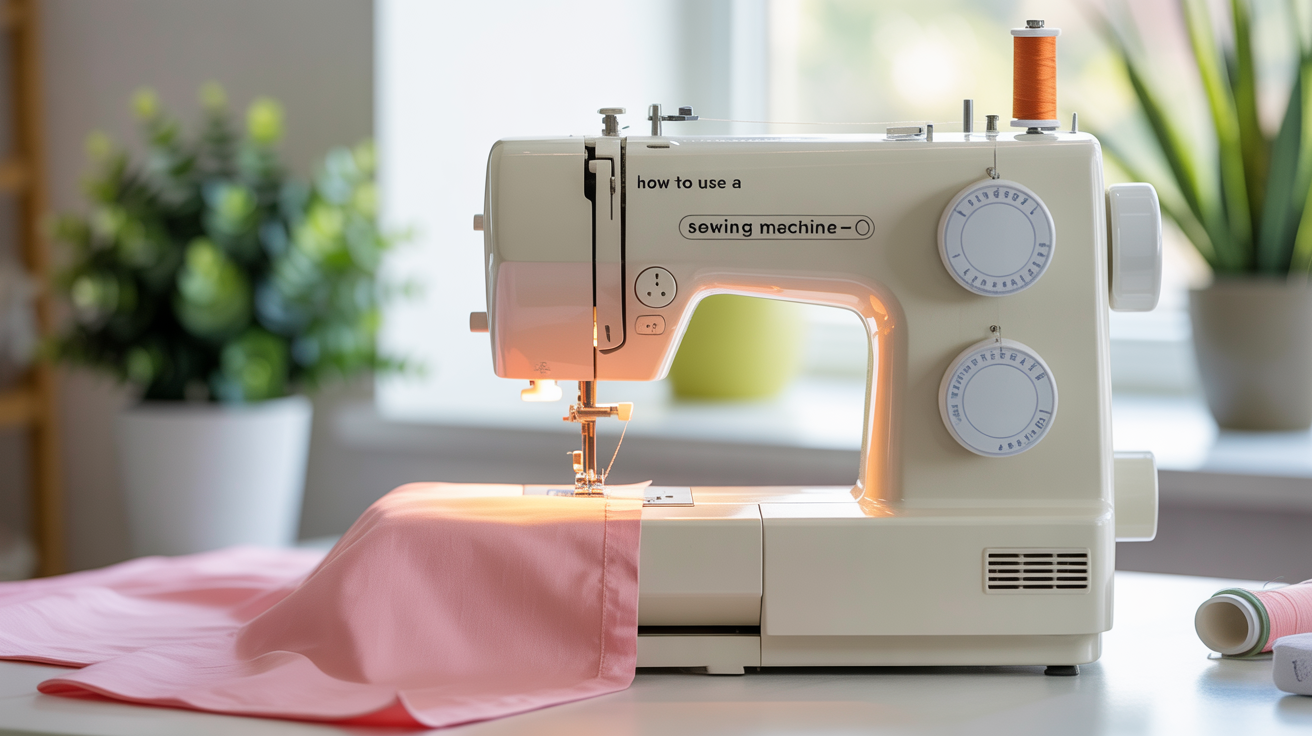
A sewing machine can look intimidating the first time you sit down in front of one. Pedal, presser foot, tension dial, bobbin winder, feed dogs, it's a lot of parts with names that don't explain themselves. But here's the good news: once you understand what each part does and work through a few practice seams, operating one becomes surprisingly natural. This guide walks you through everything you need to get started, from identifying the parts to stitching a straight seam you'd actually be proud of.
First Stitch is an independent learning resource. Our guides are written in-house and are not affiliated with, endorsed by, or sponsored by any sewing machine brand.
At a Glance
- Learn the eight core parts (handwheel, presser foot, feed dogs, tension dial, stitch selector, bobbin compartment, spool pin, presser foot lever) before you sew a stitch.
- Match needle size to fabric weight: 65/9 to 70/10 for silk and chiffon, 80/12 for quilting cotton, 90/14 to 100/16 for denim.
- Start with a stitch length of 2.5 mm and an upper tension around 4 to 5, then test on a scrap of your actual project fabric.
- Always lower the presser foot before sewing and backstitch 3 to 5 stitches at the start and end of every seam.
- Guide the fabric lightly with your hands; the feed dogs do the actual pulling, so forcing it causes crooked seams and broken needles.
- Never sew over pins, and unplug the machine before changing needles or cleaning under the needle plate.
Getting to know your machine
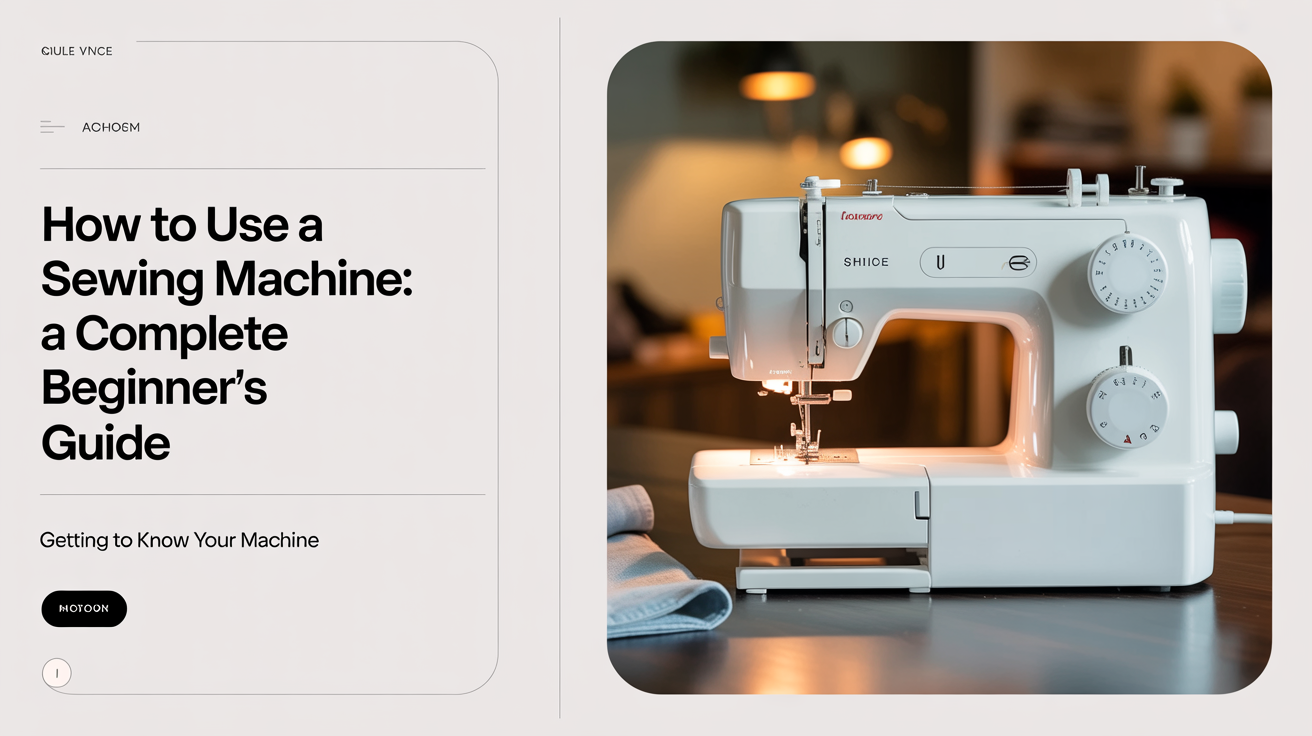
Before you sew a single stitch, spend ten minutes studying your machine. Most home machines share the same anatomy even if the exact layout varies by brand and model. The core mechanism, a needle carrying an upper thread that a rotating hook interlocks with a bobbin thread below the fabric to form a lockstitch, has stayed largely the same since home machines went mainstream in the 19th century, which is why an old family machine and a brand-new computerized one still share most of the same basic controls.
The main parts and what they do
| Part | Where to find it | What it does |
|---|---|---|
| Handwheel | Right side of machine | Raises and lowers the needle manually |
| Presser foot | Below the needle | Holds fabric flat against the feed dogs |
| Feed dogs | Under the presser foot | Metal teeth that pull fabric through as you sew |
| Tension dial | Front or top of machine | Controls how tight the thread is pulled |
| Stitch selector | Front or top panel | Lets you choose straight, zigzag, or other stitches |
| Bobbin compartment | Under the needle plate | Houses the lower thread supply |
| Thread spool pin | Top of machine | Holds your upper thread spool |
| Presser foot lever | Back right of machine | Lifts and lowers the presser foot |
Take your machine out of the box (or cabinet) and locate each of these. If something is missing from this list, your manual will cover it. Most manufacturers post manuals as free PDFs, so a quick search with your model number usually turns one up.
Mechanical machines control stitch length and width with physical dials, which means every setting is visible at a glance and there is nothing to reprogram if the machine loses power. Computerized machines replace some or all of those dials with a screen and buttons, often adding a library of built-in stitch patterns and an automatic needle threader. Neither type is inherently better for a beginner: a mechanical machine is usually cheaper to service and easier to understand, while a computerized machine can save time on repetitive settings changes once you already know what you are doing.
One thing worth knowing right away: always lower the presser foot lever before you start sewing. If you stitch with it raised, the thread won't catch properly and you'll end up with a tangled mess underneath.
Setting up before you sew
Good setup prevents most of the problems beginners blame on the machine itself.
Choosing your needle and thread
Use a fresh needle for every new project. A dull or bent needle causes skipped stitches, broken thread, and fabric damage, and needles are cheap. For most beginner projects in quilting cotton or calico, a size 80/12 universal needle is a reliable starting point. Heavier fabrics like denim call for a size 90/14 or 100/16; lightweight silk or chiffon do better with a 65/9 or 70/10. Needle packaging shows two numbers side by side, such as 80/12: the first is the metric shaft diameter and the second is the older American sizing system, and larger numbers on both scales mean a thicker, sturdier needle.
Thread weight should match your fabric. All-purpose polyester thread (the kind on a standard spool) handles most jobs well. Use the same thread type in both the bobbin and the upper spool so the tension behaves consistently.
Winding and loading the bobbin
The bobbin is the small spool that sits below your needle and supplies the lower thread. Winding it correctly matters more than most beginners expect. If the bobbin is unevenly wound or loaded the wrong way, your stitches will look loopy on one side. The bobbin case itself does real mechanical work: a small leaf spring built into the case keeps the lower thread taut while the hook mechanism sweeps the upper thread around it to lock the two threads together, which is why an unevenly wound bobbin throws off that balance so easily. For a detailed walkthrough of exactly how to wind and load it, see our guide on how to wind and load a bobbin correctly.
Threading the machine
Threading follows a specific path through guides, tension discs, and finally the needle eye. The order matters. If you miss one guide, your thread will slip out the moment you start stitching, or the tension will be completely off. Most machines have numbered threading diagrams printed on the machine itself. Follow them in order rather than improvising. For a step-by-step breakdown with photos of each stage, our guide on how to thread a sewing machine covers every machine type.
After threading, pull both threads (upper and bobbin) toward the back of the machine and hold them loosely as you make your first few stitches. This stops the threads from pulling into the machine and tangling underneath.
Adjusting your stitch settings
Two settings control almost everything: stitch length and thread tension.
Stitch length
Stitch length is measured in millimeters. A length of 2.5 mm is a good general-purpose setting for most cotton and linen fabrics. Shorter stitches (1.5 to 2 mm) are useful for reinforcing areas under stress, like the corners of pockets or the start and end of a seam. Longer stitches (4 to 5 mm) work well for basting, which is temporary stitching you'll remove later.
Thread tension
Tension controls how tightly the upper and lower threads are pulled together inside the fabric layers. When tension is correct, the stitch locking point sits exactly in the middle of the fabric, invisible from both sides. When it's off, you'll see loops on the top or the bottom.
A tension setting of 4 or 5 is a reasonable starting point on most machines, but always test on a scrap of the same fabric you're using for your project, with the same needle and thread. What works on quilting cotton may look terrible on stretch jersey. If you're running into tension problems, our guide on sewing machine tension explained and how to fix it walks through every symptom and its fix.
Quick setting reference for common fabrics
Keep this nearby for your first few projects until the numbers become second nature.
| Fabric | Needle size | Stitch length | Starting tension |
|---|---|---|---|
| Silk, chiffon | 65/9 to 70/10 | 2.0 mm | 2 to 3 |
| Quilting cotton, calico | 80/12 | 2.5 mm | 4 to 5 |
| Linen | 80/12 | 2.5 mm | 4 to 5 |
| Denim, canvas | 90/14 to 100/16 | 3.0 mm | 5 to 6 |
| Jersey, stretch knit | 75/11 stretch/ballpoint | 2.5 to 3.0 mm with a stretch stitch | 3 to 4 |
Sewing your first seams
Now you're ready to actually sew. Practice on fabric scraps before you cut into anything you care about. Calico (unbleached cotton muslin) is inexpensive, widely available, and behaves predictably, which makes it ideal for practice.
Positioning the fabric
Slide your fabric under the presser foot so that the raw edge lines up with a seam guide on the needle plate. Most machines have lines etched into the metal at common seam allowances: 3/8 inch (1 cm), 1/2 inch (1.3 cm), and 5/8 inch (1.5 cm) are the most common. For basic practice seams, use 5/8 inch (1.5 cm). Lower the presser foot lever, then turn the handwheel toward you to lower the needle into the fabric.
Backstitch at the start and end
Backstitching locks your seam so it won't unravel. Almost every machine has a reverse button or lever, usually on the front of the machine or near the needle. Press it and take three to five stitches backward right at the start of your seam, then release it and sew forward. Repeat at the end before you cut the thread. Skipping this step is one of the most common beginner mistakes, and the seam will come undone under any stress.
Guiding the fabric
Your hands are guides, not engines. The feed dogs do the actual pulling. Rest your hands lightly on either side of the presser foot and use them to keep the fabric straight, not to push or pull it through. Forcing the fabric speeds past the feed dogs and leads to crooked seams and broken needles.
Keep your eyes on the seam guide on the needle plate rather than staring at the needle. Watching the guide helps you hold a consistent seam allowance, which is what actually keeps seams straight.
Controlling your speed
Start slow. Most machines have a foot pedal that works like a car accelerator: gentle pressure, slow speed; more pressure, faster stitching. New sewers often press too hard and lose control. Practice with barely any pressure at all until you feel confident.
When you need to turn a corner, stop with the needle down inside the fabric, lift the presser foot, pivot the fabric, lower the presser foot, and continue sewing. This gives you clean, sharp corners.
Common problems and quick fixes
Even after a careful setup, things go wrong. Most issues have a straightforward cause.
- Thread bunching underneath at the start of a seam: You probably forgot to lower the presser foot, or you didn't pull both threads to the back before you started. Re-thread and try again.
- Skipped stitches: The needle may be dull, bent, or inserted incorrectly. Replace it and make sure the flat side of the needle shank faces the back.
- Thread breaking: Check that the machine is threaded correctly, the tension isn't too tight, and the thread hasn't caught on a rough spot on the spool or a burr on the needle hole.
- Fabric not moving: The feed dogs might be lowered (there's often a lever for this, used in free-motion embroidery). Raise them back to the stitching position.
- Loud clunking or grinding: Stop immediately. The bobbin may have come loose, or thread may be caught in the hook mechanism underneath the needle plate. Remove the bobbin, clear any tangles, and reinstall it carefully.
- Fabric puckering along the seam even though the tension looks fine: This is common on lightweight or loosely woven fabric under a stitch that is slightly too long for it. Shorten the stitch length by half a millimeter and try a fresh, fine needle before touching the tension dial.
- Machine sews fine for a while, then starts skipping stitches: Check for a buildup of lint around the hook and bobbin area. A few minutes of brushing with a soft, dry brush often clears it up, and it is worth doing every few projects as routine maintenance rather than waiting for a problem.
Sharp needles and scissors are the main safety concerns at the machine. Keep fingers clear of the needle path, never leave a threaded machine running unattended, and keep the machine unplugged when changing needles or cleaning underneath the needle plate.
Building good habits from the start
A few habits make every session easier.
- Cut the thread with scissors rather than pulling it, which can knock the needle out of position.
- Remove pins before they reach the presser foot. Sewing over a pin can break the needle and send fragments flying.
- Press seams with an iron after stitching. Pressed seams lie flat and look professional; unpressed seams look homemade in the wrong sense of the word.
- Clean the lint from around the feed dogs and bobbin area every few projects. Lint buildup changes how the fabric feeds and can affect stitch quality.
- Oil the machine occasionally if your model requires it. Check your manual; many modern machines are self-lubricating, but older or mechanical machines need a drop of sewing machine oil on the hook race every few months.
- Keep a small notebook or note on your phone with the settings that worked for each fabric type you sew often. It saves you from re-testing tension and stitch length from scratch every time.
Frequently asked questions
Do I need an expensive machine as a beginner?
No. A basic mechanical machine in the $100 to $200 range handles everything a beginner needs: straight stitch, zigzag, and a handful of utility stitches. Computerized machines add convenience features, but they're not necessary while you're learning. Focus on getting comfortable with the mechanics first.
Why does my thread keep coming out of the needle?
The most common reason is that the machine isn't threaded correctly, or the thread isn't seated in the tension discs. Re-thread from scratch, following the machine's numbered guides in order. Also check that the thread is coming off the spool in the right direction for your machine (some spool pins hold the spool upright; others hold it horizontally, and the thread should unwind accordingly).
How do I know what stitch length to use?
For most seams in cotton or linen, 2.5 mm is a reliable default. Use shorter stitches (around 1.5 to 2 mm) where strength matters, like on bag handles or waistbands. Use longer stitches (4 to 5 mm) for temporary basting seams. Your fabric will also give you feedback: if the fabric is puckering along a seam, a slightly longer stitch often helps.
Can I sew over pins?
Most sewing teachers strongly advise against it. If the needle hits a pin, it can break, bend, or send a metal fragment toward your face. Remove pins just before the presser foot reaches them, or use fabric clips instead of pins to avoid the temptation altogether.
Why does my seam look loopy on the bottom?
Loops on the bottom side of the seam usually mean the upper thread tension is too loose, or the upper thread isn't properly seated in the tension discs. Re-thread the upper thread (with the presser foot raised, which opens the tension discs to let the thread seat correctly) and test again on a scrap. If loops appear on top, the bobbin tension or threading is usually the culprit.
How often should I clean and oil my machine?
For a machine used a few hours a week, brush lint out of the bobbin area every two to three projects and give it a fuller clean (removing the needle plate and clearing lint from around the feed dogs) every couple of months. Oiling frequency depends entirely on your model: many computerized machines are sealed and self-lubricating, so check your manual before adding oil, since oiling a machine that isn't designed for it can attract lint and gum up the mechanism.