How to Sew in Reverse and Backstitch on a Machine
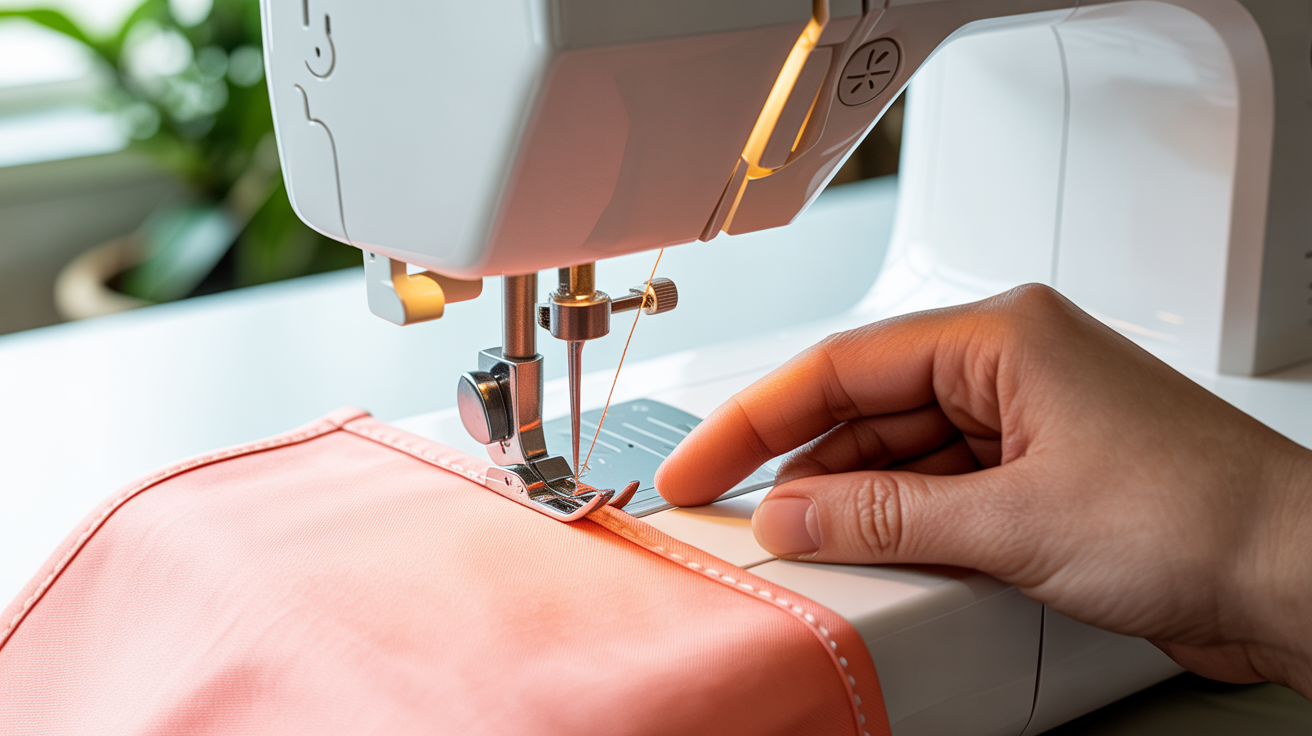
When you finish a seam on a machine, the last thing you want is for the thread to unravel the moment you pull the fabric away. That's exactly what a backstitch prevents. A machine backstitch (also called a reverse stitch or lock stitch) anchors the beginning and end of every seam so the stitching stays put through washing, wearing, and use. This guide walks you through how it works, when to use it, and a few habits that will make it second nature.
At a Glance
- Backstitch 3 to 5 stitches at the start and end of every seam that will be washed, worn, or stressed.
- Find your machine's reverse control: a lever, dial, or button, usually near the needle.
- Skip the backstitch on gathering stitches, basting, and any seam that will be crossed by another line of stitching.
- 3 stitches is enough for light fabric; use 5 on denim or canvas to anchor properly without bulking up.
- A visible lump on the right side means too many backstitches, not too few; reduce, don't add.
- If your machine lacks a reverse function, sewing several stitches in place (stitch length at 0) locks the thread almost as well.
What Is a Machine Backstitch and Why It Matters
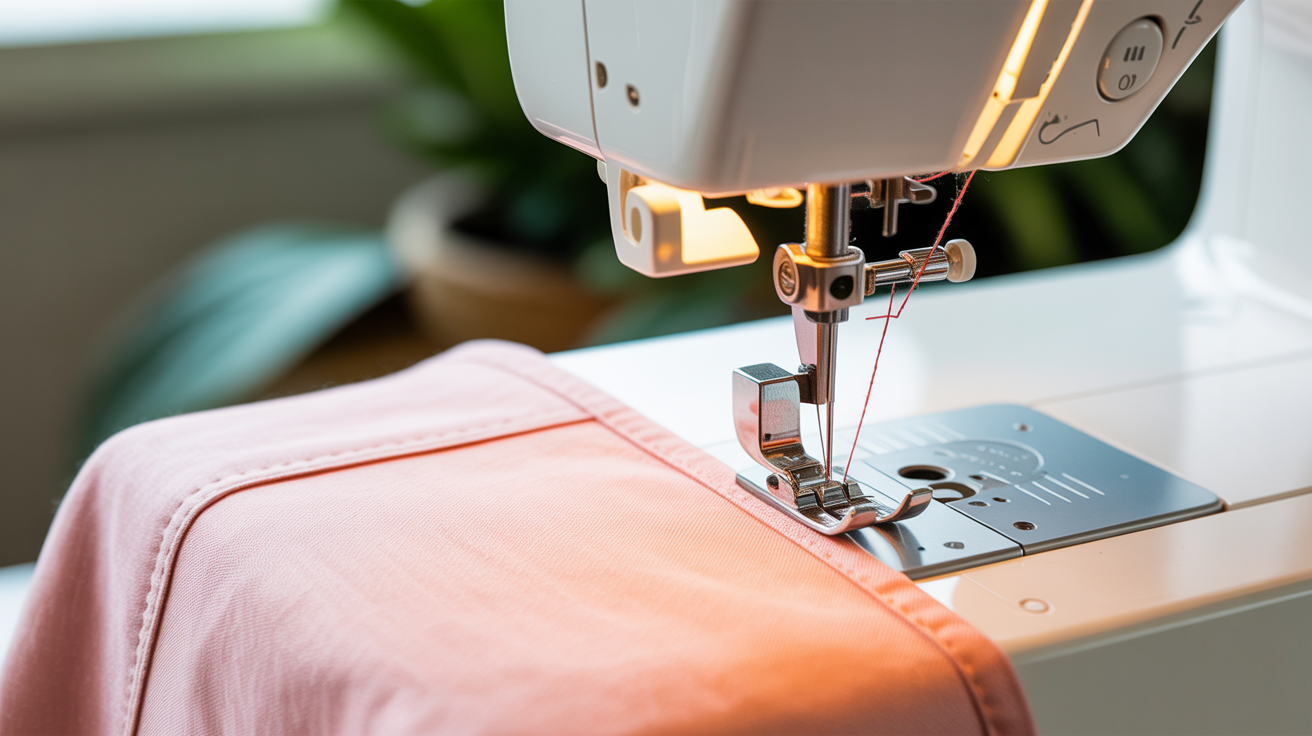
A machine backstitch is a short run of stitches sewn backward over the start or end of a seam. When you stitch forward a few stitches, reverse over them, then continue forward, the threads lock against each other and hold the seam in place. Without this, the thread ends are free to slip back through the fabric and the seam opens.
Hand sewers use a backstitch technique to create strong seams by hand, but on a machine the principle is simpler: you're using the machine's built-in reverse function to sew back over existing stitches. This doubles the thread in a small area, creating what's called a lock stitch. According to Wikipedia's explanation of the lockstitch mechanism, the machine interlaces the upper needle thread with the lower bobbin thread inside the fabric itself, which is what makes the stitch line so resistant to pulling apart compared with the chain stitch used on some older or industrial machines, where a single broken thread can let an entire seam unravel. Reversing over the same few stitches doubles that interlocking at exactly the point where a seam is most likely to fail: its two ends. It takes about three seconds each time and makes every seam far more durable.
Before sewing on real fabric, test your backstitch on a scrap of the same fabric. Different weights behave differently, and it's easier to see what's happening on a test piece than on your actual project.
Finding the Reverse Lever or Button on Your Machine
Every modern home sewing machine has a way to sew in reverse. The control is usually one of these:
- A lever or button near the needle area that you hold down while sewing to run the machine backward. Release it and the machine stitches forward again.
- A dial you turn to switch the machine to reverse mode, then switch back.
- A dedicated reverse button on computerized machines, sometimes labeled with an arrow pointing left or backward.
Check your machine's manual if you're not sure which control does it. On most mechanical machines, it's a small lever on the front face of the machine, just above or below the needle plate. On computerized machines, look for an arrow symbol on the touch panel.
You don't need to adjust thread tension or stitch length to backstitch. The machine uses the same settings you've already dialed in for the seam.
How to Backstitch at the Start and End of a Seam
This is the core technique. Use it at both ends of every seam.
At the Start of a Seam
- Place your fabric under the presser foot with the starting edge lined up at the needle.
- Lower the presser foot lever.
- Sew forward 3 to 5 stitches.
- Hold or press the reverse control and sew backward 3 to 5 stitches, back to your original starting point.
- Release the reverse control and sew the rest of the seam forward.
You've now locked the start of the seam.
At the End of a Seam
- Sew forward to the end of the seam.
- Stop with the needle down in the fabric.
- Hold or press the reverse control and sew backward 3 to 5 stitches.
- Release the reverse control and sew forward 3 to 5 stitches, back to the end of the seam.
- Stop the machine and raise the needle out of the fabric.
- Raise the presser foot and pull the fabric gently to the back of the machine. Cut the threads, leaving a short tail.
That's the complete technique. Once you've practiced it a few times, the whole start-and-end sequence adds about ten seconds to each seam.
How Many Stitches to Use
The right count depends on fabric weight more than personal preference. Too few and the lock doesn't hold; too many and you build up a visible ridge of thread right where it shows most.
| Fabric weight | Example fabrics | Backstitch length |
|---|---|---|
| Light | Voile, lawn, lightweight cotton | 3 stitches |
| Medium | Quilting cotton, linen, broadcloth | 3 to 4 stitches |
| Heavy | Denim, canvas, upholstery fabric | 5 stitches |
| Multiple layers | Bag straps, cuffs, waistbands | 5 to 6 stitches |
You don't need more than that: too many stitches pile thread up in one spot and can create a visible lump on the right side of the fabric.
When to Skip the Backstitch
There are a handful of situations where you deliberately skip the backstitch at one or both ends.
Gathering stitches: When you're sewing long basting or gathering stitches, you need to pull the thread ends afterward to create gathers. If you backstitch the ends, the thread won't move. Leave the ends loose and tie them off by hand once the gathers are set.
Seams that will be crossed: If another seam will cross perpendicular to the first, the crossing seam locks the thread anyway. Many sewers still backstitch on both seams for consistency, but it's technically redundant.
Temporary seams: Basting stitches (long, loose stitches used to hold fabric in place temporarily) are meant to be removed. Don't backstitch them.
For everything else, including seams in clothing, bags, home goods, and any project that will be washed, backstitch at both ends.
Troubleshooting Common Problems
| Problem | Likely Cause | Fix |
|---|---|---|
| Thread tangles or nests at the start | Upper thread not held, needle position wrong | Hold both thread tails behind the presser foot when you start |
| Stitches skip during reverse | Fabric not flat, too much speed | Slow down; keep fabric flat against the feed dogs |
| Reverse button hard to hold | Ergonomics of your machine | Use a finger rather than your thumb; rest your hand on the machine |
| Backstitch visible as a bump on right side | Too many stitches, too short a stitch length | Reduce backstitch to 3 stitches; check stitch length is normal (2.5mm is standard) |
| Seam still unravels | Backstitch too close to the edge | Start backstitch at least 1/4 inch from the raw edge |
| Machine jams or "birds nests" in reverse | Bobbin wound unevenly or thread caught above the tension disc | Re-check threading from the spool through every guide; re-wind the bobbin if it looks lumpy |
If your machine doesn't sew in reverse at all, check whether the stitch length dial is set to 0 (zero). Some machines stitch in place when set to 0, which secures the thread but looks different from a true backstitch. Either method works for locking a seam.
Frequently Asked Questions
Do I have to backstitch on a sewing machine, or can I just tie the thread ends?
Both work. Tying thread ends by hand is a valid alternative, particularly on thicker fabrics where a backstitch might create too much bulk. However, backstitching is faster and more consistent. For most beginners, developing the backstitch habit from the start saves time on every project.
What's the difference between a reverse stitch and a lock stitch?
These terms are often used for the same result but describe different things. A reverse stitch refers to the action: sewing backward over existing stitches using your machine's reverse function. A lock stitch refers to the mechanical stitch type your machine creates: the upper thread and bobbin thread interlock in the middle of the fabric layers. The Wikipedia entry on sewing machines explains that this interlocking design is what most household machines use by default, and it's precisely why a lockstitch resists unraveling in a way that older chain-stitch machines did not: if a chain stitch thread breaks anywhere along its length, the whole line can pull out. When sewers say "lock stitch" in casual conversation, they usually mean the anchoring technique at the start and end of a seam.
How do I backstitch without the stitches going crooked?
Watch your seam guide (the lines on the needle plate) rather than the needle itself. Keep your fabric lined up against the guide while you reverse, just as you would going forward. Going slowly helps too. Once your hands know the feel of holding the reverse control, your eyes can stay on the fabric.
Can I backstitch on stretchy fabric?
Yes, but use your machine's stretch or lightning bolt stitch for the main seam first. A straight stitch on stretchy fabric snaps when the fabric stretches. The backstitch at the start and end is still a straight stitch, which is fine for the short locking section, but the main seam needs to stretch with the fabric.
My machine has a "fix" or "tie-off" button. Is that the same as backstitching?
Close, but not identical. A fix or tie-off function sews a few stitches in place (needle goes up and down without advancing the fabric) rather than reversing. It achieves the same goal of locking the thread. If your machine has this button, you can use it instead of the reverse stitch to secure your seams.
Does backstitching weaken the fabric by punching extra holes in the same spot?
Not meaningfully, as long as you keep to the recommended 3 to 5 stitches. The needle re-enters at or very near its original holes rather than tearing new ones each time, so the fabric fibers around the stitch line aren't cut any more than they would be by the seam itself. Where you can weaken fabric is by backstitching repeatedly over the exact same few threads during unpicking and re-sewing; if you've ripped out a seam more than twice in the same spot, shift your stitching line very slightly to fresh fabric.
Once you're comfortable with backstitching, the rest of machine sewing builds on this foundation. If you're still getting to know your machine, our complete beginner's guide to using a sewing machine covers setup and basic operation from the start. For threading, see how to thread a sewing machine step by step, and for bobbin setup, how to wind and load a bobbin correctly will walk you through that process.