Is Sewing Hard to Learn? A Realistic Beginner Timeline
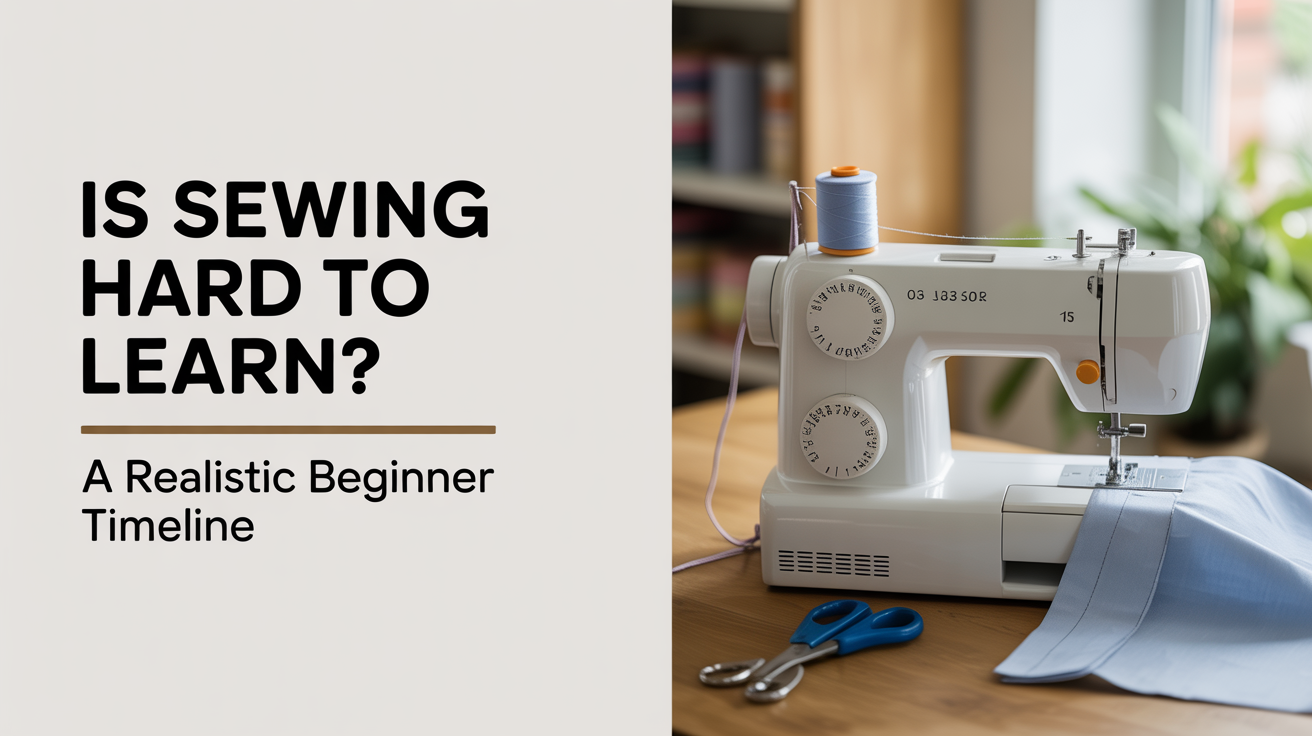
Sewing is not especially hard to learn, but it does require patience in the early weeks while your hands and eyes figure out how to work together. Most beginners can sew a simple, straight-seamed project like a pillowcase or tote bag within their first few sessions. Getting genuinely comfortable, where you can look at a pattern and feel confident rather than anxious, usually takes a few months of regular practice. That gap between "first project done" and "confident sewist" is what surprises people most, and understanding it makes the whole process less frustrating.
What actually makes sewing feel hard at first
The sewing machine itself is the first hurdle. Threading it correctly, managing thread tension, and controlling the fabric speed all happen at once, and that is a lot to coordinate when everything is new. Most beginners spend their first hour just threading the machine and running practice lines on scrap fabric, which is exactly right.
A few specific things trip people up repeatedly:
- Tension problems. Loops on the underside of the fabric almost always mean the upper thread is not seated properly in the tension discs. Re-thread from scratch before adjusting any dials.
- Uneven seam allowances. Wandering off a 5/8 inch (1.5 cm) seam line is normal at first. Use the seam guide markings on your needle plate and keep your eyes on those lines rather than the needle.
- Fabric shifting. Light fabrics like quilting cotton can creep sideways while you sew. Pinning every 3 to 4 inches (7 to 10 cm) along the seam keeps everything in place.
- Nervousness around sharp tools. Needles, scissors, seam rippers, and a hot iron are all part of sewing. Work slowly, cut away from your body, and let the iron heat up and cool down with nothing else nearby.
These are not signs that you lack ability. They are the standard beginner experience, and they pass.
A realistic learning to sew timeline
How long it takes to learn to sew depends on how often you practice and what you want to make. Someone who sits down twice a week will progress faster than someone who picks it up once a month. Here is an honest picture:
| Timeframe | What most beginners can do |
|---|---|
| First 1-2 sessions | Thread the machine, sew straight lines on scrap, finish a simple flat project (cloth napkin, hem on a pillowcase) |
| Weeks 2-4 | Complete a project with corners and basic finishing (tote bag, simple pillowcase with an envelope back) |
| Month 2-3 | Read and follow a beginner pattern, cut fabric from a layout, sew a garment with 4-6 pieces such as pajama pants or a simple skirt |
| Month 4-6 | Handle zippers, buttons, and fitted seams with reasonable confidence; troubleshoot common machine problems without panicking |
| 6-12 months | Tackle intermediate patterns, adjust for fit, choose fabrics independently rather than following exact instructions |
These ranges are not hard rules. A retired person sewing every day will move faster. A parent with an hour here and there will move slower. Neither pace is wrong.
The skills that build on each other
Sewing is layered. Each skill you add makes the next one easier, which is why the early weeks feel slow and then things start clicking faster.
Straight lines first
Everything else depends on being able to sew a consistent straight line and hold a consistent seam allowance. Before you cut into any fabric you care about, run at least 10 to 15 minutes of practice lines on scrap calico or muslin. Draw parallel lines with a fabric marker 1/2 inch (1.3 cm) apart and try to sew exactly on them. This feels tedious but builds the muscle memory that makes every future project easier.
Cutting and pressing are half the battle
New sewists often underestimate how much good cutting and pressing matter. Fabric cut carelessly produces crooked seams even when your sewing is neat. Pieces pressed flat and opened after each seam make the next seam line up properly. Invest time in these steps and your finished projects will look noticeably better.
Reading a pattern
Patterns have their own language, and learning it is a separate skill from operating the machine. Grain lines, notches, cutting layouts, and sizing charts all need attention before you cut a single piece. If you are following a complete beginner's roadmap, learning to decode a pattern is usually step three or four, after you have some basic machine time behind you.
Hand sewing alongside machine sewing
The machine does not do everything. Hemming by hand, sewing on buttons, and finishing raw edges sometimes require a needle and thread. Hand sewing is also a good way to get comfortable with thread, fabric tension, and stitch consistency before you ever sit down at a machine. If you are weighing where to start, the comparison between hand sewing and machine sewing is worth reading before you buy anything.
What you need to start (and what you can wait on)
You do not need a lot to begin. The list of genuinely useful tools is shorter than most beginner guides suggest:
- A basic sewing machine with a straight stitch and zigzag stitch
- Sharp fabric scissors kept only for fabric
- A seam ripper (you will use this constantly, and that is fine)
- Straight pins or clips
- A tape measure
- An iron and ironing surface
Everything else, specialty feet, dress forms, sergers, embroidery hoops, comes later when you have a specific reason for it. A fuller breakdown of what a beginner sewing kit actually needs can help you avoid spending money on things that will sit unused.
Common reasons people get stuck and how to get past them
The most common reason beginners stop is a frustrating mistake they do not know how to fix. A tangled bobbin, a skipped stitch, fabric that puckered, a seam that came out crooked. Any of these can feel like a signal that sewing is "not for you" when they are actually just normal problems with known solutions.
A few fixes worth knowing early:
- Tangled thread under the fabric (bird's nest). Usually caused by starting to sew without holding onto both thread tails. Always hold the upper and bobbin threads behind the presser foot for the first few stitches.
- Skipped stitches. Often a needle issue. Check that the needle is fully inserted and that you are using the right needle type for your fabric. A dull needle causes skipped stitches on woven fabrics like linen and quilting cotton.
- Puckered seams. Usually too much tension or a needle too large for the fabric. Test your settings on a scrap piece before starting any project, using the same fabric and number of layers you plan to sew.
None of these problems mean the machine is broken or that you are doing it wrong in some fundamental way. They are troubleshooting, and troubleshooting is part of sewing.
Frequently asked questions
How long does it take to sew your first project?
Most complete beginners can finish a very simple project, something flat with straight seams like a cloth napkin or simple tote bag, in two to four hours including setup time. That number includes threading the machine, running a few practice lines, and making some small mistakes. It is slower than it looks on tutorial videos, and that is completely normal.
Is sewing harder to learn than knitting or crochet?
They are different kinds of hard. Sewing involves machinery, cutting, and working with larger pieces of material, which makes early mistakes feel more visible. Knitting and crochet are more portable and easier to pick up and put down. Neither is objectively harder; it comes down to which type of project interests you more, because interest keeps you practicing.
Do I need to take a class, or can I learn from videos?
You can learn from videos and written guides, and many people do. A class gives you hands-on help when something goes wrong, which is valuable in the first few sessions. If you go the self-taught route, budget extra time for troubleshooting and do not skip the practice-on-scrap step.
What fabric is easiest to learn on?
Medium-weight quilting cotton is the standard recommendation for good reason. It does not shift much, it presses well, and it shows stitching clearly so you can see what is working. Avoid very stretchy fabrics, sheer fabrics, and slippery satins until you have a few projects behind you.
Can I learn to sew as an adult, or is it easier to start young?
Adults learn to sew all the time and often do well because they can follow instructions carefully and tolerate the slow early stages. Starting young has some advantages in terms of built-in patience, but it is not a prerequisite. If you have wanted to learn, the only thing that actually matters is starting.