Sewing Machine Feet Explained: Which Presser Foot Does What
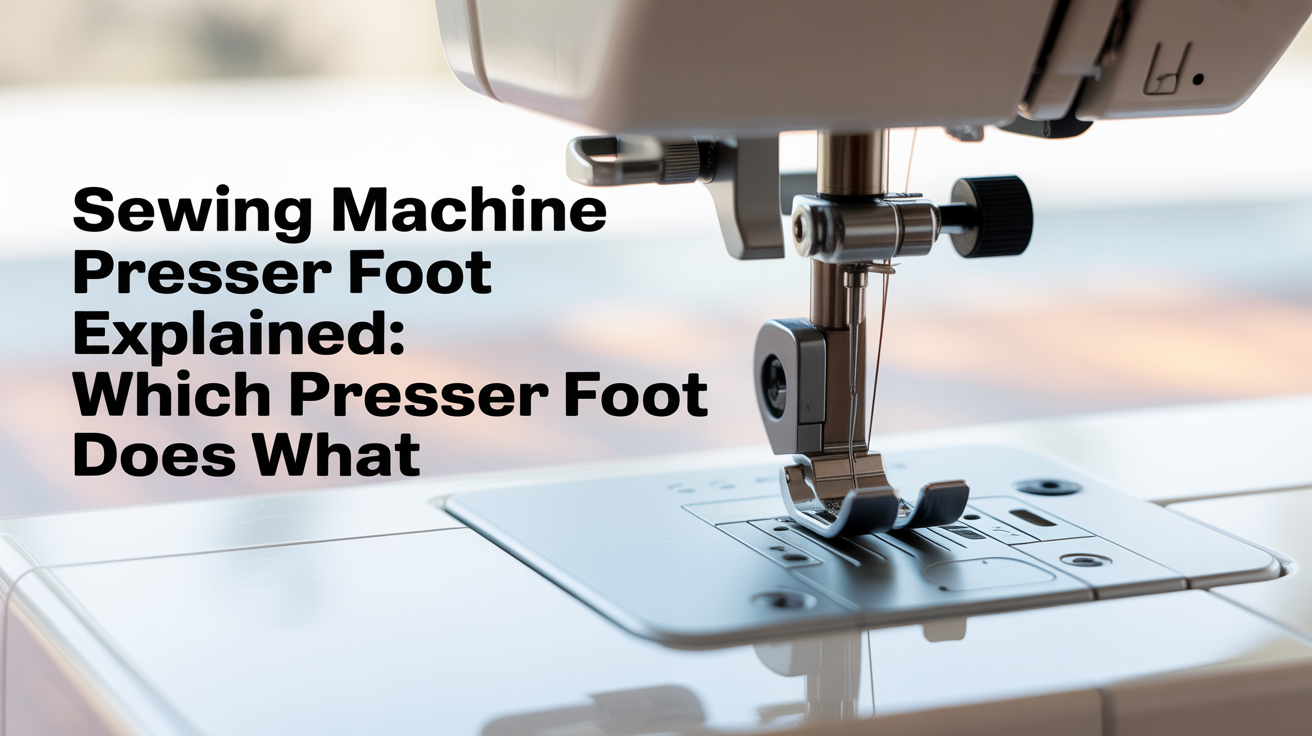
Most machines ship with a small bag of extra feet tucked in the accessory compartment. Many beginners find that bag, set it on a shelf, and never open it again. The all-purpose foot works for so many things that the others seem unnecessary. Then you try to sew a zipper with the wrong foot, and the needle clears the zipper teeth by about half a millimeter, and you wonder if there is an easier way. There is. The right foot for the job takes what feels like a frustrating task and makes it straightforward.
This guide covers the feet that come with most entry-level machines: what each one does, which projects call for it, and how to swap feet safely. Your machine may not include every foot listed here, and the names can vary slightly by brand. Check your machine manual for the names it uses.
Safety note: Always lower the needle into the fabric or raise it fully before swapping feet. Needles are sharp, and a foot that wobbles mid-swap can cause injuries. When testing any stitch or foot, test on a scrap piece of the same fabric you plan to use.
The All-Purpose Foot (and Why It Has Limits)
The all-purpose foot, sometimes called the standard or zigzag foot, is the one already on your machine when you take it out of the box. It has a wide opening in the center to accommodate straight stitches, zigzag stitches, and most decorative stitches.
This foot works for the majority of everyday sewing: straight seams, topstitching on flat fabric, basic hemming, and most quilting on home machines. If you only ever use one foot, this is the right one to use for most situations.
The limits show up in specific tasks. Sewing right next to a zipper pull is awkward because the foot rides over the teeth at an angle. Hemming jeans is difficult because the foot tips when it rolls over thick seams. Sewing knit fabric can result in wavy seams because the foot and feed dogs push the fabric unevenly. These are exactly the situations where one of the specialty feet below earns its keep.
The Zipper Foot
The zipper foot has a narrow body and a notch on one side (some designs have notches on both sides or can be repositioned). This lets the needle stitch right alongside a zipper coil or a fabric edge without the foot riding up over the teeth.
Use it any time you sew an invisible zipper, a regular lapped zipper, or a centered zipper. The foot lets you stitch much closer to the zipper than the all-purpose foot allows, which gives a neater, more professional result.
On most machines, you can position the zipper foot on the left or right side of the needle, depending on which side of the zipper you are sewing. Check your manual for how to adjust the position.
If you want to practice zippers before working on a real project, How to Sew a Zippered Pouch: Your First Zipper walks through the process step by step.
The Buttonhole Foot
The buttonhole foot makes consistent, repeatable buttonholes. On most machines it has a sliding plastic piece that you use to set the button size. You drop the button into the slider, and the machine creates a buttonhole to match.
The foot handles the entire sequence automatically: it sews one side of the buttonhole, bartacks at each end, and sews the other side. You get a neat, evenly-sized result without having to count stitches or measure by hand.
Use this foot whenever your project calls for buttonholes: shirts, jackets, skirt waistbands, pillow covers with button closures. It works on most woven fabrics. Very stretchy knits or very thick fabrics may need a stabilizer underneath to keep the fabric from puckering during stitching.
The Blind-Hem Foot
The blind-hem foot works with your machine's blind-hem stitch to create a hem that is nearly invisible from the right side of the fabric. The foot has a small inner guide that rides along the folded edge of the hem, keeping the fabric in position so the stitch catches just a few threads on each swing.
This foot takes a little setup: you fold the hem allowance under, then fold the fabric back on itself in a specific way so the guide has an edge to follow. It sounds fiddly but becomes quick once you have done it once or twice.
Blind hems are most useful on dress pants, skirts, curtains, and anywhere you want a clean finish on the right side of the fabric. They are not as invisible on heavy fabric or thick thread, but on lighter fabrics with matching thread they can look hand-sewn.
The Walking Foot
The walking foot is larger than the other feet and attaches differently. It has its own set of feed dogs built into the foot, so the fabric feeds evenly from both the top and the bottom at the same time.
On a standard foot, the machine's built-in feed dogs pull the fabric from the bottom only. On multiple fabric layers, a slippery fabric, or a fabric with a directional pattern, the top and bottom layers can shift relative to each other. The walking foot prevents this by moving the top layer at the same rate as the bottom.
Use a walking foot for quilting (particularly when sewing through a quilt sandwich), sewing slippery fabrics like satin or silk, matching plaids or stripes across seams, and sewing stretch knit fabric in straight lines. It is one of the more versatile specialty feet.
If you are still learning the basics of operating your machine, How to Use a Sewing Machine: A Complete Beginner's Guide covers the fundamentals before you start adding specialty feet to the mix.
The Overcasting Foot (or Overcast Foot)
The overcasting foot is designed to be used with your machine's built-in overcast or overlocking stitch. It has a small wire guide or pin that the thread wraps around, which prevents the fabric edge from curling inward as you sew.
Use this foot when you want to finish raw fabric edges without a serger. Run the foot along the raw edge of a seam allowance, and the stitch wraps around the edge to prevent fraying. It does not replicate what a serger does exactly, but it gets close enough for many projects.
This foot is handy for wovens that fray easily (linen, cotton, some synthetics) and for knits where you want a tidy seam finish on a home machine without buying additional equipment.
How to Swap Presser Feet
On most modern machines, feet attach with a snap-on mechanism. To remove a foot, raise the presser foot lever on the back of the machine, then press the small release button or lever on the foot holder until the foot drops free. To attach a new foot, line up the pin on the foot with the groove on the holder and press down until it clicks into place.
Raise the presser foot lever again and lower the needle to confirm the needle passes cleanly through the opening in the new foot before you start sewing. A mismatch between foot and stitch type can break a needle or damage the foot.
A few feet, like the walking foot, attach differently and clamp around the needle bar. The manual for your machine will show the correct method.
Before sewing on your actual project, always run a few inches of stitching on a scrap of the same fabric. Check the stitch looks right, the foot moves smoothly, and the thread tension is acceptable. Learning to wind and load a bobbin correctly becomes especially relevant here because incorrect bobbin tension can show up as uneven stitches even when the foot is correct for the job.
Frequently Asked Questions
My machine only came with three feet. Do I need to buy more?
Not necessarily right away. The all-purpose, zipper, and buttonhole feet cover a wide range of projects. If you find yourself struggling with a specific task, that is the time to look for the foot that addresses it. Buying a large set of specialty feet before you know what you need often means most of them sit unused.
Can I use feet from a different brand on my machine?
It depends on the shank (the connector between the foot and the machine). Most home sewing machines use a low-shank system, so feet from different brands often are interchangeable. High-shank and slant-shank machines are less common but do exist. Check your machine manual or the product listing carefully before buying.
How do I know which foot is currently on my machine?
The all-purpose foot usually has a wide, rectangular opening and is the most common foot to find already attached. If you are unsure, compare the foot on your machine against the images in your manual. Most manuals include a chart with each foot labeled.
Will specialty feet work with all stitches?
No. Each foot has an opening designed for a specific range of motion. The blind-hem foot, for example, is made for the blind-hem stitch, not for a wide zigzag. Selecting a stitch with a wider swing than the foot's opening allows can cause a needle strike. Always match the foot to the stitch you plan to use.
Do I need to change the needle position when I change feet?
Sometimes. The zipper foot in particular requires you to position the needle to the left or right rather than center so it sews close to the zipper edge. The overcasting foot is usually used with needle position left of center. Check the instructions for each foot and test on scrap fabric first.